Soon to have a demo featured in this Summer's Steam Next Fest, Don't Kill Them All! is a turn-based strategy game with crafting and base building mechanics by development studio, Fika Productions.
Don't Kill Them All! has a simple but fun concept where you play as an orc trying to turn your clan from flailing to thriving. As each time your clan goes on a raid, they return empty-handed, due to their all-consuming rage that turns them into berserk, killing machines. Low on resources, your clan leader is annoyed and entrusts you as the new warchief, to teach your party of orcs how to control their anger and return with loot to enhance your home base. From three hours or so with the game, you begin to build structures and equipment, to teach orcs mindfulness, discover what they like, and create a community of strong but less angry orcs.
At the home base, you speak to the orc leader and other NPCs to receive quests, which acts as a tutorial for every gameplay mechanic from the combat system to crafting items and building structures. From here, you take your orcs on raids in various biomes, where you battle on semi-procedural, grid based battlegrounds to receive loot. It's up to you to decide whether to risk your loot by continuing into more fights or whether you take back your loot before you fail and lose it all. But each raid is categorised by difficulty and features different enemy types and resources to collect.
The very moment you embark on a raid with your warchief and his three orcs, you setup on battle grids of varying sizes and complexity. Materials and enemies are randomly placed on the grid, and more often than not, enemies move to prepare an attack which is shown by a block of red squares that cover orcs or resources. If you find yourself targeted, walking out of the red zone inflicts an attack and increases your rage meter.
The rage meter is the game's most important feature. It acts as a health bar of sorts, as if it fills up, orcs enter berserker mode and you lose control of them. This can make them attack resources, which increases the entire party's rage by one. Consequently, if every orc becomes enraged, they kill and destroy everything in sight, which leads to the game's version of a game over for that specific raid.
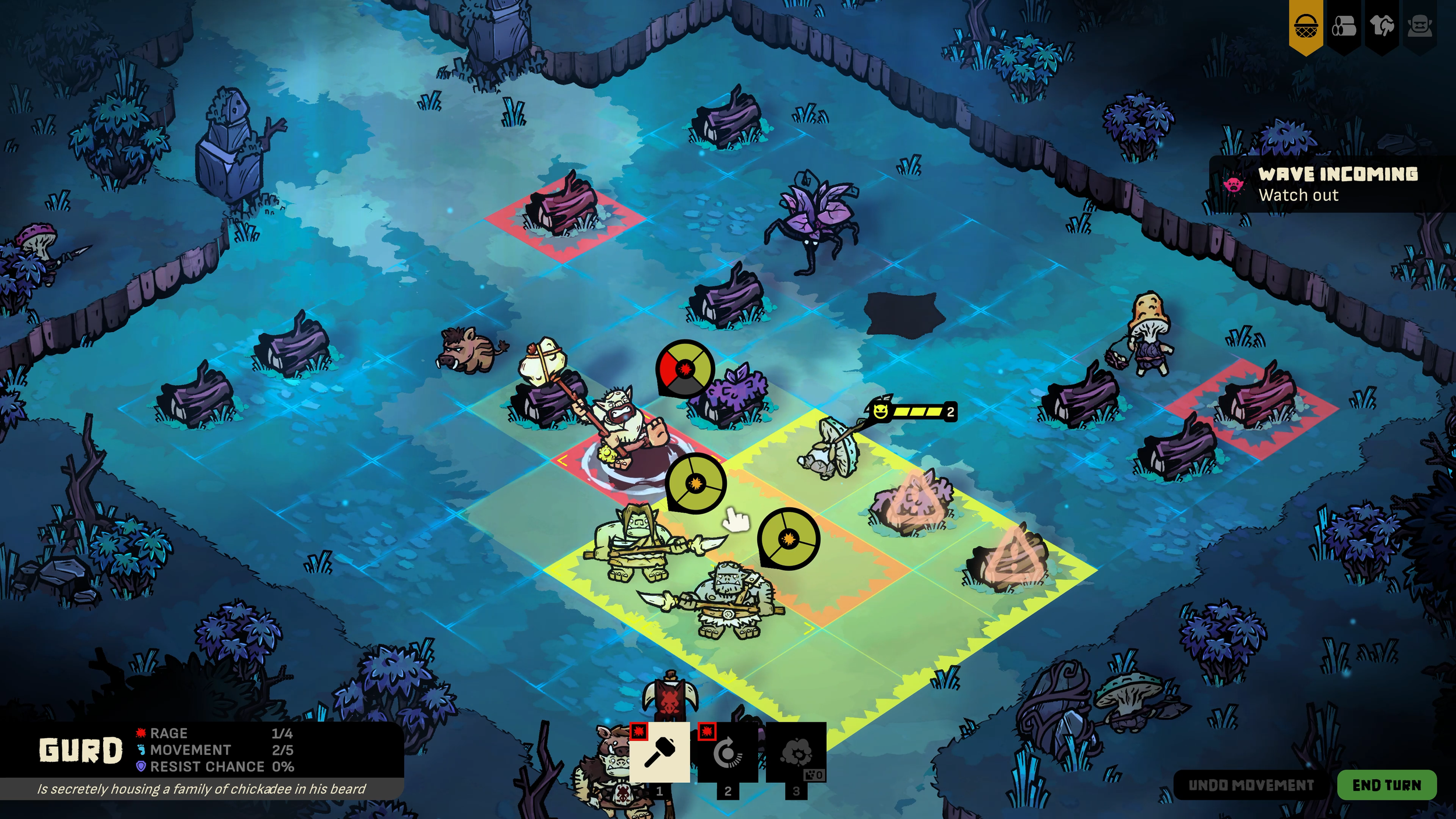
Image: Don’t Kill Them All! - Battle grid combat
Your role as a warchief is to balance your party's rage while gathering necessary supplies to upgrade and build structures at your home base. It makes you strategically plan your every move, as sometimes it's worth the risk to collect more loot, and other times, it's best to go home and rest - the start of an addictive gameplay loop.
Battles begin simple enough. Your orc units carry different weapons like spears and battle-axes, which all hit different areas of effect. They can also move a set number of squares on the grid, unless you use your warchief's ability to extend the distance they can move. As well as being able to use secondary abilities like push or pull to move resources or enemies away from incoming attacks, a leap to reposition yourself, or useable items like herbal tea to reduce rage. Plus, equippable armour to increase the amount of rage an orc can endure, and weapons to increase your damage to opponents.
However, none of this is possible without successfully taking loot back to camp. After carefully moving your orcs around the titles and avoiding destroying loot, you return to camp with an abundance of supplies. Having found specific resources for a quest, you enter build mode to continue your objectives by building basic structures within the camp. You start by building a mud bath that reduces your party's rage meters, and an anvil to craft better weapons.
Although, actions take time from the day and night cycle. Everything from raids to crafting armour takes an allotted amount of time. Each day allows you to do a set number of actions until you must sleep in your tent to begin a new day - a feature I hope will develop as the game progresses beyond the demo. As so far, it seems to only create a sense of forward momentum.
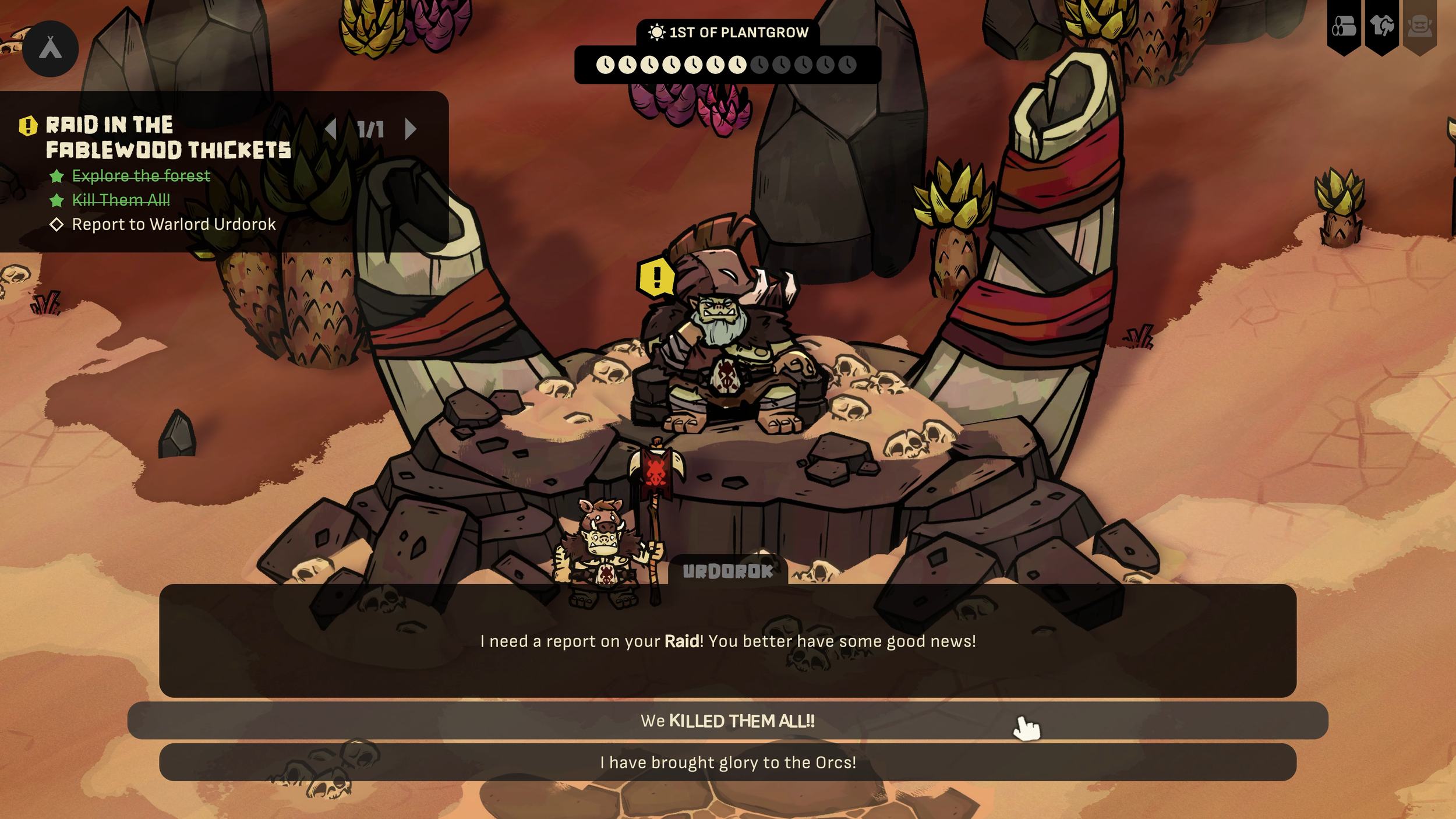
Image: Don’t Kill Them All! - Orc Leader
Whereas, building, crafting, and the combat system, evolve throughout the demo, and if the steady evolution continues in the full game, it'll become a very fun strategy game, that funnily enough feels quite relaxing for a game about controlling your anger.
After a few hours with the demo, I took my orcs on higher difficulty raids where I needed to craft and equip high powered stone weapons and better armour to improve their attack and defensive stats, to be able to dispatch enemies with higher health and stronger attacks. It's where the combat truly flows and you feel like you're solving a puzzle. You learn to balance the risks of doing multiple attacks, as subsequent attacks beyond the first adds rage. If you use your spear, the first stab is free, but then, the second adds a block of rage, and the third adds two blocks, and so on.
The same goes for secondary abilities like pushing loot out of the way of enemy attacks and much more. Every encounter becomes a strategic battle to avoid becoming enraged, or damaging your loot, whilst working on defeating the enemy, or sparing them. You receive an item for letting enemies go that can be redeemed at mud baths during raids, to reduce your party's rage, allowing you to continue further into the biome.
Alternatively, you can use a net to capture enemies to hold them captive in your prison. It's these extra features that keep adding little nuances to the gameplay loop. As even with the simple loop of raiding, using loot to craft weapons and upgrade your orcs, and rinse and repeat, it's already a fun gameplay experience. But if it keeps adding extra features, it could become a great game.
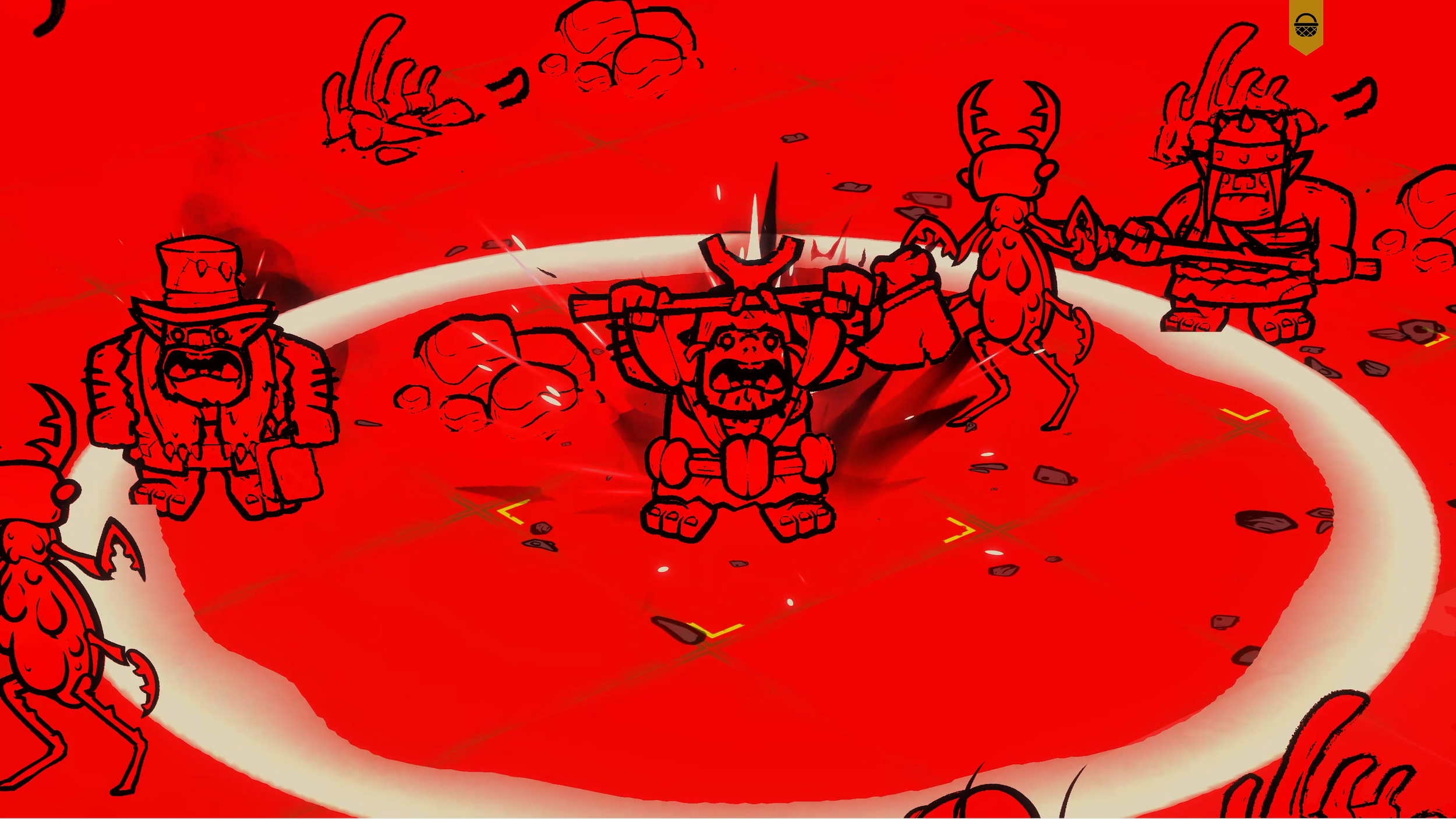
Image: Don’t Kill Them All! - Beserker
However, the game would fail without strong combat mechanics. But thankfully, I found the risk reward of each scenario carried the game. As sometimes you'll venture out on a raid for a specific resource to be able to build a certain building and complete a quest, so you'll instantly make a gut decision to protect your resource by sacrifice another one when you launch a spear attack at an enemy that hits everything in a long line. Luckily, it's also a coin flip whether you even destroy loot, as it always has a chance to shield against attacks.
The moment to moment gameplay feels just the right level of strategic as it develops into a combat system where risks and choices become second nature as you battle waves of enemies. And when healing objects like herbal teas are introduced, you can risk continuing to battle more enemies to get more loot. If the game continues to build on its systems, it'll be a fun gameplay loop for fans of base builders and strategy games.
However, I did experience a few bugs during the demo. A visual glitch when I ordered my orcs to relax in the mud bath and only one orc entered whilst the others bashed into the side of it. I also got stuck loading into a raid a few times. And I believe the game would benefit from explaining its status symbols a little better. But I expect these little issues to be tweaked and fixed by release.
But it must be said that Fika Productions have used a lovely hand drawn art style that adds to the humourous dialogue choices and gives a lot of personality to the world and orcs. The expressiveness and animations help to give combat a little more punch. Partner this with a pleasant score and intuitive mouse controls, and Don't Kill Them All! is a game I look forward to seeing how it progresses whenever it releases.