Taking your first foray into the future world of D-topia, you'd expectantly take one look at the glistening white decor and believe it's a perfect utopia. But like many modern cosy games, there is an undercurrent of dystopian unfairness peaking through the surface - a structured, interdependent society accepted by its citizens.
D-topia is part relaxing puzzle game, part choice driven adventure game. Set in the idyllic D-topia facility; a place controlled by an artificial intelligence that decides who is worthy enough to call the place home. It's a zen and pristine place where everything functions around strict routines and the pursuit of human happiness and productivity.
Children go to school and adults complete shifts at their assigned workplace. Then spend the rest of their day however they want to. Whether spending their earned U-points on food, furnishings, or activities. But only if they meet the required rank to access certain luxuries like the salon. Everything is locked behind a classist blockade.
You play as eighteen year old Shiro who's been deemed to possess the ideal disposition to become D-topia's Facilitator: a fixer that repairs mechanical issues beyond the AI's droids capabilities, and solves the local community's personal and emotional quandaries - a surprisingly layered premise.
Over the seven in-game days D-topia takes place, Shiro's schedule maintains a familiar cadence. D-topia is a surprisingly relaxing experience, but also filled with serious moralistic and philosophical questions that subverts the gentle anime tone.
Now D-topia's Facilitator, Shiro is assigned identification number 46 and an empty apartment. You find your new home bland apart from a small succulent Shiro has brought with him, and a freshly washed Facilitator outfit. You arrive late and go to sleep, and wake up groggy for an uncomfortably early start.
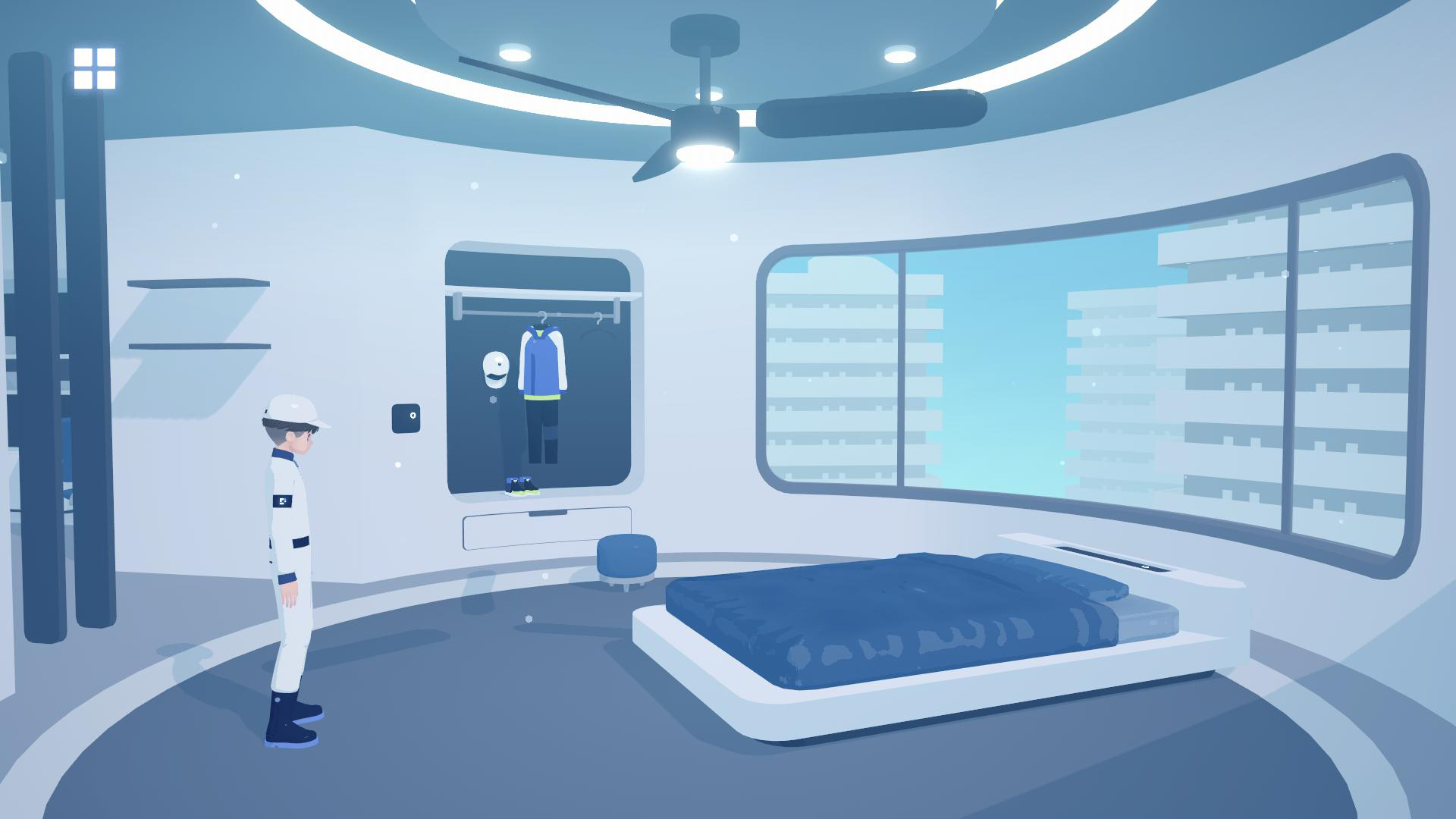
Image: D-topia - Bedroom
It's here that your neighbour 47 sends a message to your device and introduces you to importance of dialogue choices. Each decision has the potential to raise the affinity with new friends in the community. A very similar relationship system to the Persona series.
Shiro's apartment acts as a safe space away from his responsibilities, mollycoddling his every whim. The AI instructed droids called Troids prepare his meals to satiate his hunger. He can sit down and watch television, water and care for his plant, and wash the grogginess away in the early morning. You can also decorate the apartment from furnishings bought at D-topia's shop.
After watering Shiro's succulent, eating his breakfast and washing, he is stopped from leaving his apartment until he completes a wellness check to test his vitals. This is the first experience with one of a handful of simple puzzle types. You simply guide a line along a route to symbols that teleport you to another symbol until you reach the centre point.
Once the AI has given you the all clear, Shiro can walk the corridors of D-topia. The whole game uses fixed camera angles which effectively show glimpses of the gargantuan size of the idyllic, multilayered facility. At first sight, hallways and social areas look pristine until you begin to notice semi-transparent glitches where a fire extinguisher should be, or where misplaced rubbish has been left on the floor. But if you miss these glitches, citizens will make sure to tell you about them. As Shiro can stop and talk to the majority of the citizens in the world. Although, it is Shiro's job to fix minor inconveniences, as well as mending bigger mechanical breakdowns.
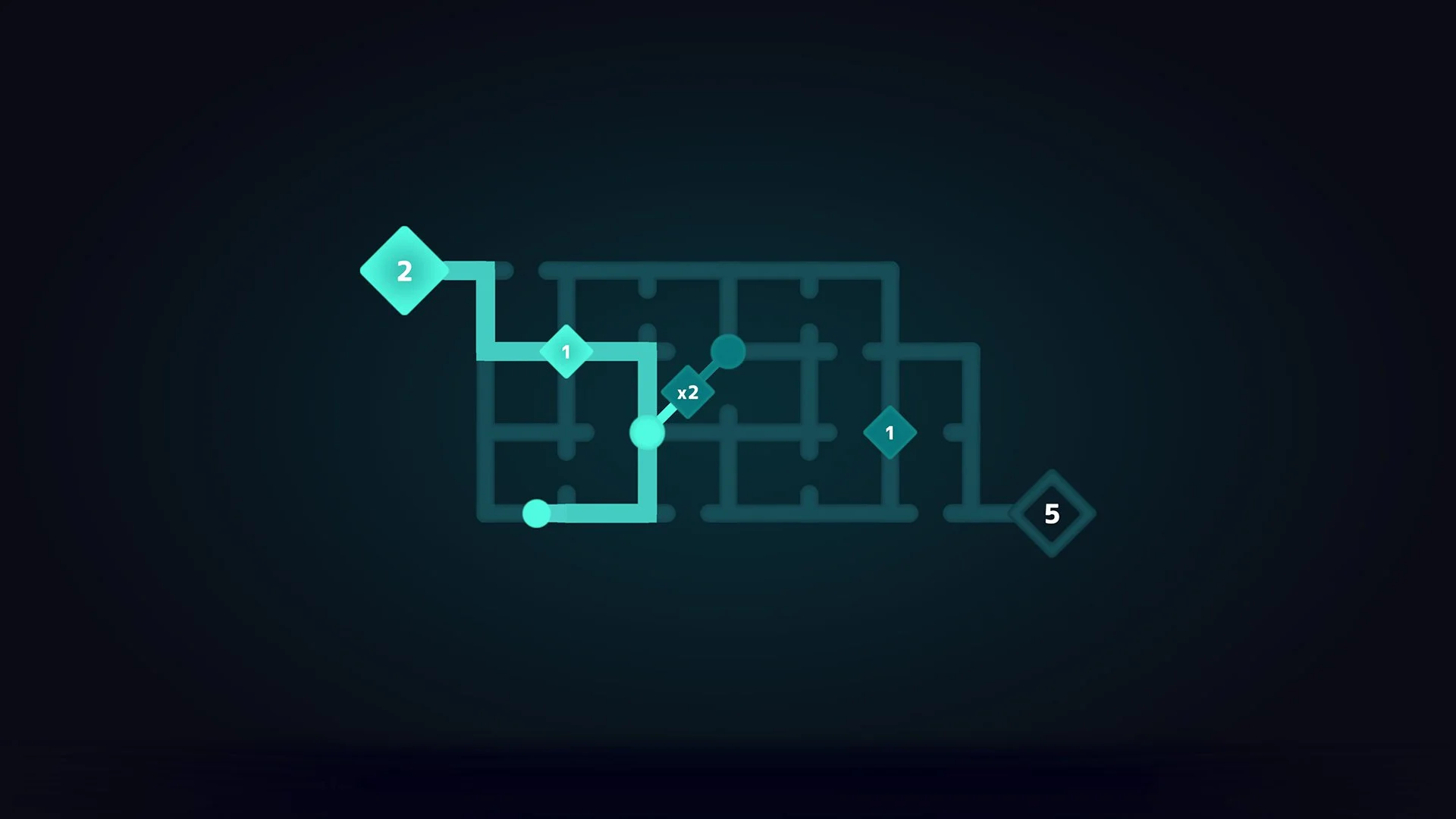
Image: D-topia - Line Puzzle
But first, Shiro must attend a morning shift working at D-topia's factory. Morning shifts are represented by a variety of puzzles that steadily increase in complexity and difficulty. You're graded on how well you perform, and if you complete a flawless shift without skipping a puzzle, you can even do overtime in the form of extra puzzles.
Created by ex-Professor Layton developers, it's unsurprising to find simple but well-made puzzles that incrementally get harder as you progress through the game. But in keeping with D-topia's mostly relaxing atmosphere, these puzzles never stray into becoming too difficult. A mixture of simple block moving puzzles: some where you must place blocks to add up to a total number by selecting a block to increase, another where the block increases its numerical value each time it moves on the grid, one where you have a set amount of blocks to place around numbered blocks, and another where your movement is mirrored. But if you find any of the mainline puzzles challenging, you can skip them to continue the story.
But when your shift ends, whether you choose to do overtime or not, you spend the rest of your day solving the personal and emotional problems within D-topia's community. Over the time span of the game, you continue to meet and befriend new community members, and each day you get to decide how you want to solve their issues. This generally involves bending the rules of the AI in charge, at the risk of your own safety. So, you must decide if the risk is worth someone else's happiness.
D-topia is jam-packed with moral, societal, and philosophical quandaries. It's much darker in tone than the happy anime aesthetic would lead you to believe, as you contend with the nature of free will, and what makes a person happy or content. In your free time, you return to each new friend and make dialogue choices that can grow your bond whilst solving their issues. You can even invite your close friends over to your apartment to share tea in a simulator.
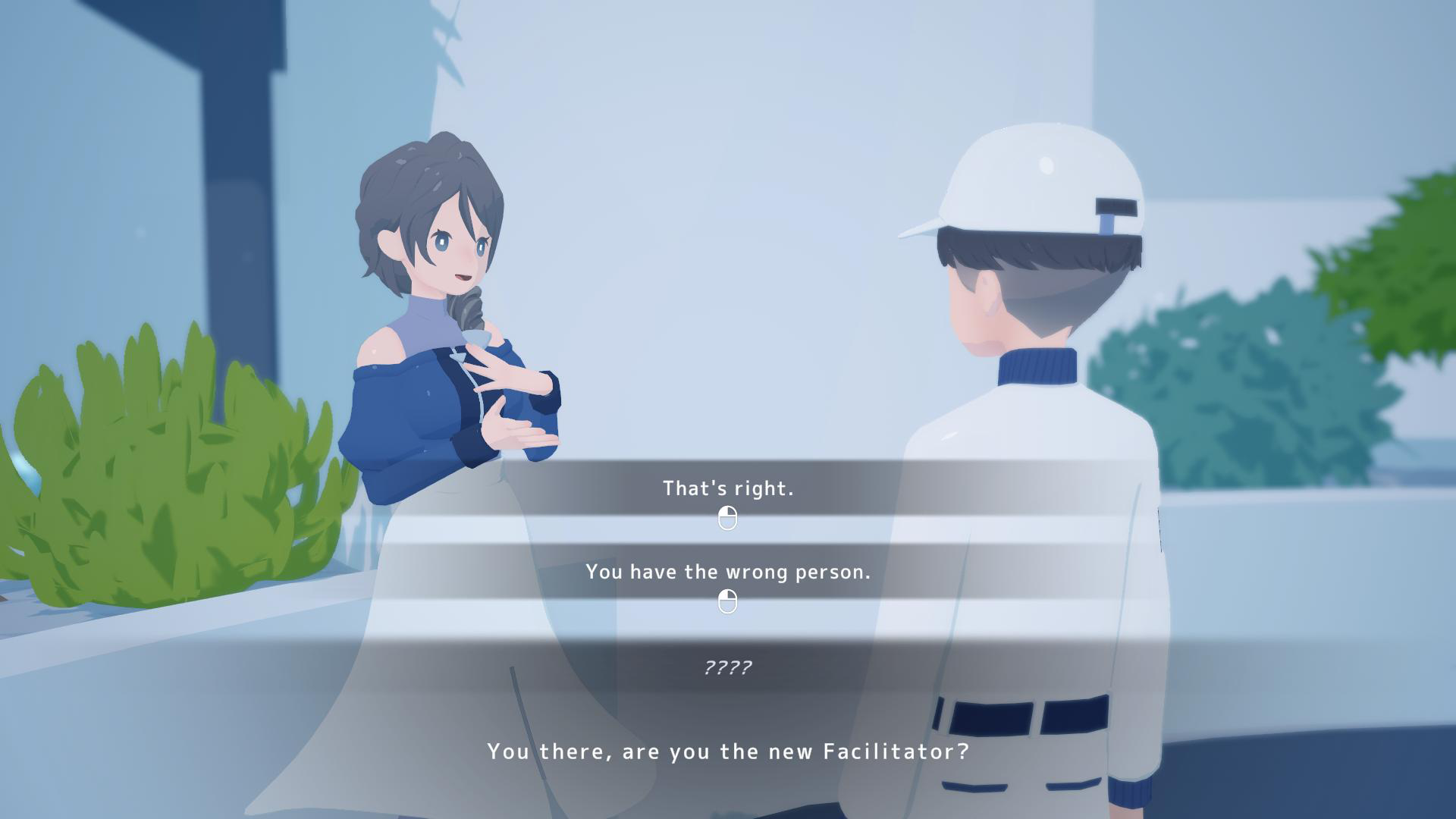
Image: D-topia - Companion
But these visual novel, Persona-esque companions are what kept me engrossed from beginning to end. After earning their trust, each person has a serious, deeply personal conversation with you. One character is struggling with his emotional relationship with food. Another wants you to break the law to hack the AI's software to install their mod. I won't spoil my favourite one, but there is another where a shy girl opens up to you about the potential that she will get deported. As like everything in D-topia, the AI links to everyone's Optimiser which shows you an ideal visualiser of the world. So, it chooses when the sun shines, when it rains, and if you see or hear the metallic hum of the facility you really live in. But this isn't a secret; people openly choose to accept that the fake simulation is better option than reality.
But when it comes to the shy girl, her generic makeup makes it difficult to withstand the sensory elements of the Optimiser. Typically, on the day that she is being tested to see if she's worthy enough to stay in the Utopia Project's best sector, the AI makes it rain which makes her nauseous. This is where Shiro comes in. With all of the details about a situation absorbed, he enters a Brain Meeting, a yes and no choice system that runs through all the information you've collected so you can choose what Shiro will do and why. Due to the unfairness of the girl's living situation and sensory disability, I chose to help her by breaking the rules. But another person could choose a very different outcome.
You'll find many moments throughout D-topia where your choices matter, and it feels like your own cosy but oddly serious puzzle adventure. But in order to help via hacks or to assist non-friendship characters in the environment, you'll sometimes need to enter the Block Side. As a Facilitator, Shiro can use certain terminals to remove his Optimiser and see the dark, robotic real world - a place alive with the acoustic hum of machinery.
No one can see you in the Block Side, and it offers you the chance to see faults in machinery, Troids, and things like faulty fire extinguishers and lay-away trash present as glitches in the utopian version of D-topia. You complete puzzles to fix and hack machinery, and enter a grabbing mini game to clear up rubbish and drag a fire extinguisher back into its receptacle. You also begin to talk to a community of intelligent mice, who've made the Block Side of D-topia their home.
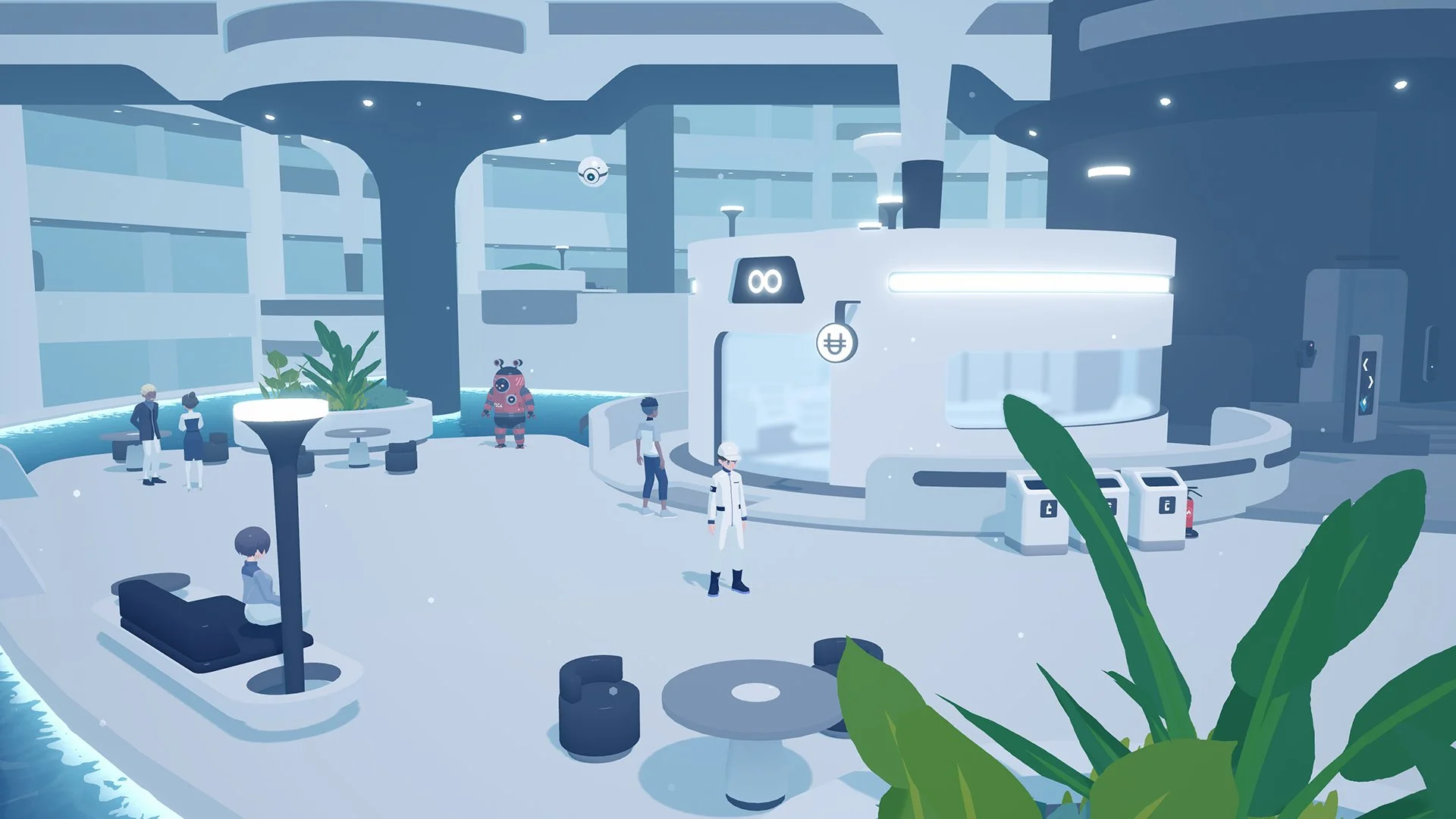
Image: D-topia - Shop
All of this is hungry work, and after one shift, Shiro's stomach is rumbling. You either need to go back home for a meal prepared by the Troids, or spend your hard-earned U-Points at the stalls or main shop. But as well as being able to buy things like video games consoles to decorate your apartment, you can buy key items to resolve side quests that improve your affinity with specific characters.
Then, after a long day, you return home to shower, eat and get ready for bed. But more often than not, you’ll receive another message from your neighbour or a new friend to discuss the day’s events. This relaxing pace combined with intense problems to solve, continues over the whole game. Thankfully, there's also a main story running around all of these elements, which further impacts your decisions.
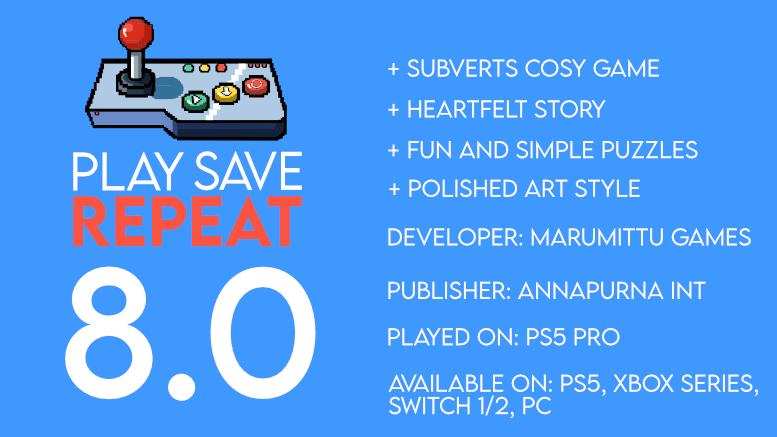
Even if it was just a cosy job puzzle game with a wonderfully pristine anime art style, D-topia would be a good time for cosy game fans. But with the inclusion of serious, thought provoking topics that mostly land, it turns D-topia into something more.
But D-topia isn't without its flaws. For a game about diverse characters, some with disabilities, it has very few accessibility options. The translation of the dialogue also feels a little off at times, and I would've preferred if the dialogue was voiced. It would've helped add emotional weight to some heavier handed moments, and given some heft to the predictable overall plot.
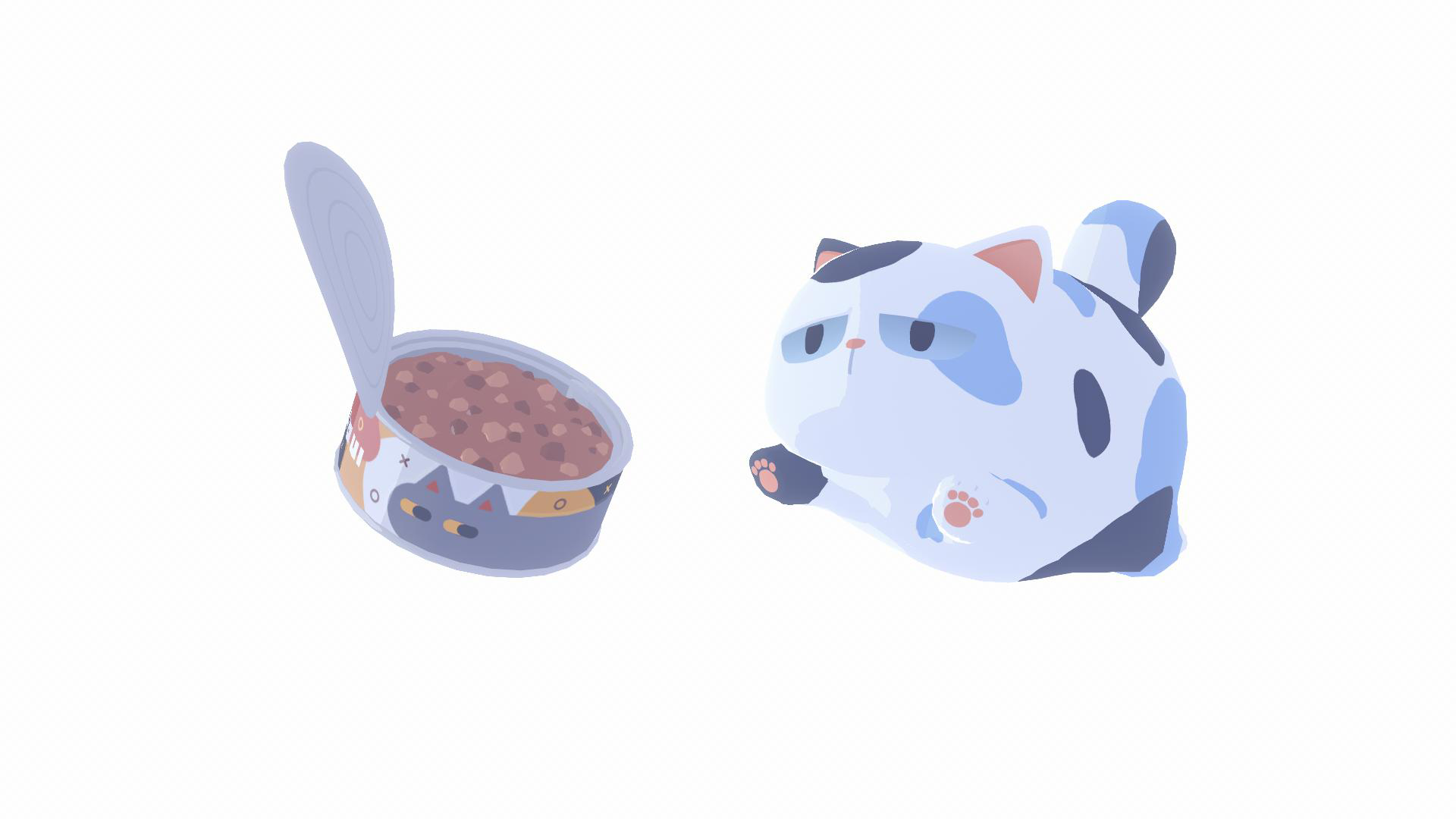
Image: D-topia - Cat
But I understand some projects have certain constraints, and outside of the absent voices, the audio and visual presentation all coalesces to deliver what the developers are going for. Despite this, the varied character stories and personalities still shine and make D-topia's narrative impactful.
D-topia maintains what makes a good puzzle game, as well as subverting a perfect society by asking difficult questions, and asking the player to give personal answers to form your own story. It lets you decide if faux contentment is real, or if you can always do better by people. It's a unique game with memorable characters that I'll be thinking about for a while.
*Review Code Provided By Publisher