

Deer & Boy Review - A Poignant Journey
Deer & Boy is a narrative focused 2.5D puzzle platformer and the debut game from small indie studio Lifeline Games. You play as a young boy who runs away from home and stumbles across a small, defenceless fawn - in a story that's often a poetic and emotional rumination on loss, grief, the unexpected bonds, shared experiences, and the manifestations of emotions that bind us.
The human-animal bond is a timeless trope in all media, but it's been successfully done in two modern games: Planet of Lana 2 and Neva. Both telling a similarly evocative tale about grief and environmentalism. However, Deer and Boy presents itself as a tale for a wider age bracket. It's unconventional, zero dialogue approach and show don't tell story beats is an intentional narrative choice to appeal to all ages. Bolstered by strong sound effects and a subtle score that uses piano and guitar at just the right moments to give emotional scenes an added poignancy. Further driven home by an evocative musical interlude that cements the human-animal bond.
While Deer & Boy's narrative shifts from touching to moments of despair and terror, similarly to Studio Ghibli, the developers don't sugarcoat real life themes of loss and balance tension so the game doesn't ever become overwhelming to most younger players. It combines serious topics with endearing character designs, cinematic cutscenes, and expressive animations. All with the intention of respecting a child's emotional intelligence and willingness to learn, whilst still being a solid story for adults to enjoy.
Thankfully, Deer & Boy has solid gameplay that develops from beginning to end. It isn't a perfect game by any means, but the puzzles, whilst never hard are involved enough to make you feel like you have agency in the linear story. As the game is an incredibly bespoke experience, which offers little option for exploration. For a purposeful indie title, this is a good choice, as it helps streamline Deer & Boy into an entertaining and thoughtful video game that can be finished in one or two sessions.
Although without competent and varied gameplay, any game in the 2.5D puzzle platformer genre would suffer. Luckily, Lifeline Games have created a highly responsive traversal system. The boy can walk, run, jump, interact with objects, direct the deer to complete tasks and more. The game is essentially split into three core pillars: standard exploration and platforming, methodical stealth sections, and team-based puzzle solving.
From the moment the boy runs away from his house, the developers use cinematic camera work that alters angles based on the direction of the boy's path. At times the game controls how fast the boy can walk to initiate a cinematic, emotional moment, like the boy approaching a vigil to someone that sees his offering of a candle be extinguished by a sudden downpour. This allows the player to share in the boy's momentary anguish; just one example of how story and gameplay intersect throughout the game.
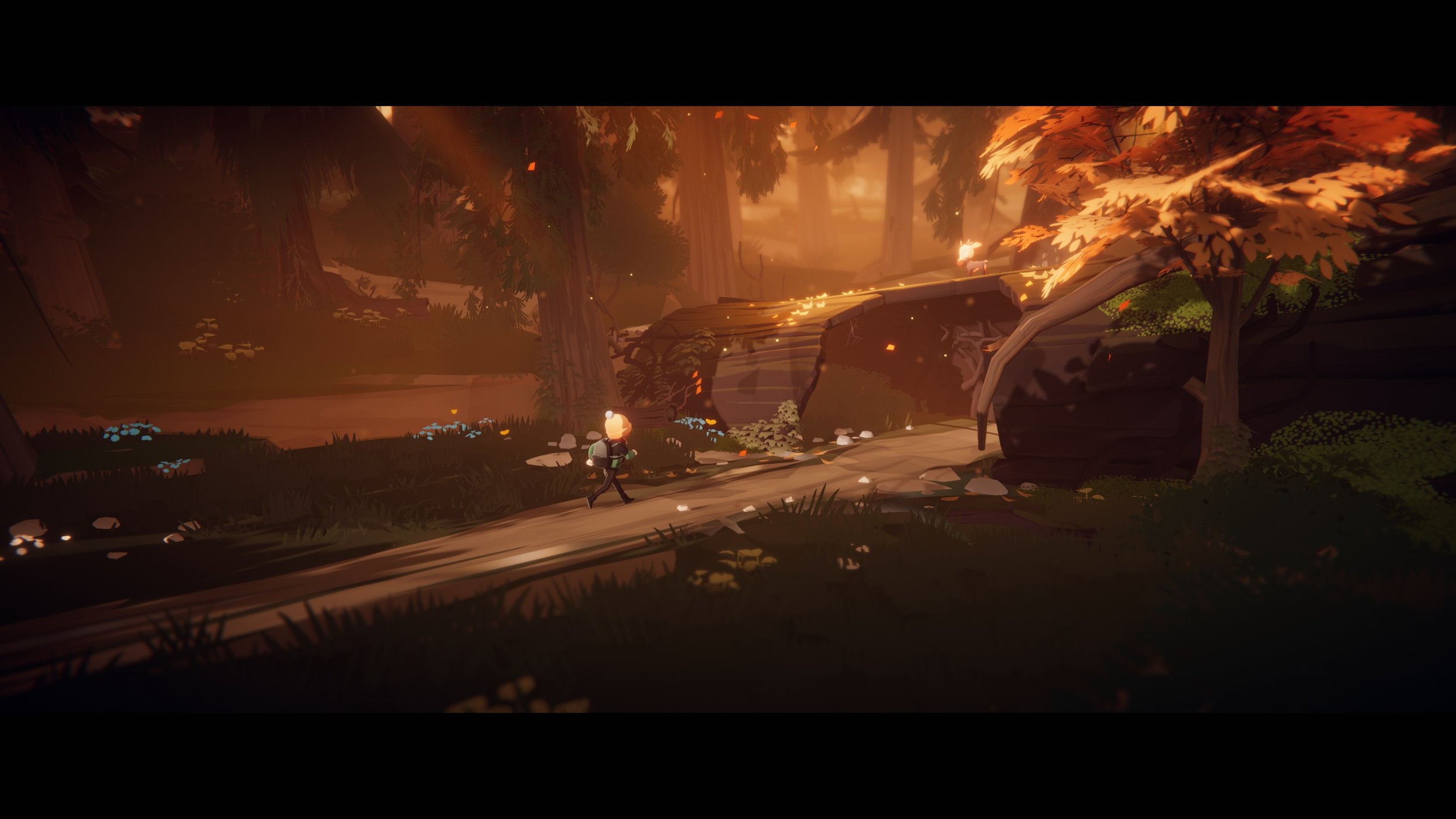
Image: Deer & Boy - Woods
However, platforming is similar to other titles in the genre, like Limbo and Inside. Yet, the developers differentiate Deer & Boy by breaking away from the 2.5D perspective during important moments, and by cleverly layering each level with multiple planes that include climbable ledges, ladders, vines, and precipices to shimmy along. Whilst still in the same view, layering platforming like this helps to create a sense of adventure and adds variety to the linearity of the game. But the platforming truly comes into its own during chase sequences - rapid life or death moments where the boy and deer are being pursued by wolves, or infected animals.
Early on, these animals infected by dark matter begin to intensity each of the game's core gameplay mechanics. As to begin with, the boy carefully sneaks through a construction site, avoiding the staff's patrols and routines, such as waiting for a builder to use a pneumatic drill before pulling away a wooden plank. These methodical stealth sections require patience and timing to complete. Although, in a few scenes, infected animals use their glowing security light-like eyes to scan the environment for the boy, and you must wait for them to look away before making your move to safety. Unfortunately, the timing is a tad too strict. Even though I completed it on my second try, I could imagine a younger player growing frustrated. But a solid checkpoint system stopped me from ever feeling hard done by.
Like every gameplay mechanic, stealth evolves as the boy grows closer to the deer. You eventually gain the ability to direct the deer to interactable switches, which are used to access new locations to continue moving forward, or to help the deer escape whilst you backtrack to avoid an overzealous security guard.
While puzzles don't ever grow into true brainteasers, they do keep adding new elements to keep things fresh. They begin with the classic pushing and pulling of crates to access higher walls, or to help the deer move forwards at different stages of the game. As early on, the deer needs the boy to care of it, keeping it safely in his backpack. This prevents you from jumping, so now you must solve rudimentary puzzles by dropping your backpack and finding a way forward before returning to collect the deer, or having to coax him across a small river.
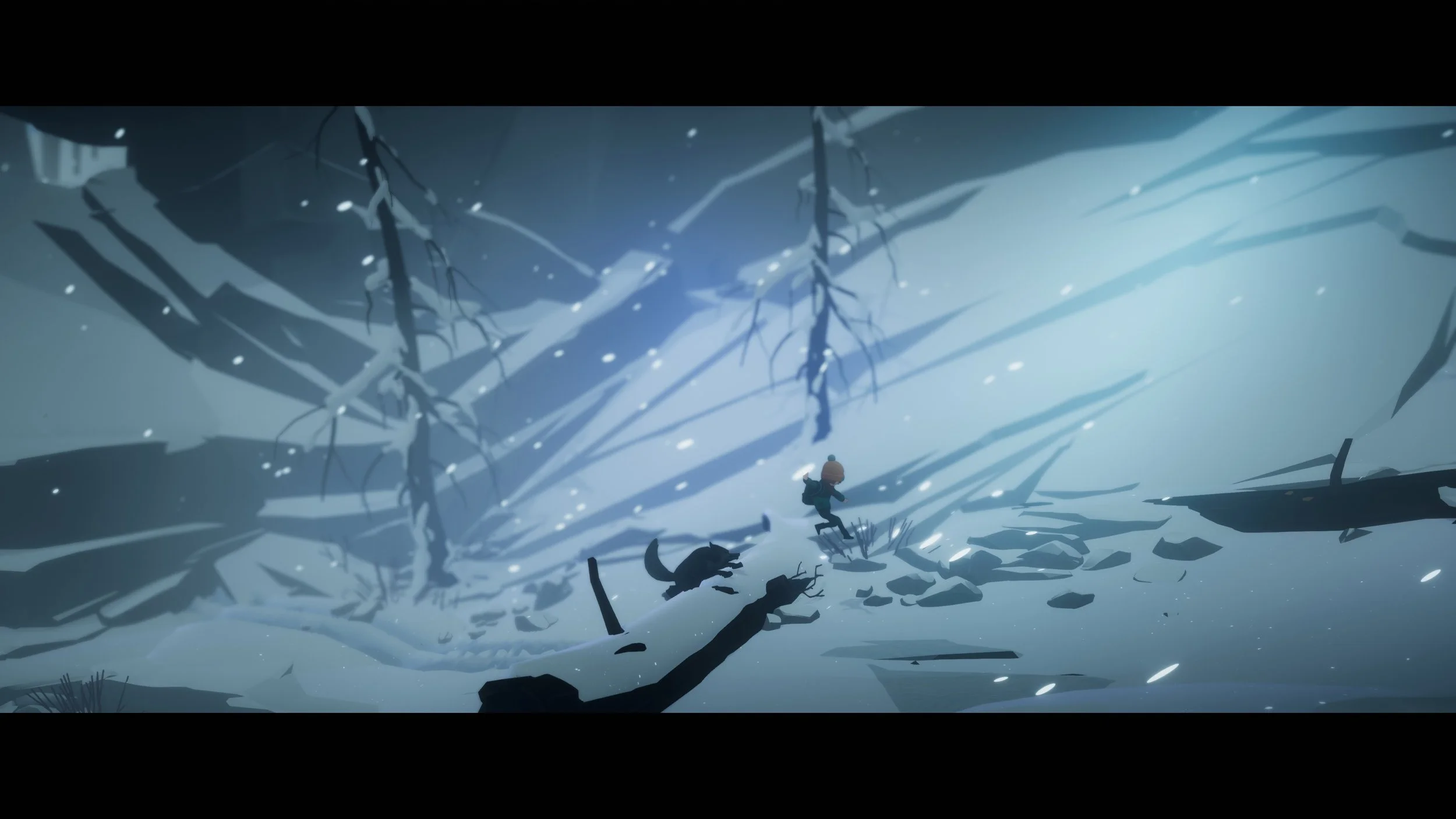
Image: Deer & Boy - Snow
Then, the deer grows in confidence and size alongside the boy's emotional development. Assisting you by gaining the ability to zap away pools of dark matter, turning on switches, and later on, helping the boy climb higher platforms and survive what would be deadly falls - a role reversal from carer to dependent.
But again, these new abilities also benefit the puzzles. Eventually you use the deer to ride an elevator to find a way forward, get him to kick snow down from a tree, and so much more. But without spoiling the game, there are further gameplay elements that combine on top of the boy and deer's gameplay mechanics to create a strong finish to the puzzle design in the late game areas. While none are ever difficult, they all keep the game flowing forward alongside the enjoyable story. Much like the game as a whole, Deer & Boy is a purposely accessible game for a wide age range, and isn't weaker for it.
But when it comes to the visual presentation and technical performance, Deer & Boy isn't without its faults. While it strikes an effortless cinematic feel through good use of lighting and shadows, there is a heavy amount of light and shadow flickering, some frame rate dips, and aliasing issues on Playstation 5 Pro. These don't distract from the overall experience, but I didn't expect them with such a stylised art style.
The only other issues were when new mechanics weren't tutorialised or clearly explained, and a repeat of a gripe shared by many 2.5D cinematic platformers: an overindulgence in long stretches of walking forward. While Deer & Boy isn't as big a culprit as Replaced from earlier in the year, I found a few sections felt like narrative padding rather than moments of emotional resonance. Although, sometimes, they do work to set the intended pace. It's a difficult one, as different things work for different people. But thankfully, the gameplay elements progress alongside the story at a good rate, which made Deer & Boy feel like one of the better paced games in the genre.
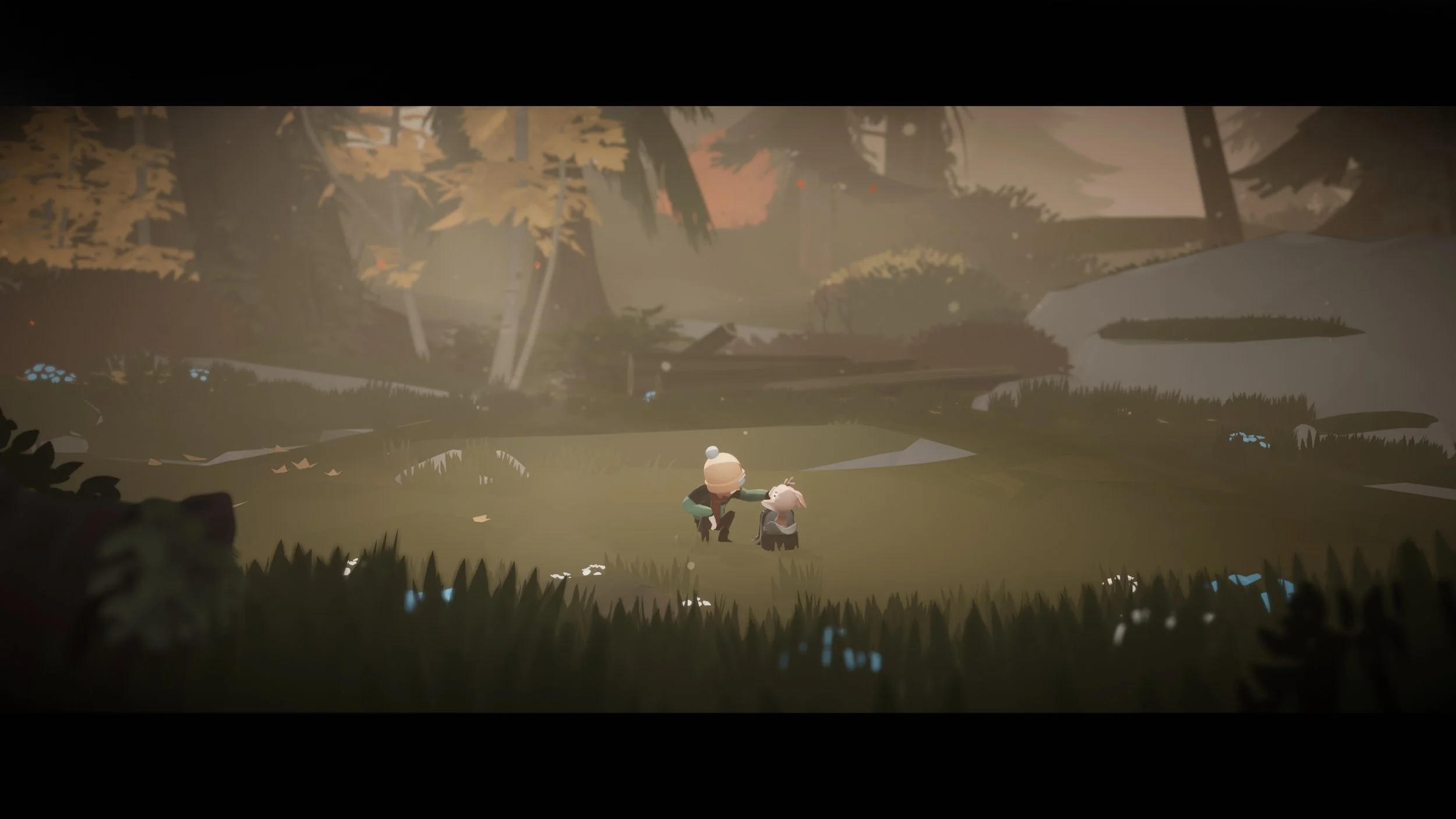
Image: Deer & Boy - Fawn
Deer & Boy is a wonderful exploration of grief and loss, and the consequences of unacknowledged trauma. As a first game, Lifeline Games have produced a poignant tale through the strength of bonds and the journey of rediscovering yourself. It's an approachable game for young and older players; the perfect entry into the genre. Deer & Boy shows there is power in silence, but a greater freedom in finding the right words at the right time.
*Review Code Provided By Publisher