

*Apologies for a review in-progess. Poor health prevented me from completing the game in time. Score will be added later.
After only five hours, Desktop Explorer is already one of those rare indie games where I'd hesitate to share many details. As the journey of discovery is a key part of what makes it tick. It's a psychological horror mystery game packed with inventive puzzles. Developed by Recurring Dream, it's an exploration of family and a puzzle game in the guise of a functioning 90s PC.
The setup is simple: after the protagonist inherits an old PC from their uncle, you find multiple accounts but can only login to one. Signed-in, you find a letter asking you to continue investigating a missing person's case that meant something to the protagonist's relative. But alongside their uncle's journal entries, all you find is a mysterious puzzle game called Desktop Explorer, that he says contains the truth. But you soon find out that the uncle wasn't the only user of the PC, and the program within might be the core part of this 90s era mystery.
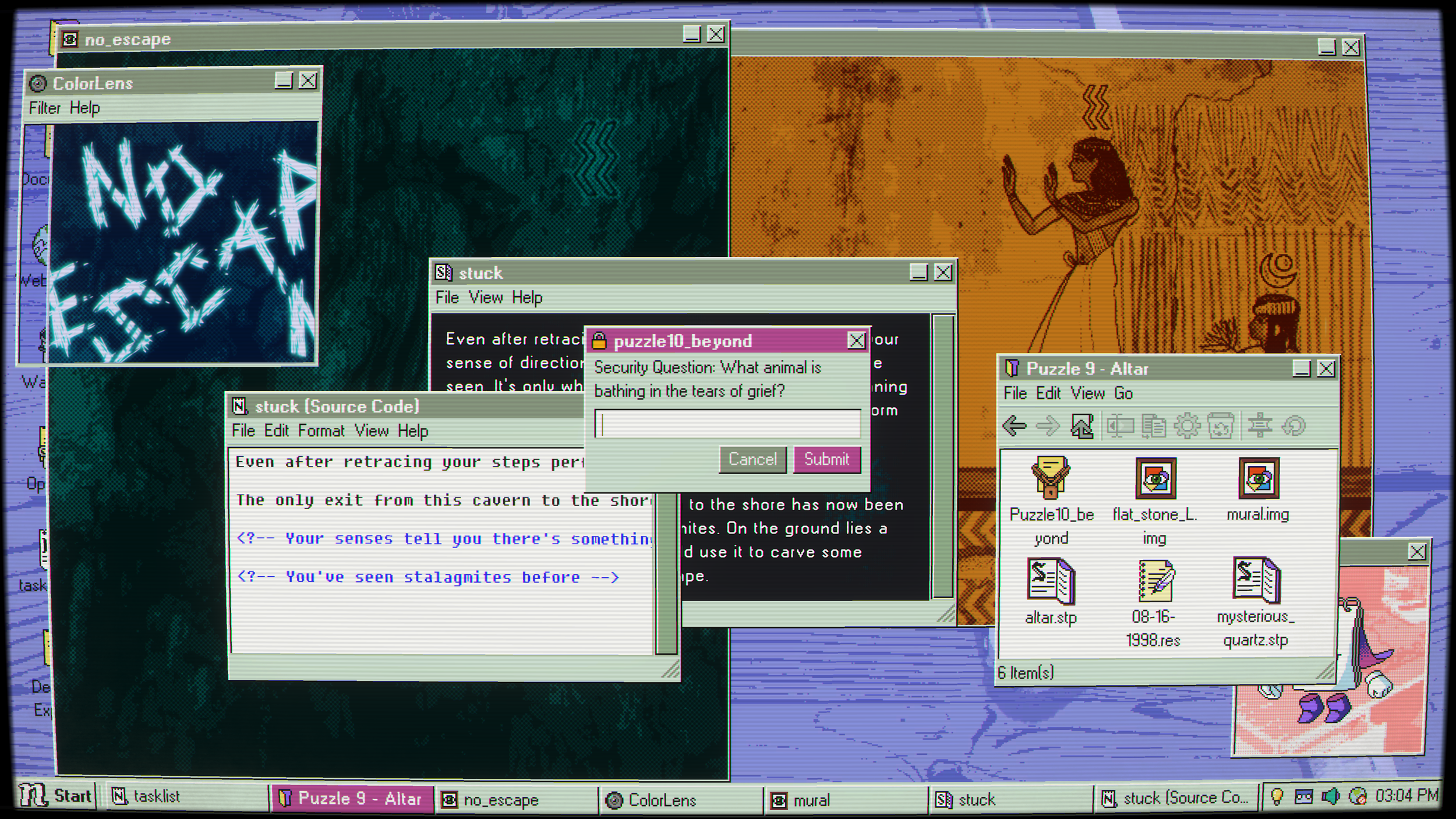
Image: Desktop Explorer - Puzzle 9
In many ways, the 90s era computer functions how you'd expect: you can change the date and time, boot up installed programs, open files and attempt to go on the internet. Once you find the document that prompts your investigation into the missing woman, it leads you to a program named Chronolog. The journal where the uncle stored all of his personal thoughts. But unfortunately, it's missing entries need to be found by doing puzzles. Yet there's a clear emotional thread that's been tightened by illness, which has the potential to raise the narrative into something special.
Afterwards, you're promoted to open a program called Desktop Explorer, which is where the puzzles begin. You open the folder to another set of files and a locked folder that's been password locked. But the PC mascot named Pizzaro appears, which is somewhat similar to Microsoft's Clippy. It's used to dispense information about each puzzle and talk to you. But it's system level hints and reminders don't tell you what to do, they nudge you in the right direction.
The first locked folder asks you to find a password somewhere within your current open folder. It's another video game like The Roottrees are Dead where observation is King. Concentrated reading and an open mind are necessary to pinpoint the correct solution to a problem. While some puzzles are solved by finding bracketed words simply in files, other require computer knowledge to use the system to manipulate files and reveal hidden truths.
One lock asks for the uncle's nickname for the protagonist - a simple and logical conundrum that teaches players to pay attention to the Chronolog entries. But the further you delve into Desktop Explorer, the more it tests you.
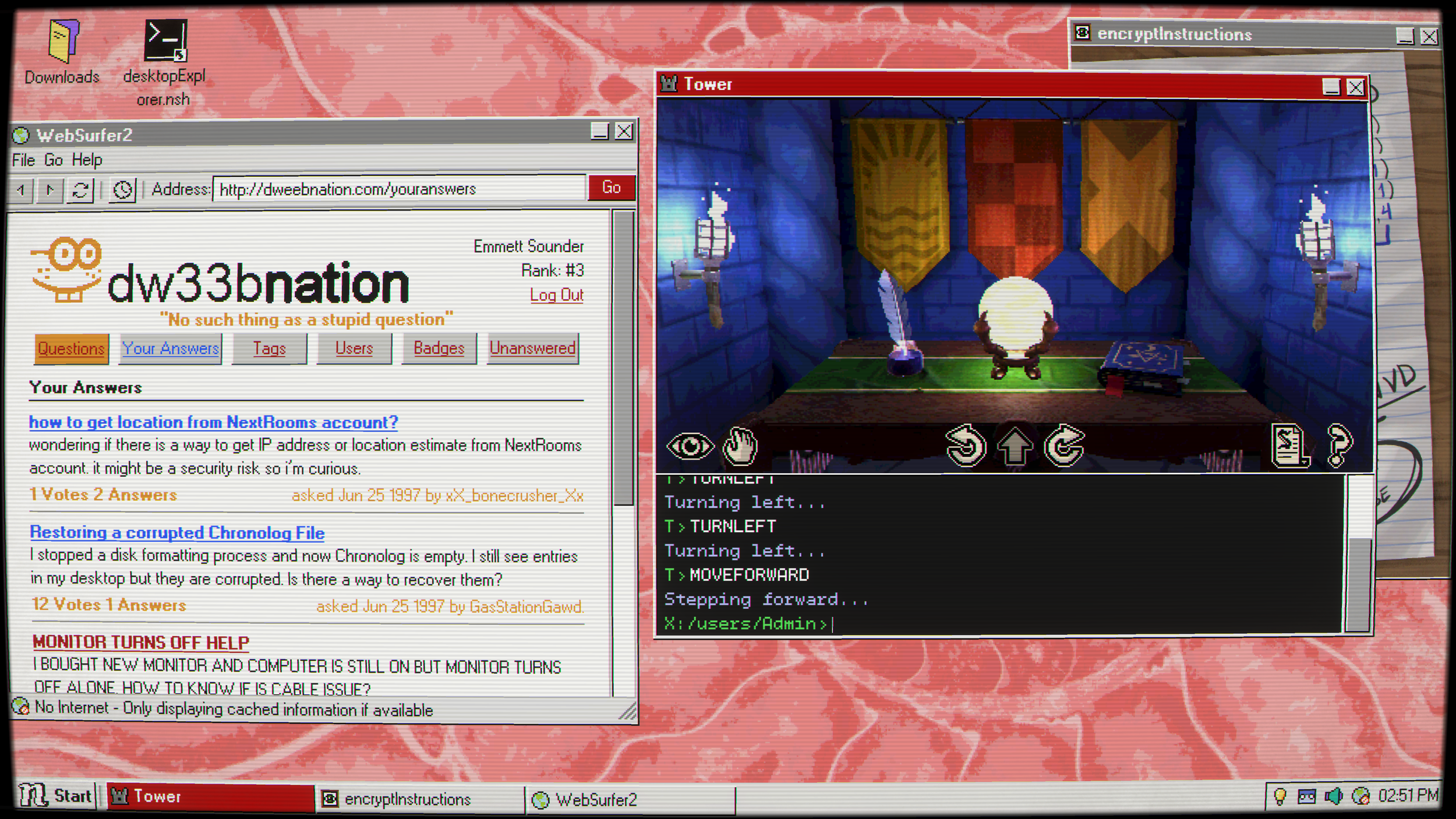
Image: Desktop Explorer - Game
Folders contain a combination of images, text documents, Twine style text applications and others. Puzzles patiently onboard what it expects from you; it creates the correct headspace to solve any puzzle. It teaches you to look for passwords in brackets, and then, if you get stuck, to ask Pizarro for help. One time it reminded me to look beyond the surface of a file and enter the source code, which reveals secrets within the internal code.
Pizarro also teaches you to zoom-in or out, check the properties to see who authored each file, show all hidden files in a folder, warp text in a text document to reveal images, and so much more. These system level techniques become muscle memory, to make sure you don't miss anything. But fortunately, Desktop Explorer doesn't let you get complacent.
The developers introduce other programs that need to be used in conjunction with system knowledge like rewriting file extensions or duplicating images. You can use a program that displays a coloured lens over images with symbols to show hidden messages and numbers. This is used to solve one of the riddles, which makes you feel accomplished. Some puzzles I finished instantly, and others had me stumped for a few minutes due to overthinking their instructions, or trying to solve them in an overcomplicated manner. One had me loading the calculator program and notepad to attempt an equation when the solution was far simpler.
Although it's a sign of strongly designed puzzle game when each person gets stumped on different things. Yet it balances this by hints in the source code of files and Pizzaro's system level recommendations. Yet, I do think a more straight forward multi-layered hint system like something in The Incident At Galley House would make the game more approachable to a wider audience.
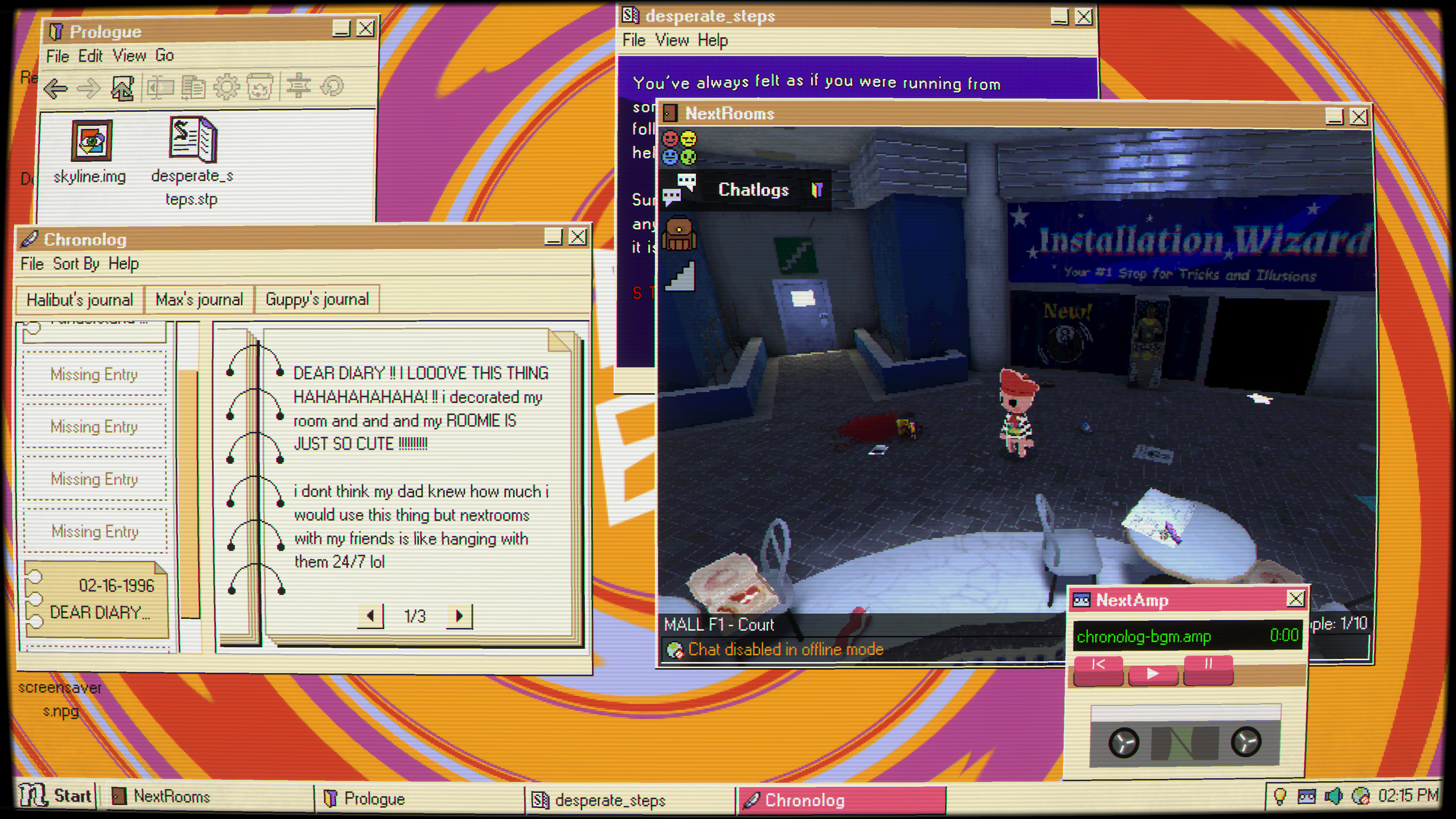
Image: Desktop Explorer - Next Rooms
At times, Desktop Explorer's puzzles feel almost labyrinthian, as sometimes going backwards is the only way forward. With a story partially focused on illness, it often feels like you're trespassing in someone's most intimate memories and thoughts. Like the game itself is messing with your mind.
Important information can even be in seemingly innocuous journal entries, as bolded text hints at information for present or future puzzles. It's an experience where you need to keep your wits about you and take notes on the notebook program or in real life. But there's also a foreboding dread that accompanies the journal entries about illness and lost friends. It's intensified by glitchy glimpses of horrifying faces or menacing text entries. It's a multilayered story where something creeps below the surface, waiting to be discovered.
Beyond the puzzle gameplay, the retro graphics do the heavy lifting in transporting you back in time to an accurate 90s era PC operating system. A lot of the atmospheric lifting is done by an optional CRT filter, retro sound effects, an old boot up menu, and being able to select music tracks from a built-in music player.
So far, all of this coalesces into an enthralling mystery that uses so many interesting gameplay mechanics to truly keep you guessing as to how to solve every puzzle. If the story progresses as I expect it to, and the horror gradually increases, it'll be an easy game to recommend. It's a story and mystery I can't wait to see through to the end.
*Review Code Provided By Publisher