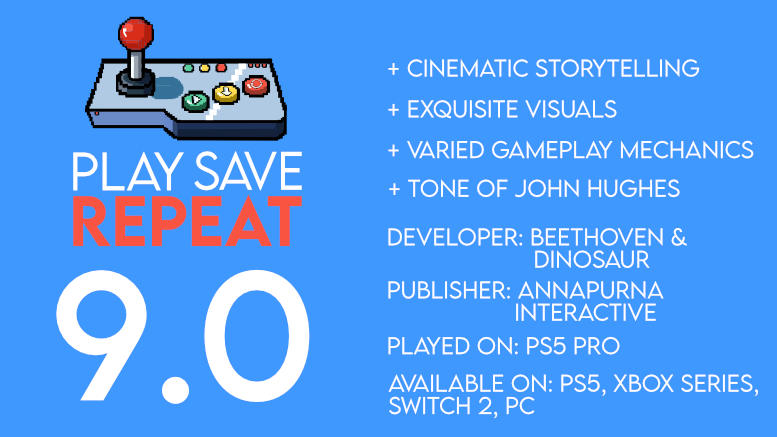
Mixtape Review
Memories are imprints, some you'd rather forget, others that are printed permanently in your mind. I remember certain songs, films, books and video games having a lasting impact on my formative teenage years. Challenging and awkward years where everyone begins to learn who they are, want to be, and what they want to do. Many snapshots in time linked to listening to songs or watching movies - the very concept of Mixtape by developers Beethoven and Dinosaur.
Mixtape is a narrative adventure game that tells the coming of age story of three teenagers in the form of a music playlist - an eclectic mixtape of vignettes that link to memories, often blurry, exaggerated or dreamlike. Set in the 1990s, you play as Stacey Rockford, Van Slater and Cassandra Morino, three teens on the verge of adulthood, on their last night together before everything changes. Whether they admit it, they're anxious and scared that their friendship will change once some of them go to college and Stacey goes to New York to try to become a Music Supervisor - to use her talent to always select the perfect soundtrack to any moment.
For years, the trio have plotted a farewell roadtrip to create lasting memories before they cannot hangout all the time anymore. But Stacey has upended their plans by choosing to pursue her dream job in New York. This friction brews as the friends prepare to attend their last secret party before going their separate ways. The start of an emotional story that touches on changing friendships, the bittersweet feeling of growing up, isolation, creative outlets, bullying, social standings, relationships and so much more. Mixtape is a nuanced and perfectly paced story that slowly unpeels the layers of its core cast and doesn't stop until the credits roll.
After their debut game, The Artful Escape, a psychedelic music platformer, Beethoven and Dinosaur have used all of their experience and significantly raised the bar. One glance at Mixtape and you immediately notice the impeccably designed hand painted art style - highly detailed environments and 3D character models. But it's in motion that Mixtape stands out: a continuation of the modern animation trend seen in the Spider-verse series and K-pop Demon Hunters - a decision to ignore the traditional rules of frame speeds in animation, and instead, use a low frame rate to give all movements a distinct stop motion quality.
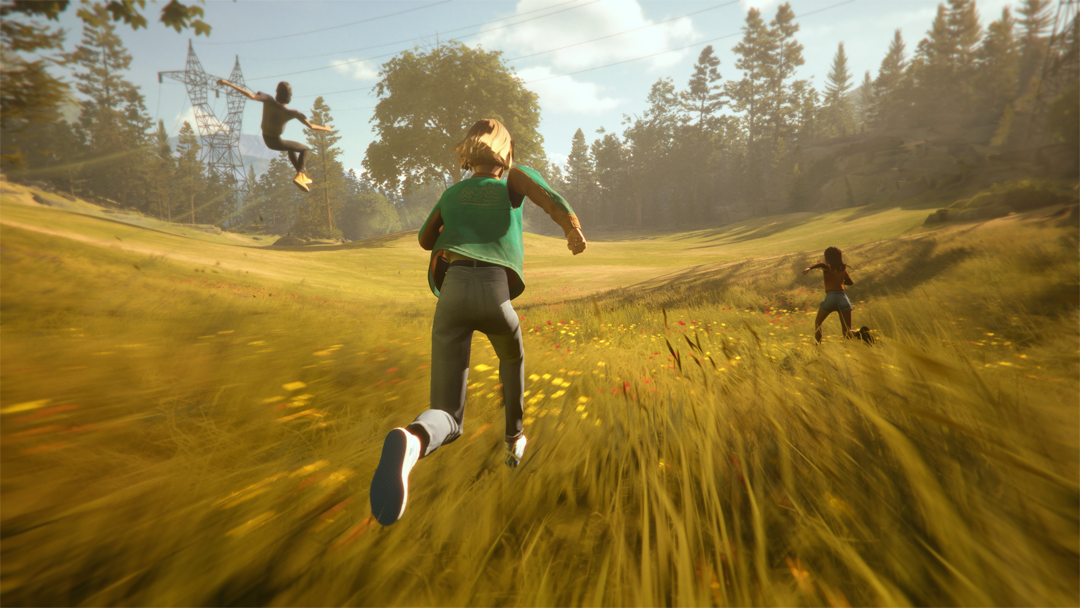
Partnered with Johnny Galvatron's direction and the team's camera work, it's an incredibly stylish and cinematic video game. Mixtape uses many cinematic techniques: flawless transitions from in-game visuals to live action segments, monochrome colour grading combined with a version of Spike Lee's double dolly shot to show emotion, film set backgrounds to create humour and normal backgrounds to focus you on a moment of important exposition, like when Stacey breaks the fourth wall to explain the role of her dream job as a Music Supervisor.
Stacey freely breaks the fourth wall as stylish typography appears on screen, showing the name of the latest song in her mixtape, to initiate the soundtrack to the next narrative piece. She explains the song's musical history, comparing to other artists and why she's chosen the track. It instantly summons thoughts of John Huges' great movie, Ferris Bueller's Day Off mixed with the quirkiness of Wes Anderson's unique style of storytelling.
These instances of narration lead into Mixtape's gameplay sequences. Some progress the story in linear fashion, others take place in short memory vignette's brought on by specific songs. Gameplay varies wildly in each level. Our first taste is skateboarding down a dangerous road to a catchy Devo track as Stacey and her friends clap along to the beat, all while doing ollies and flip tricks as the group banters and shouts out car when there's incoming traffic.
Mixtape does repeat some gameplay element with a few tweaks, like adding explosive finger guns while skateboarding, or spinning around in an unruly shopping trolley as you hurtle down steep streets to avoid being stopped by the police for underage drinking. Each memory further showcasing the strength of the group's bond.
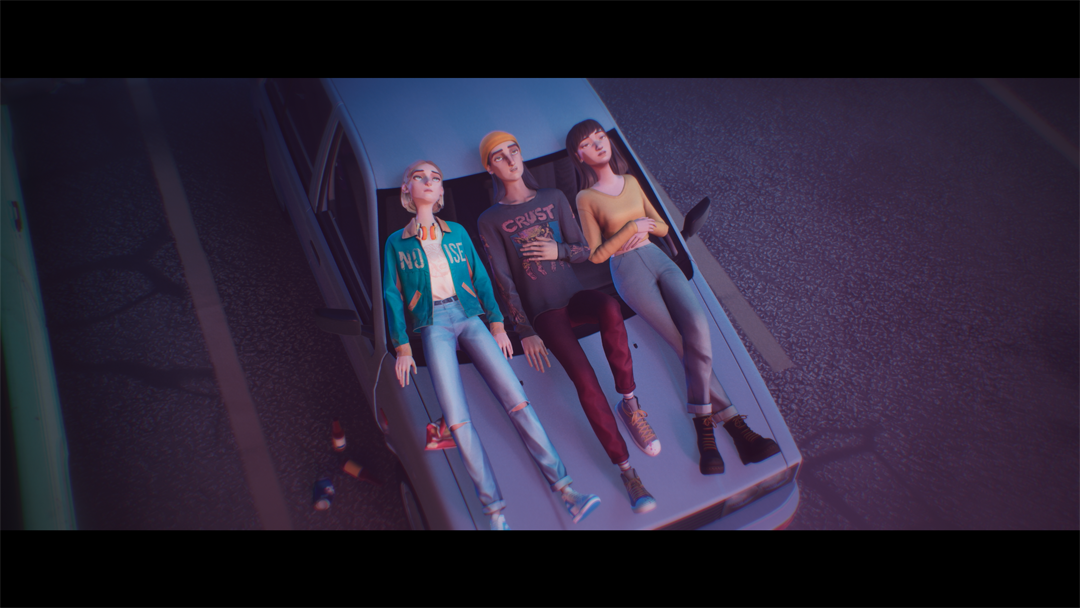
Whereas, other levels see you control Stacey through beautifully lit and richly detailed interiors. You freely explore hallways and bedrooms that feel lived in by their meticulously decorated and interactive spaces. Where Stacey can interact with numerous objects like burnt CDs and VHS tapes. Then, she adds her witty and informative commentary about each item, further building out the lore of the friendship group. These parts are reminiscent of the exploration in the Life is Strange series, but with a different tone in a 90s analogue era.
Quieter moments allow Beethoven and Dinosaur to use personal trinkets as an entryway to Stacey's core memories. Shorter memories with a wide variety of gameplay mechanics, all set to the backdrop of a song. Gameplay mechanics vary from secret handshakes activated via quick time events, rewinding cassette tapes with a pencil and mini games that endear players to the likeable cast. Like when Stacey bonds with Slater over making the best slushie, tapping buttons to headbang to grunge during a humorous car ride, a simple baseball game that acts as an emotional outlet, and the ability to take photographs with a camera.
Everything serves to create a nuanced, comedic and emotional interactive story, where you feel a part of the teenagers key experiences. It's a brisk but entertaining and powerful story, that I will gladly return to in the future, like rewatching a good movie.
But it's the written dialogue that deserves praise. Johnny Galvatron has captured the nuanced emotions of being a teenager, the analogue technology and feel of the 1990s, and created a perfectly paced and emotionally cathartic story that impeccably balances humour with relatable heartfelt moments. To make every interaction between the teens feel natural, Johnny Galvatron has the group frequently slip between nonchalant conversations about dreams and music tastes, and more serious topics. Made more believable by the animation where characters turn their heads to pay attention to whoever is talking. And even when Stacey stops still, she enters natural idle animations, like moving her jacket to check the CD player on her waist that continues to spin.
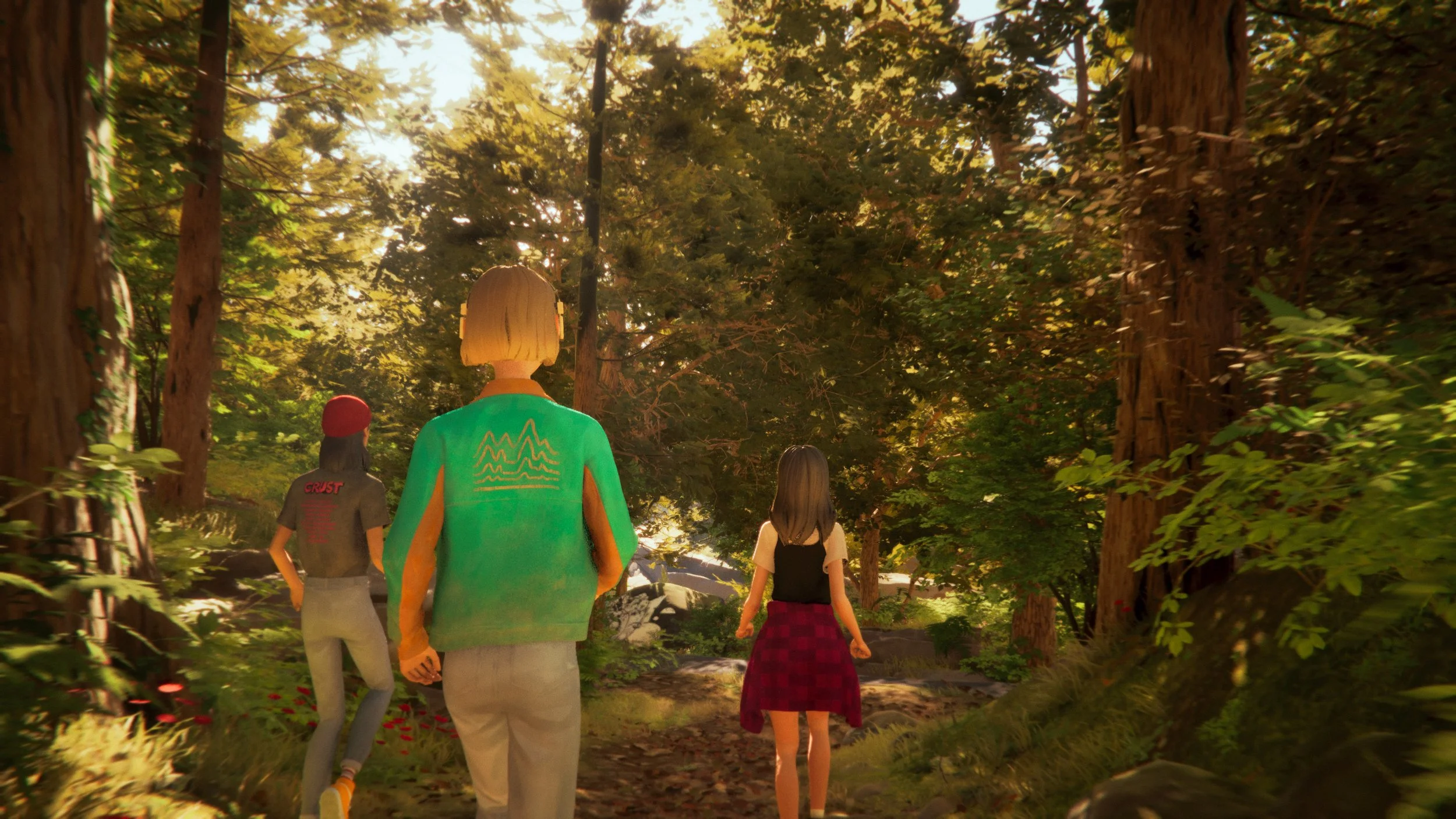
Yet, none of this would work without a tone perfect voice cast. Bella DeLong gives a standout perfomance as Stacey Rockford, somehow able to present a vulnerable confidence outside of her passion and encyclopedic knowledge of music; Max Korman embodies Van Slater, a kind stoner who's compassionate, empathetic and creative; and Jessica Ma as Cassandra Morino, a kind, deeply vulnerable young woman who has always been studious, but wants nothing more than to rebel to live the normal teenage experience. Each actor plays their parts brilliantly, as the vignettes in the past show character development as they begin to trust and share experiences with one another.
But it's the titular mixtape that glues the whole game together. Each new song is perfectly selected to compliment what's happening in a scene. Whether skating and zoning out to an upbeat Devo track, or headbanging to grungy band Silverchair. The playlist isn't just stuck in the 90s, it stretches back decades to highlight a curated list of popular artists from Joy Division, The Smashing Pumpkins, Portishead, Roxy Music and a lot more.
When these parts combine together, Mixtape becomes a highly polished and cinematic video game. Although, the game doesn't include many accessibility options. Fortunately, the gameplay remains simple and approachable throughout. This simplicity in gameplay mechanics is going to determine how much you enjoy the game. The short runtime and minimal gameplay isn't going to suit every player. However, it's the kind of game I really enjoy - a memorable jaunt through an entertaining story that doesn't overstay its welcome. I honestly appreciate something so creative and uniquely a part of the developers' ethos, as a video game can be many different things. That's the great thing about them, there's always something for everyone.
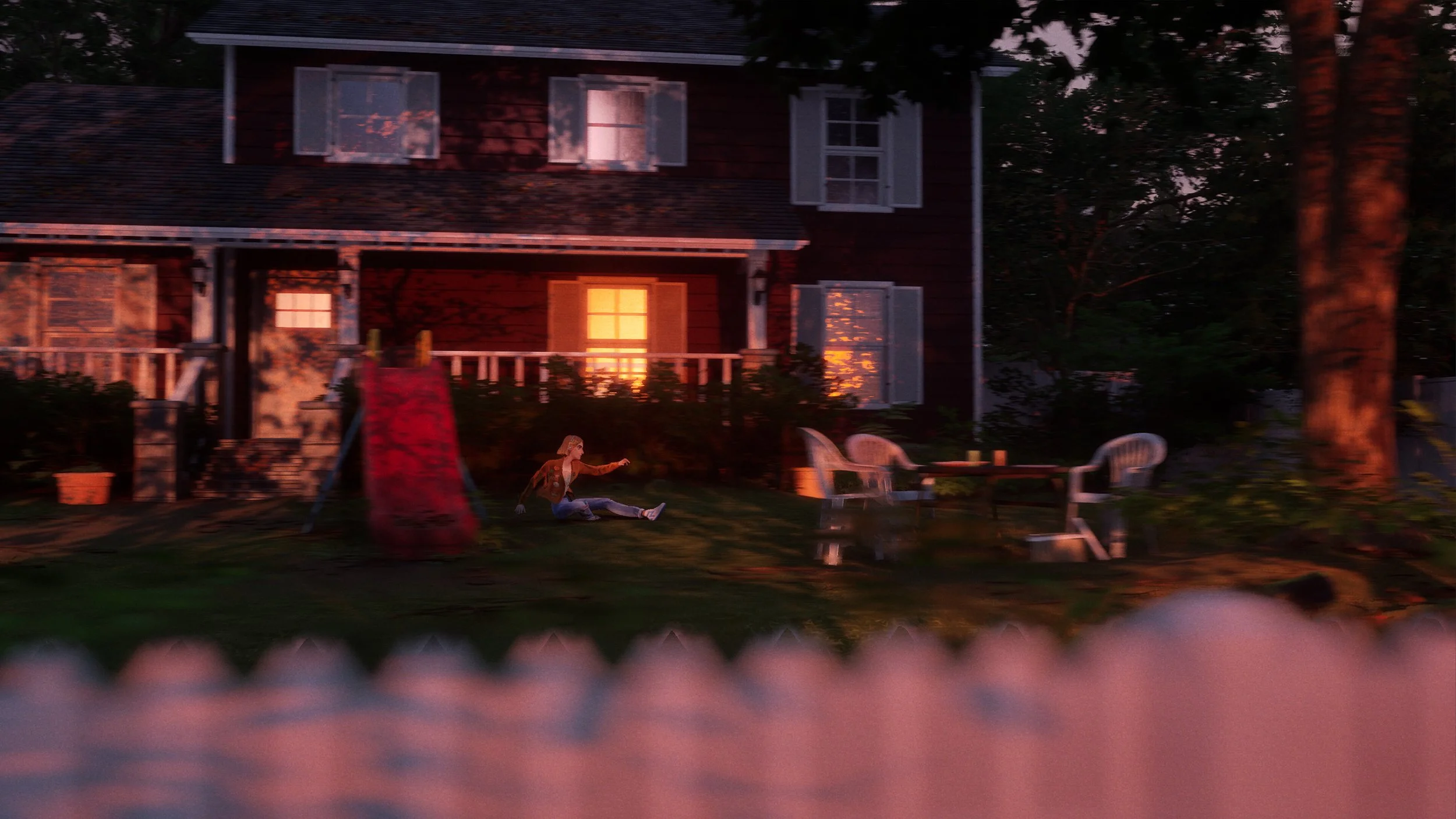
Like The Artful Escape, Mixtape is a celebration of music and what it means to people. At around three hours long, Mixtape plays like an interactive homage to the great teen coming of age films of the 80s and 90s - a unique experience in video game form. While games like the Life is Strange series have made their own solid interpretation of the genre, Mixtape feels like it could sit right alongside the very best.
Although it isn't the most original story, the characters and dialogue combine with polished visuals and a curated soundtrack to create a fantastic piece of art that positions itself at the centre point of cinema, video games and music. The biggest compliment I can give Mixtape is that it feels like a teen coming of age movie from John Hughes in his prime, whilst still being undeniably a creative output from the talented team at Beethoven and Dinosaur. The Artful Escape already put the developers on my radar, but Mixtape elevates their storytelling and style to put them on my list of can't miss developers for whatever comes next. If any of this sounds like something you'd enjoy, I cannot recommend Mixtape enough.
*Review Code Provided By Publisher