Having been raised on a stable diet of JRPGs from the 90s onwards, from Chrono Trigger, the mainline Final Fantasy series, Skies of Arcadia and countless more, I've always appreciated a long-form story where you get to know a cast of characters in an original, imaginative world. But over time, the genre has slowly transitioned to a prominent action or hybrid focus over turn-based combat. Although I've still enjoyed countless action JRPGs like Kingdom Hearts, I still keep an eye out for any new and interesting turn-based games - a genre that saw Clair Obscur Expedition 33 win many people's game of the year award last year.
Instantly, People of Note from independent studio, Iridium Studios, had my attention with its unique hook - a turn-based RPG musical inspired by the JRPG greats from the 90s and early 2000s. But it also aims to distinguish itself with emotionally resonant songs, a deep combat system, and a strong focus on puzzles.
You play as Cadence, a wannabe singer who wants to win the Noteworthy Song Contest, to achieve the stardom she's always dreamed of. But when her own music isn't deemed enough, she decides to travel the world of Note - where every region represents a different genre of music in every aspect of their life - in search of fellow talented musicians to join her band. But whilst recruiting band mates, Cadence discovers that nefarious people plan to risk the future of all music, if she doesn't step up.
Although, at its heart, People of Note is a heartfelt tale of self-discovery - a thematically rich story that touches on countless important subjects like identity, the cost of dreams, what truly makes a friendship, the importance of empathy, how kindness costs nothing but has unlimited value, and so much more.
People of Note harkens back to the familiar structure of old JRPGs I spent weeks with as a child and teen. The kind that used simple text boxes for dialogue. However, People of Note's key conversations are presented like Hades, with beautiful drawn 2D character portraits. Whilst interactions with normal NPCs throughout the world use simpler text boxes.
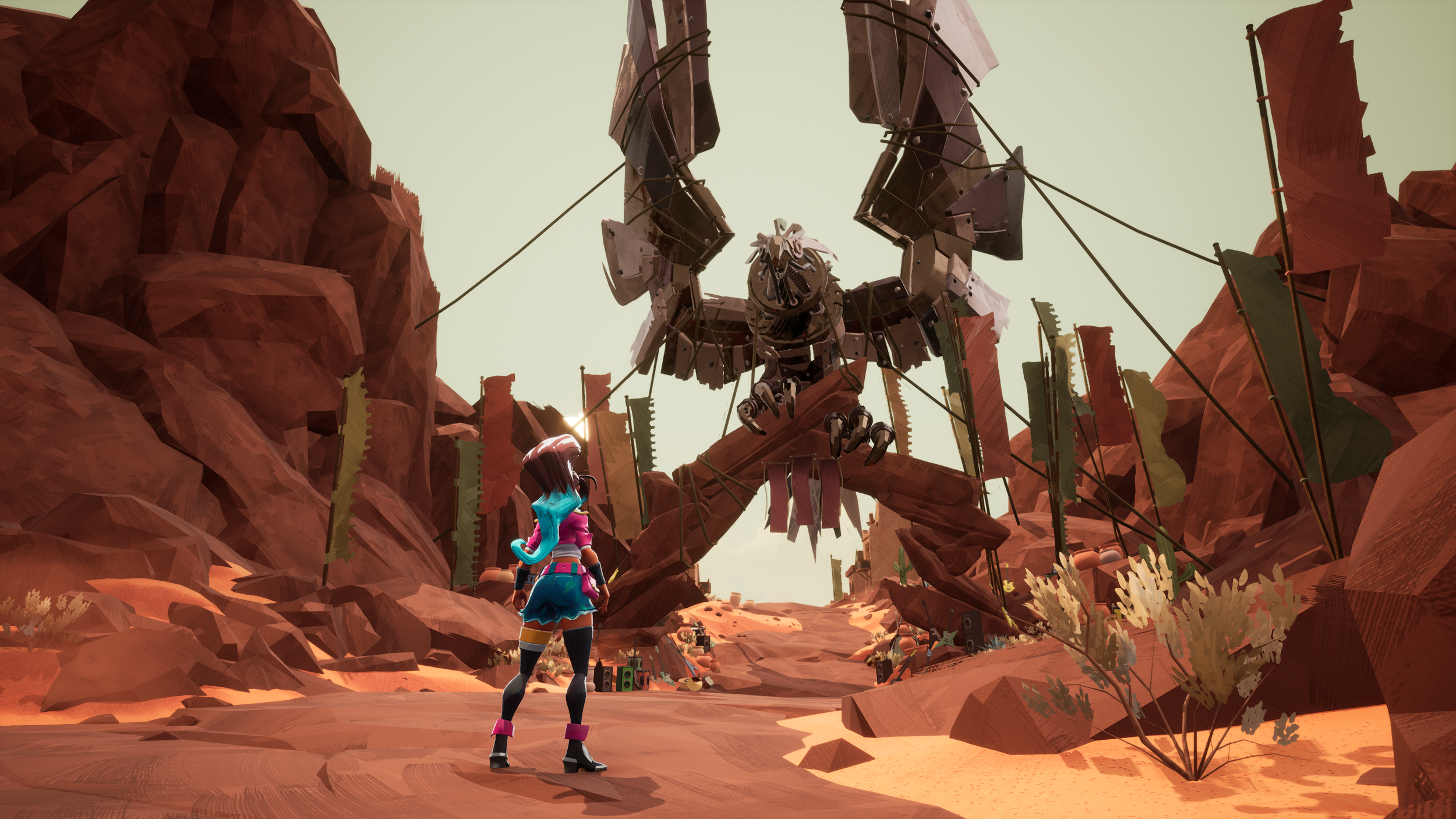
Image: People of Note - Durandis
Structurally, People of Note sees Cadence fully explore a location and talk to those in it, then sometimes complete optional side quests and puzzles, before taking on the location's dungeon, which can be a mix of both JRPG strategic turn-based combat and brain teasing puzzles. It's a satisfying gameplay loop, which works successfully almost all of the time, due to the cohesion between every aspect of the game's design.
This focused world is varied and feels expansive enough during the entire 20 hour adventure. This variety is best represented in the many cutscenes. Musical numbers are used to delve into each main character's ideals, motives and emotions. Each one is performed in the genre of the character's homeland: Cadence is from the pop centric, Chordia and sings pop songs, Fret is from the rock locale of Durandis and plays electric guitar.
These musical numbers have well-written lyrics and good compositions, that also feature nice ensemble singers. By the end of the songs, you understand each character's personal struggles: their complex struggles with identity, wrestling with selfishness to achieve your dreams, a compulsion to face your fears and anxieties, and the importance of music. And how everyone's journey of self-discovery comes at different speeds.
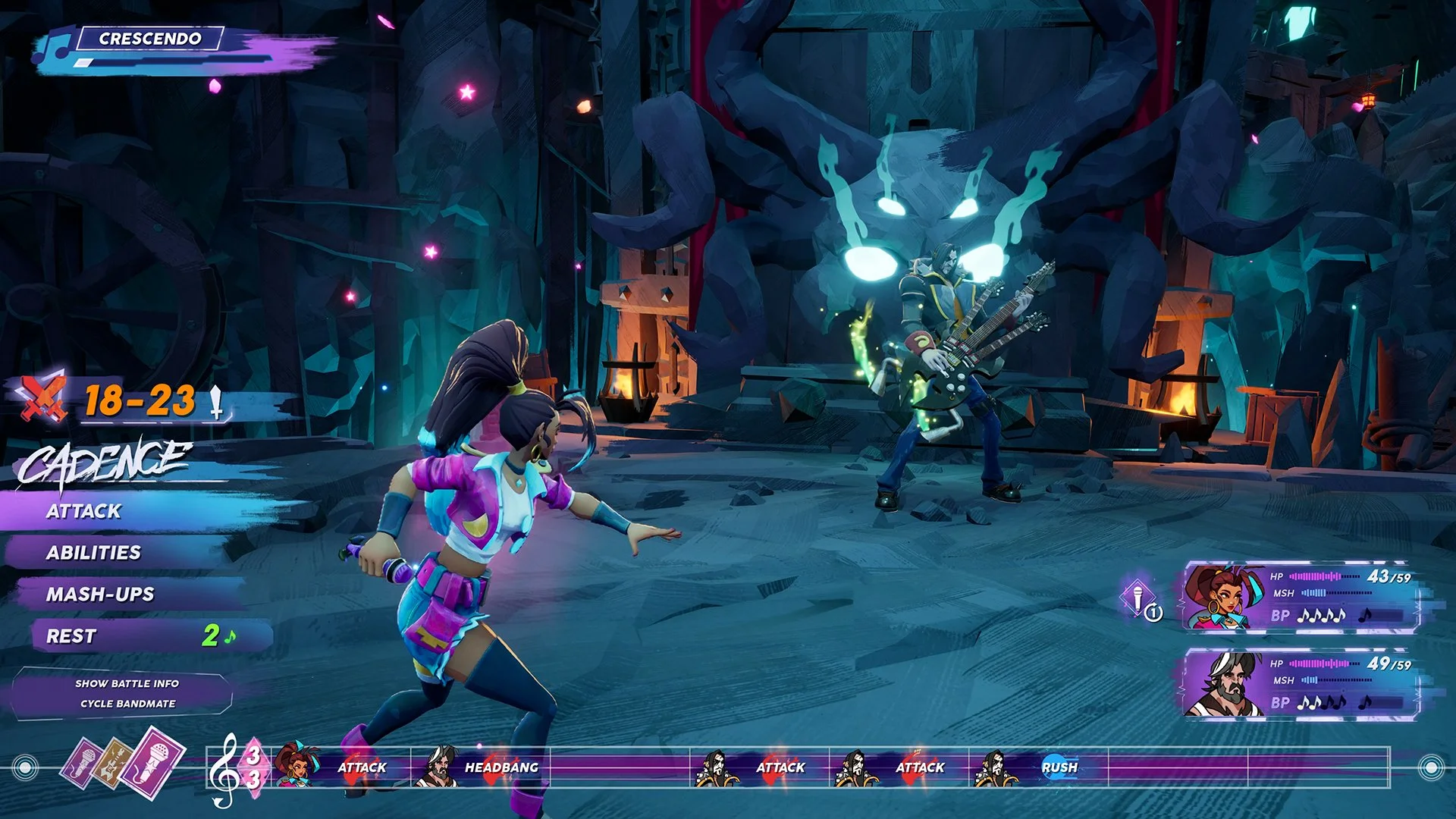
Image: People of Note - Combat
These narrative tools pull together to create a unique universe and enjoyable story that intensifies as it develops. As the game reveals satisfying character moments, I found the story kept a good pace until the buildup to the finale. Even though the pace faltered slightly and some side characters felt underdeveloped, I found the overwhelming amount of positives, and my overall enjoyment far surpassed any negatives.
It's rare to play an indie game where the clear creative vision is understood on all fronts. They even make time to include fun puns and anime, video game and music references. I appreciated their passion shown in the world building and I hope to see it continued in further projects by the studio. But it's the naturalistic dialogue and banter between the band mates that I enjoyed the most - sincere, honest and earnest bonds that grow over time.
However, People of Note wouldn't be a very good turn-based JRPG without a solid combat system. The game uses an interactive, rhythm focused system, where on your turn to attack, you press a button in time with a visual and audio cue like a rhythm game. If you hit the input perfectly, your attack power increases.
Like most JRPGs, each party member can perform a basic attack, use abilities that consume BP which is similar to MP in Final Fantasy, complete mashups with teammates which is People of Note's version of a limit break, or you can rest to strategically regain BP and raise your defense. However, People of Note excludes the use of items and chooses to rely on abilities for heals or revives. This adds another layer of strategy to your party setup.

Image: People of Note - Cutscene
As you level up, Cadence and her eventual party of four gain extra ability slots as well as AP points to upgrade abilities. These abilities are called Songstones, basically spells that you can purchase or find throughout the world. Each party member has Songstones exclusive to their genre of music, which makes a traditional JRPG archetype. Such as Fret, Cadence's rock performing ally, he can equip abilities that heal and revive party members if you cannot hold out until a teammate automatically resurrects after so many turns. Whereas, Synth can debuff what is called a Measured Mod to remove an enemy's negative modification that they've applied to one of the turns in a stanza - the name of your turn in a battle.
AP points from leveling up can be spent to upgrade Songstones - a must if you want to overcome later foes. And you can equip power modifications that can link to multiple Songstones at a time, like being able to heal when using a linked ability or increasing its power.
These elements combine to create a strategic combat system with a good amount of depth, where you need to take later foes very seriously on normal difficulty and above. But the real strategy comes in by being able to choose to use your party in any order during your turn. Sometimes it took a few tries to defeat a boss, until I learned their weaknesses and adapted my strategy to counteract their self-buffing moves. But like in most JRPGs, this will depend on how much time you've spent on levelling up.
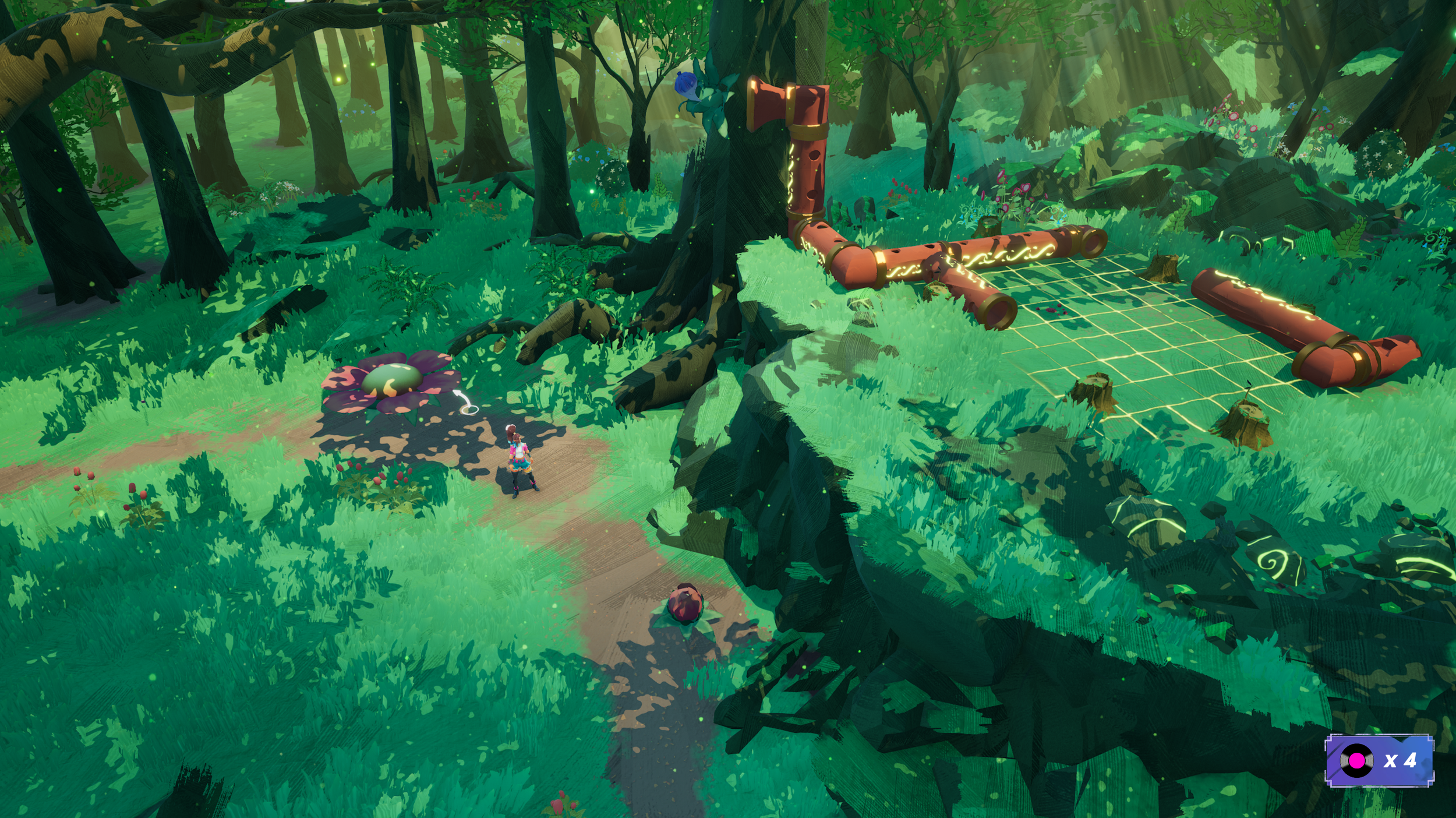
Image: People of Note - Puzzle
Dungeons contain a set number of visible enemies to beat, who drop vinyls upon defeat. These vinyls can be spent at vendors in each dungeon for exclusive items, instead of spending your currency in the city shops. But you can also spawn random encounters at any time, to gain experience points and more vinyls. This pace of powering your characters feels good. You can tell the developers are huge fans of the genre. They've taken the best bits to make their own focused project with a musical spin.
There's also a number of optional activities. The main ones being side quests that give extra story and items. And owl trivia: hidden enemy encounters found in glinting dots in the environment. Once found, these enter you into a battle which consists of a simple trivia question about the game, and if you answer correctly, you're rewarded with a feather to spend later in the game with a particular vendor. And this isn't even everything.
You also find treasure chests hidden around the world and inside these combat areas. They contain equipment or Songstones. Like other JRPG style games, you can equip new weapons, clothes and accessories - all to power up your character to suit your playstyle.
Outside of strategic combat and fun exploration, People of Note is a smart puzzle game. Most battle areas and some optional zones contain a variety of well-designed puzzles. Early on, Cadence must solve a block based puzzle, where you step onto a switch with a set icon to elevate the blocks of the same type. This opens new paths and lets you raise and lower blocks until you create a clear path to your goal. There's also one where you control the water flow of pipes, in order to reach a new area. However, this one and many others require the use of out of combat abilities like pushing objects, synching two water pipes together to make a new path or duplicating an ability.
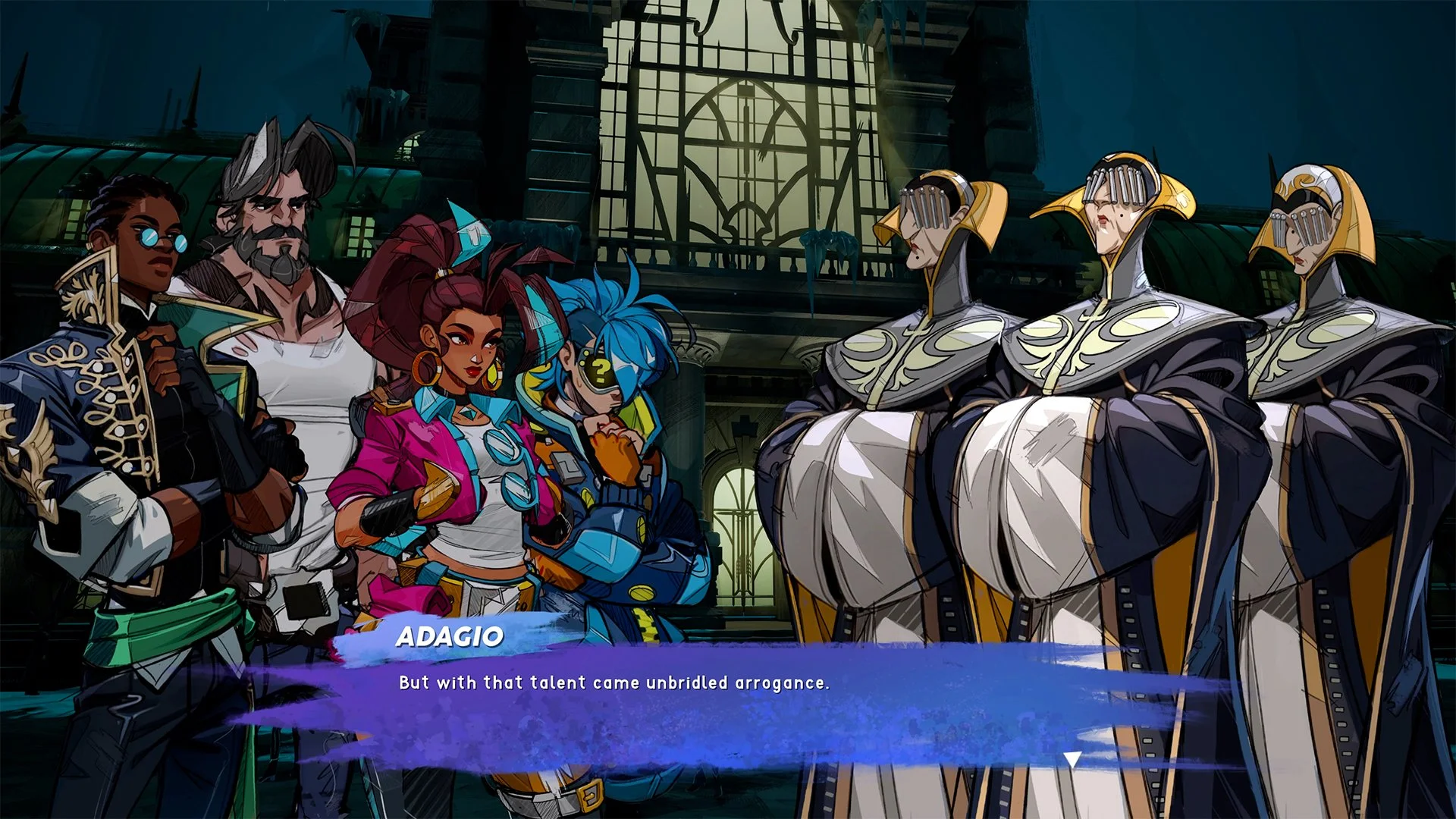
Image: People of Note - 2D Conversation
Although, my favourite was a short but fun deduction game that I will let people discover for themselves. It feels like a wonderful homage to the current renaissance of indie deduction games. And with Iridium's skill at designing puzzles, I believe they'd make an excellent pure puzzler.
Puzzles continue to evolve up until the end of the game. There's even a whole dungeon that reminded me of Final Fantasy 7's iconic Shinra Mansion in Nibelheim mixed with the puzzles of a Resident Evil game. Intricately woven brain teasers that keep People of Note feeling fresh throughout.
Naturally, puzzles and strategic combat aren't going to be for everyone. Iridium knows this and caters to those who just want to enjoy the story or require accessibility options by including thoughtful difficulty and accessibility settings. Besides the usual difficulty options, you can apply settings to skip battles and solve puzzles. A freedom of player choice that allows people to play their way. If you want to skip the grind of leveling up, you can. If you need help with a puzzle, you aren't punished for getting help. It allows you to play however you want to.
And for people who need to remove the rhythm inputs or don't like them, you can deactivate them. Iridium Studios have applied this thoughtful game design throughout and made a welcoming JRPG that veterans and newcomers alike can enjoy. Also, to see more about the passionate developers, it's well worth watching the credits.
This care continues in the visual design. Everything has a vibrant, painterly look that perfectly matches each distinct location's genre of music. Chordia is a high-tech, glitzy city of pop, Durandis is a barren, dusty wasteland of hard rock that's split into subgenres where the people are like a toxic fan base that prefers to hate something else rather than just enjoy whatever they like. And many other locations that represent EDM, rap and folk.
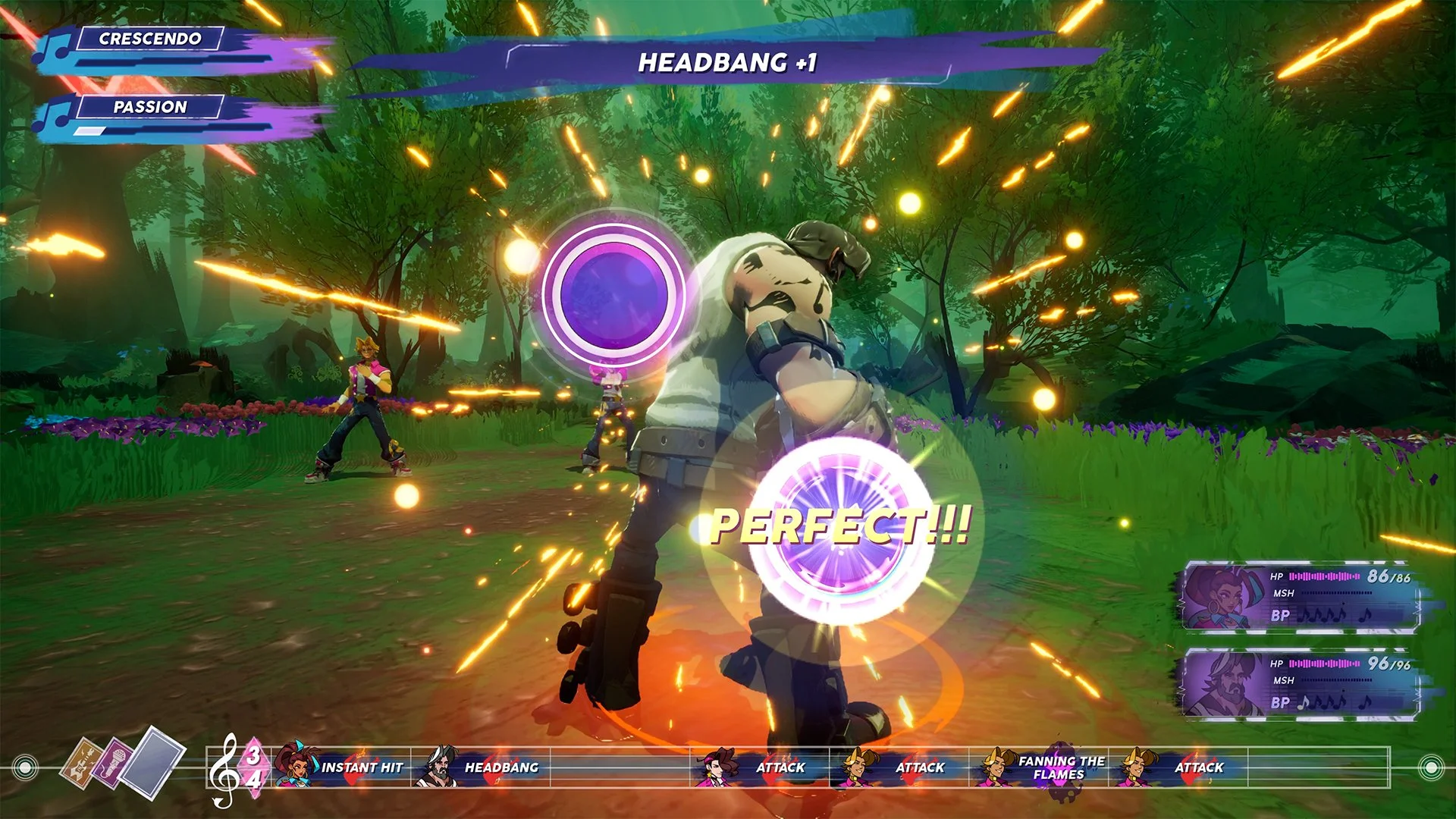
Image: People of Note - Rhythm Action
A meticulousness also presented in the game's world map - a hand drawn canvas that slowly gets coloured in as you travel from place to place. A skilled artistry that continues into the 2D dialogue portraits that switch between a variety of expressions.
This continues to the 3D character models that represent each location and musical style. Cadence wears the neon pinks of Chordia, and Fret wears a rocker's vest with long hair. Every location feels like it has an distinct visual flair that helps highlight a different culture and society.
But the 3D models really shine during the mocapped, fully animated musical cutscenes. Finely produced music videos that propel each character's story forward. And in typical musical fashion, the songs are the heart of the experience.
Being a musical, turn-based JRPG, sound is the connective tissue holding People of Note together. Lyrically poignant songs shift genres effortlessly, to match each location. Music is the powerful lifeblood of Note. It allows Cadence to dream, but blinds her in other ways. It's the delivery system for the people of Note to speak their minds.
Obviously, the musical genre isn't ever going to be for everyone, but with such a wide range of genres inside a great JRPG, there's enough here to enjoy outside of the music. But I found the songs were well produced and impeccably performed by a talented cast. A talent that carried over to the voice cast, too. The casting is phenomenal and the acting makes every motive and bond believable.
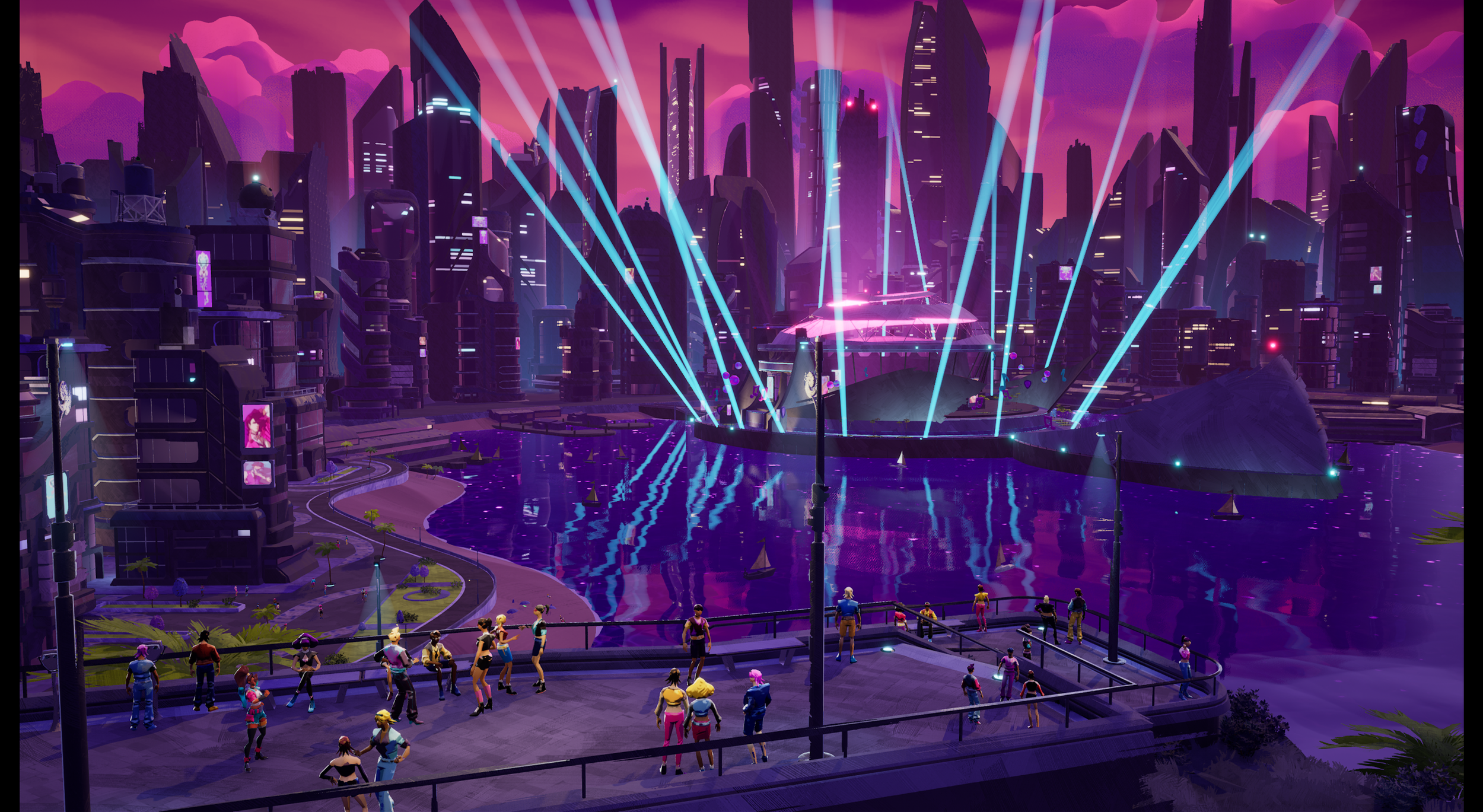
Image: People of Note - Chordia
However, sound isn't just for the story. It gives audio cues during combat. As the background music switches to a different genre each turn, to let you know that using the party member aligned to that genre will get a boost - another layer of strategy. It also lets you know when to perfect the rhythm based attacks. Like last year's Clair Obscur Expedition 33, any form of interactivity during turn-based combat makes it feel more engaging.
This isn't to say People of Note is a perfect game. I encountered a few glitches, but nothing game breaking. And I found the pacing of the story in the final third and a few side characters to be underserved, which impacted the narrative ever so slightly. But when you consider People of Note is an independent project with a clear shared creative vision across the whole development team, it's understandable why they made certain design choices within their sensible scope for the project. Yet, I like to view it as an opportunity to build upon these already great systems in the future.
People of Note is a lovely mixture of two of my favourite genres: turn-based JRPGs and puzzle games. Within the first hour, I was transported back to the feelings of my childhood when I played Final Fantasy 7, 8 and 9 - transformative experiences that made me an RPG fan. For an indie game for twenty five dollars, People of Note is remarkably polished and confident in its execution. The passion of the team is apparent in every frame.
Even though it isn't a perfect game, the blend of emotional musical cutscenes, cleverly designed combat and memorable puzzles, propels People of Note from a good game into a truly great one. I can imagine the story and musical aspects won't be to everyone's tastes, but if it lands, this will be another memorable rpg that will hopefully become a transformative experience for a new generation of players.
*Review code provided by the publisher.
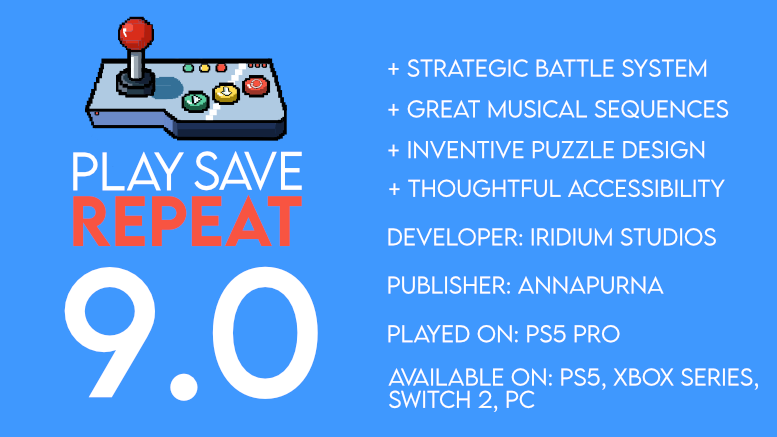
Image: People of Note - Score - 9/10