

After the excellent duology of A Plague Tale: Innocence and Requiem, that told the visceral and emotional story of siblings Amicia and Hugo, Asobo Studio returns with the prequel spin-off, Resonance: A Plague Tale Legacy. But instead of continuing A Plague Tales' strictly stealth approach, Resonance transitions to a more action focused entry.
Now, Asobo Studio tells the story of Sophia who was first introduced in A Plague Tale Requiem - a renowned smuggler that helped Amicia and Hugo in their time of need. At first I thought Asobo Studio were going to go in a different direction, but Sophia is an interesting choice and one that after completing the game, I can confirm it was the right one.
Resonance: A Plague Tale Legacy reintroduces Sophia as a child as she's being experimented on with black blood transfusions until her father's band of plunderers saves her from her agonising existence. But when the experiments give Sophia visions of obscure horrors on an ancient island, her father vows to search the land for answers. A story that adds to the lore of the Macula by using the mythos of Theseus and the Minotaur as a fantastic story foundation.
As Sophia ages from a child to an adult, Asobo Studio cleverly introduces Resonance's cast and builds out the world with the same cinematic and heartfelt writing that feels natural while effortlessly bouncing between light-hearted and immensely sad moments. A skill that makes all three A Plague Tale games match the narrative quality of the very best stories in the medium.
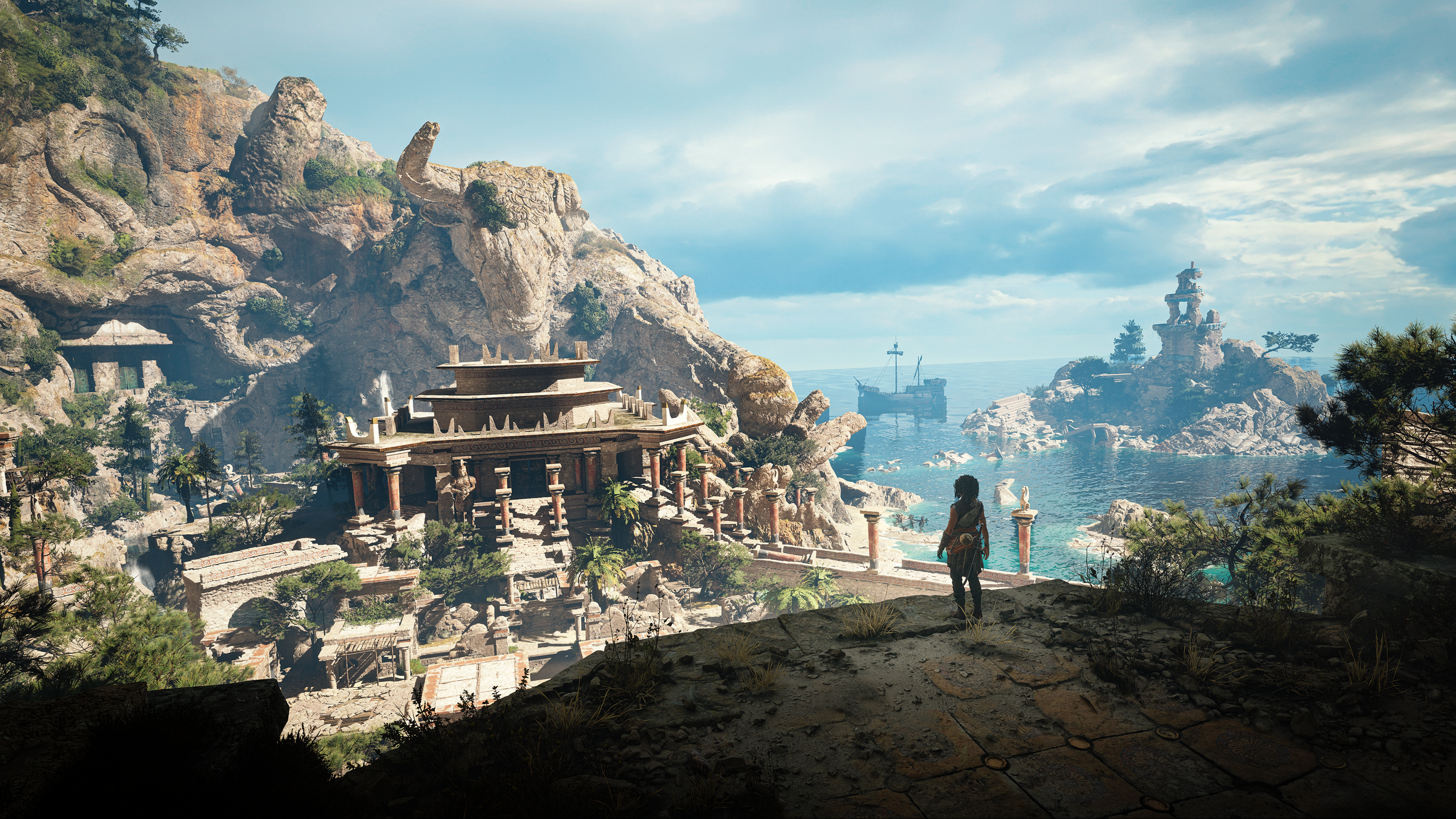
Image: Resonance: A Plague Tale Legacy - Overlook
Asobo Studio has created a beautifully rendered home base for the plunderers, in a densely populated space where everyone has well-performed dialogue as Sophia passes by them. Every little detail is intentionally inserted to make the base feel like a home. But it's the smart onboarding that's impressive. Each narrative moment is used to teach players how to control Sophia in this new action-adventure focus for the series.
Asobo Studio teaches you to run during a friendly chase between Sophia and one of her guardians Ezra - a kind-hearted man who always has her best interests in mind. You instantly feel the difference between Sophia and Amicia. Sophia is fleet of foot: she can sprint fast, roll under ledges, push through cracks without losing momentum, jump across large gaps, climb up ropes, grapple hook and use zip-lines.
But her athleticism isn't only platforming focused; she is a highly skilled swordswoman. As she transitions to an adult, we see many battle scars appear on her skin as Asobo Studio teaches the basic combat mechanics via a set of story propulsive combat tutorials. Sophia uses both a sword and a dagger. She can slash to reduce an enemy's health and build-up their stun meter until it breaks, use her dagger on stunned enemies for heavy blows called Critical Strikes, block incoming normal attacks, tap block to time a perfect parry against yellow attacks, rapidly dodge unblockable red attacks, and kick enemies into walls or off ledges.
An intuitive and response combat system where you can lock-on, or nicely free flow between targets all around you. It's similar to parry heavy games like Ghost of Yotei and Assassin's Creed Shadows. While Resonance has mainly top notch animations, I enjoyed jumping down to instant-kill an unaware enemy, and then, dispatch a group in an intense sword fight.
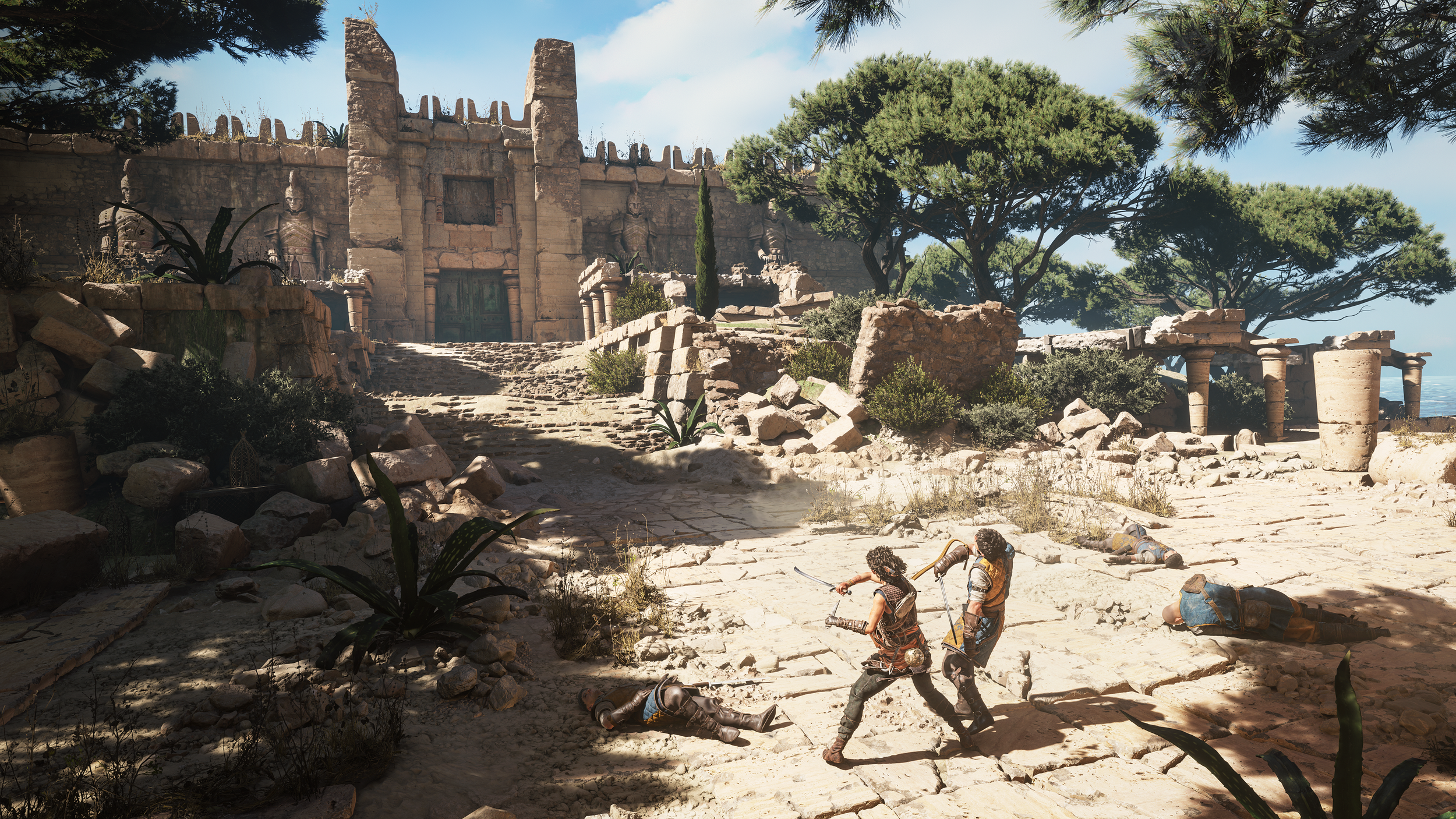
Image: Resonance: A Plague Tale Legacy - Combat
Fortunately, this is only the beginning of Sophia's skill-set. Each new enemy type teaches Sophia a new move for her combat repertoire, or gives her a new tool. Such as a grappling hook to pull down archers from unreachable perches and pull down rocks during exploration, throw objects at enemies to stun them, use a kick to break the guard of a shielded enemy, or enemies with a red outlined block to break their posture, and much more.
You must also avoid being hit three times in a row or else Sophia will die. This encourages you to use every move at your disposal, as killing an enemy earns back a portion of your health. There's a nice rhythm between being offensive and defensive - a real risk reward to beating groups of enemies.
After Sophia has been taught the basics, her gang of plunderers depart on a dangerous mission in Venice. Like previous titles in the series, Sophia is accompanied by her close friend Leni - a master thief who's smart as a whip. Leni is immediately likeable through interesting dialogue exchanges and helpful during combat and solving puzzles.
But Asobo Studio does not settle for interesting characters, they also build beautifully detailed environments. Even linear, Venice like other levels, contains split routes worth exploring for collectibles and extra world-building in the form of missable NPC conversations. One such immersive scene happens when you can stop to watch a Punch and Judy style puppet show. You listen to tales about the time, and hear children laughing during what would've been an amazing spectacle in that era.
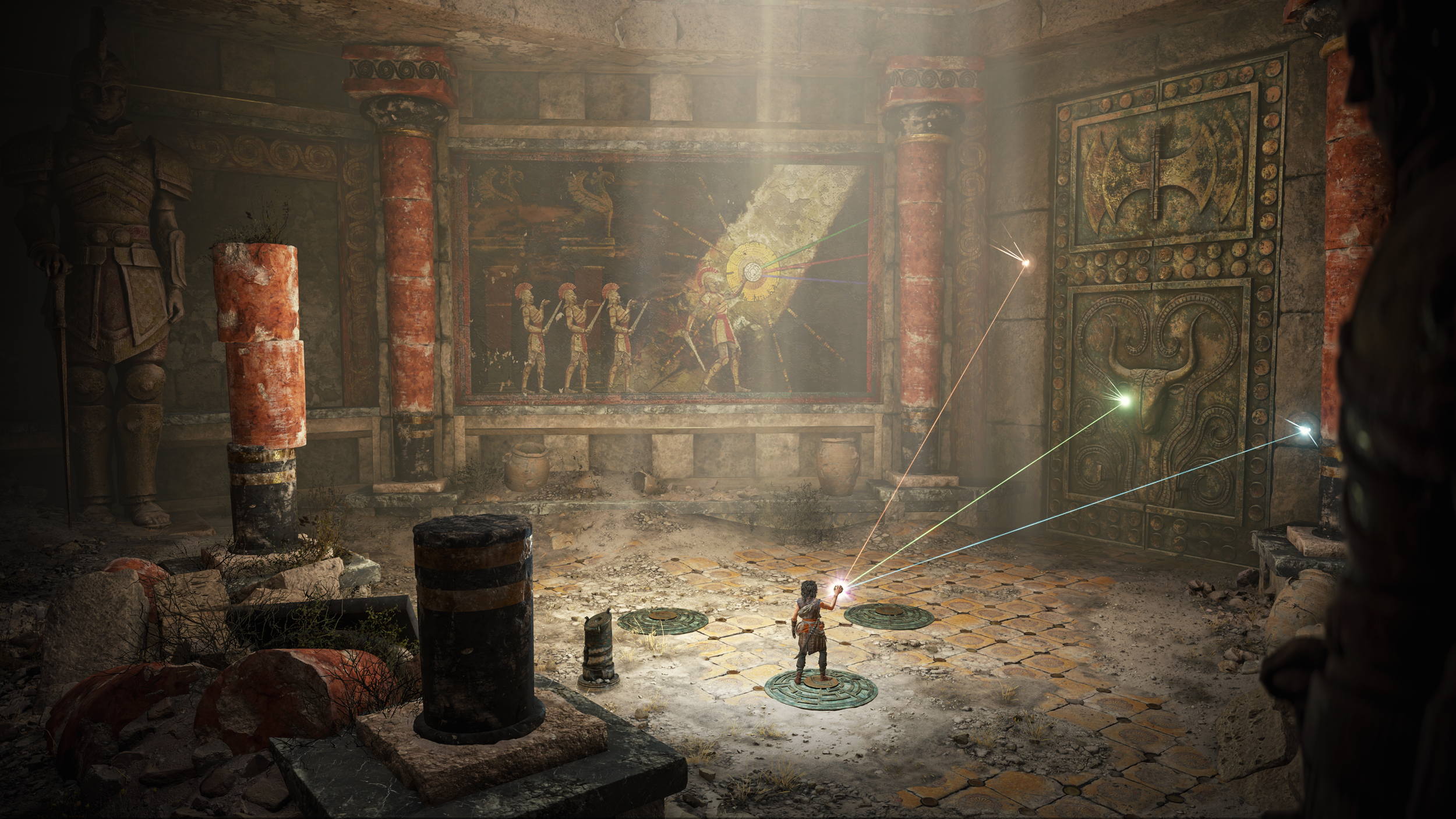
Image: Resonance: A Plague Tale Legacy - Light Puzzle
Whereas, Resonance: A Plague Tale Legacy also contains collectibles such as artefacts, hidden swords with buffs, and decorative charms that Sophia wears for added passive bonuses like avoiding a death blow. There's also glinting seashells called Resonance Points hidden around each level - the points needed to upgrade Sophia's skills.
But when the Venice mission doesn't exactly go to plan, Asobo Studio flex their cinematic muscles with a combat and adrenaline inducing platforming sequence. This introduces how slick the platforming can be, as Sophia jumps from buildings, grapples above the city, and zip-lines down into combat encounters.
After this is where Resonance: A Plague Tale Legacy truly begins. Sophia and Leni arrive at the main setting of the game: Minotaur Island. It's here where Resonance solidifies itself as something different whilst retaining what made the other games special. Standing on the beach of a sprawling landscape, Sophia finds the path in front imprecise and wider than anything that came before. While still wide-linear in design, the phenomenal landscape makes the island feel mysterious and massive. But it's the new gameplay mechanic that makes Resonance feel like a proper pirate adventure.
As a child, Sophia recorded her visions in a journal, which her father then used to mark his expeditions to the island she saw in her visions. This is one of my favourite additions to Resonance. You open Sophia's journal and see the drawings of a child and flip through to see an adult's sketches, and get a sense of the size of the adventure ahead. You can run Sophia's finger along each page and tap on anything of interest to receive dialogue about it. Then, once you've found a page that matches something in your current environment, you can look up from the journal to scout the route ahead.
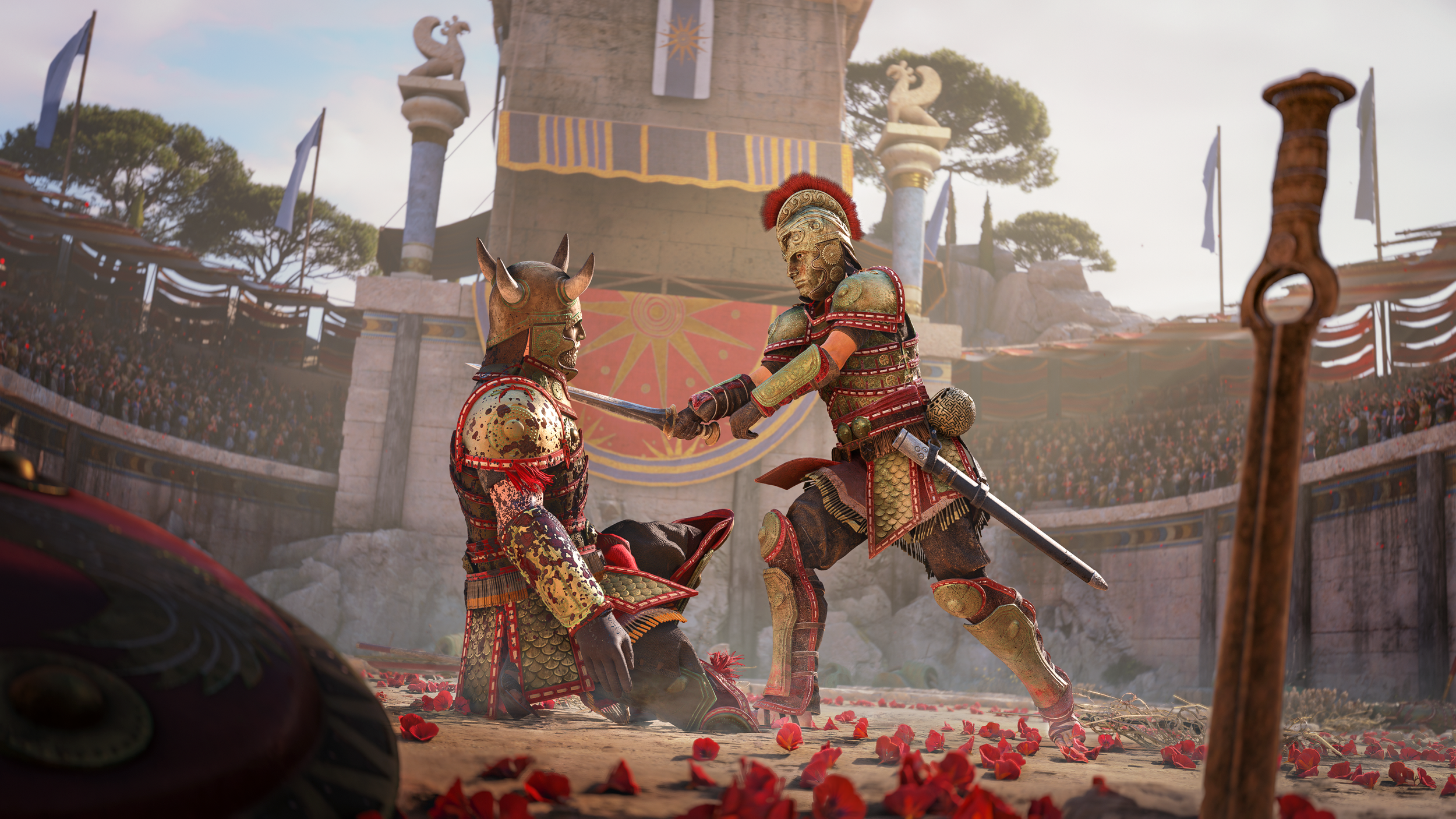
Image: Resonance: A Plague Tale Legacy - Greek Soldiers
But first, it's vital to scour every environment for collectibles and Resonance Points. While Sophia's skill tree isn't the biggest, there's enough helpful moves to unlock and further upgrade them to mastery level as you progress. These substantially change Sophia's combat effectiveness, especially on higher difficulties. You can unlock game changing moves and abilities such as being able to dodge faster, parry unblockable red attacks, and double kick. Although if you do miss these along the way, you also earn Resonance Points from completing battles.
Although if combat feels too tough, Resonance: A Plague Tale Legacy has a full suite of accessibility options. There's five difficulty levels which tweak many gameplay mechanics. Narrative applies automatic parries and dodges. Hard and Nightmare give the ultimate challenges with reduced health. There's even an invincibility mode to stop all damage from combat, which would degrade the gameplay experience. But the choice is there.
You can also tweak the frequency hints are made available, as well as a selection of visual presets like turning off motion blur, steadying the camera, and turning off screen deformation effects to help prevent motion sickness.
Leaving no stone unturned, Sophia reaches the rock formation from the journal and finds a tunnel to go through. You feel like a pirate following a treasure map as you traverse caves and shimmy along dangerous cliff-sides. The journal is very similar to the ones in the Uncharted series; a way to make the story more tangible for players. This immediacy opens opportunities for Sophia and Leni to share charming interactions, as they take a breath before continuing their journey and finding a number of puzzles to solve.
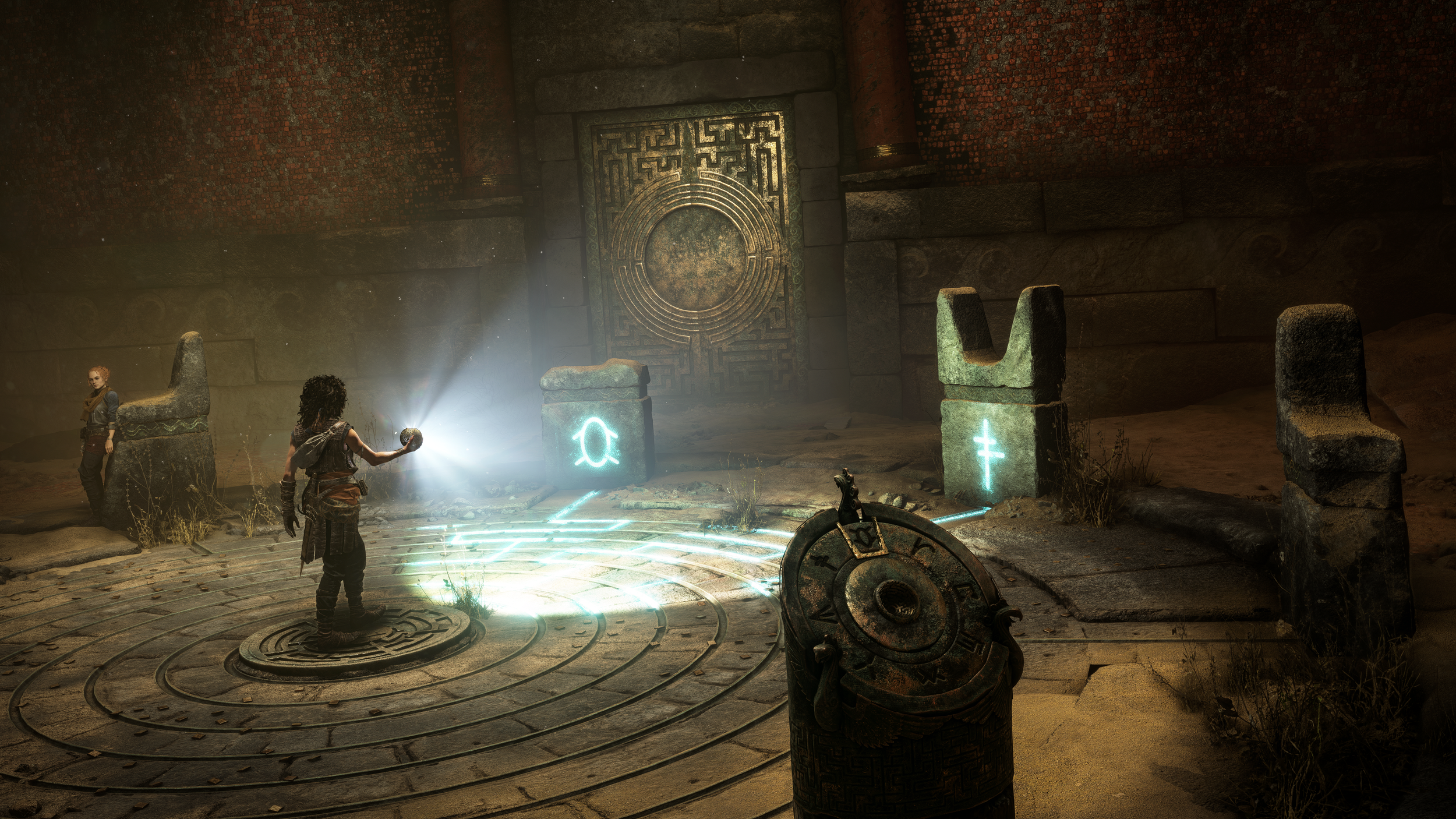
Image: Resonance: A Plague Tale Legacy - Light Puzzle 2
The journal contains clues to a set amount of puzzles, but Asobo Studio strikes a good balance between visual clues in the journal and diegetic environmental information. The first step on a fine line between explaining a function and giving the answer. But Asobo Studio succeeds in making players feel smart as you piece the clues together.
Despite this, there's also a nice hint system for those who prefer to breeze through puzzles, or need a little nudge in the right direction. But unlike games like God of War that has their AI companions blurt out the solution before you've had chance to look at the puzzle, Asobo Studio bring a simple D-pad prompt onto the screen, to let you decide when to receive help.
Beyond the mysteries while exploring the ancient landscapes via Sophia's journal, most puzzles are based on light. As Sophia eventually obtains a sphere that can manipulate light around light sources. The sphere can be held up to light a hidden path through spike traps, or to reveal hidden symbols on the wall to determine which is the safe path to go. These feel like something out of Indiana Jones, as you feel like a proper explorer descending down ancient structures to complete the island's many trials. All of which require cooperation from Leni, such as pulling switches together, or aiming a light where you walk.
Later on, you'll also come across mirror puzzles where you have to direct light towards other mirrors to unlock the way. These gradually become more complex as you use the sphere to locate which spots to point the beams of light. But the other light puzzles require different sphere functions, such as lining up scenery to align with multicoloured light beaming from the sphere, and other functions.
But as Sophia explores the ancient ruins, she finds objects that grant her visions of the past. You play as Theseus during his attempt at defeating the Minotaur trials. These combat sequences are similar to how Sophia plays, but he can also do a special move that spirals an attack at multiple enemies at once.
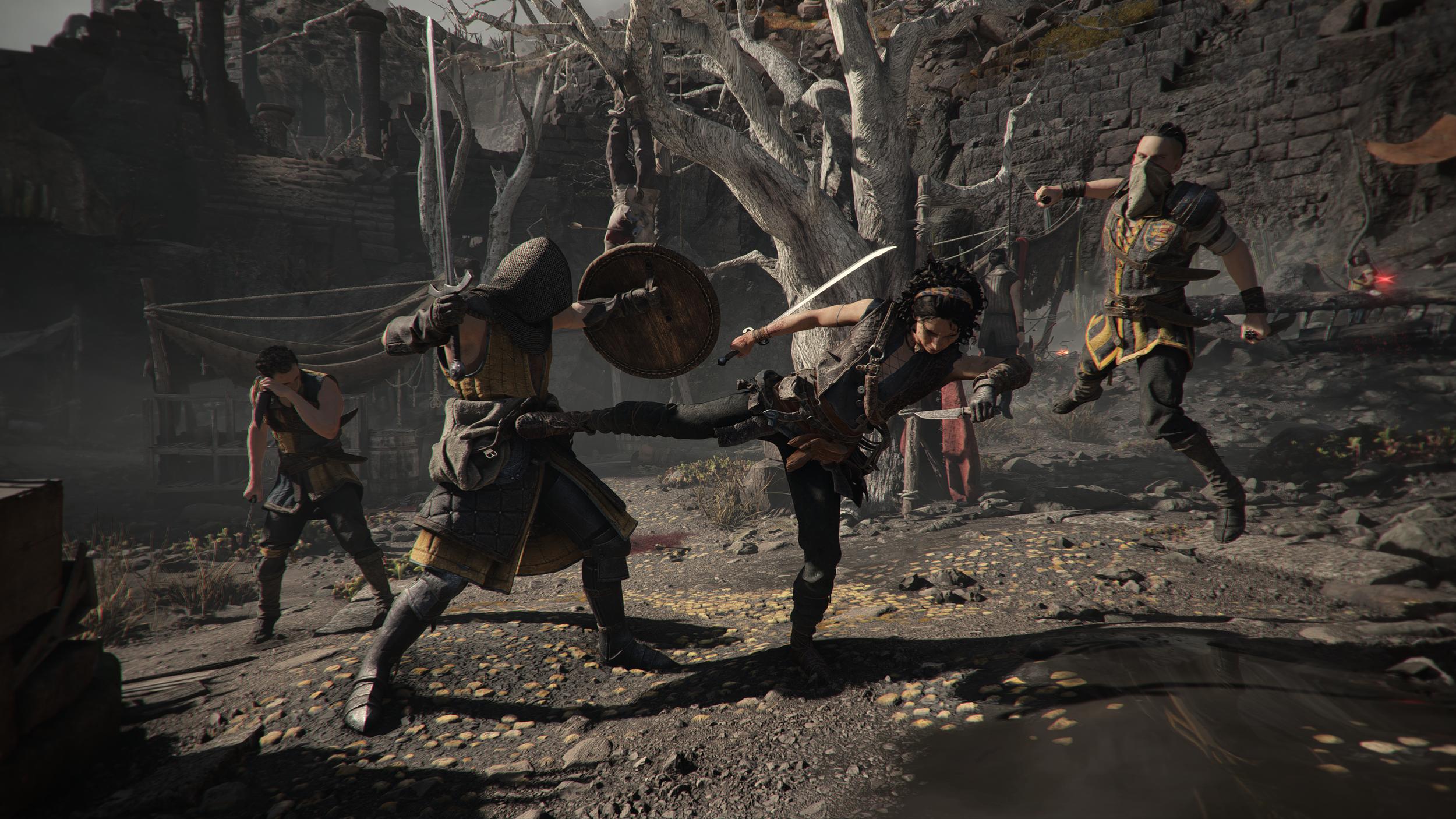
Image: Resonance: A Plague Tale Legacy - Fight
However, it's the striking world-building that stands out. You see what the ruins used to look like in all your splendour before visiting them as Sophia. But it becomes more than that; it's a wonderfully smart interplay between A Plague Tale lore and Greek myth.
While many A Plague Tale fans might be wary of Resonance's different gameplay mechanics, I'd say Resonance still feels wholly A Plague Tale title. Once again, Olivier Deriviere delivers a masterful composition that heightens the emotional highs and lows of what makes A Plague Tale story. It's a very different soundscape of Greek chanting, excellent use of atmospheric strings, and a repeated motif that will be stuck in your head for a long time. Yet, it feels entirely familiar, as Olivier blends in familiar sounds from the prior games. It's a soundtrack that elevates both the story and the gameplay experience.
Also, Anna Demetriou's performance as Sophia is fantastic, and lives up to the high bar the previous games set. She brings a defiant independence, vulnerability and strength to a complex character under so much strain. And expectedly, the rest of the cast is just as strong at bringing these characters to life. It's also helped by the big improvements to the visuals and motion capture. For a medium sized team, Asobo Studio really pushes the visuals to the limit. While some combat animations might feel a little stiffer than they should, for the most part, Resonance is impressive from beginning to end.
But for those worried that Resonance has abandoned the horror stealth of the first two games, I would implore players to keep an open mind. As the combat is fluid and fun, the world is immersive, the puzzles are engrossing, and the fast platforming is thrilling as you slide down broken pipes and grapple across gaps to safety. But there's another element that merges with everything else, and takes up a large chunk of the game: horror stealth sections reminiscent of those in Amicia's journey.
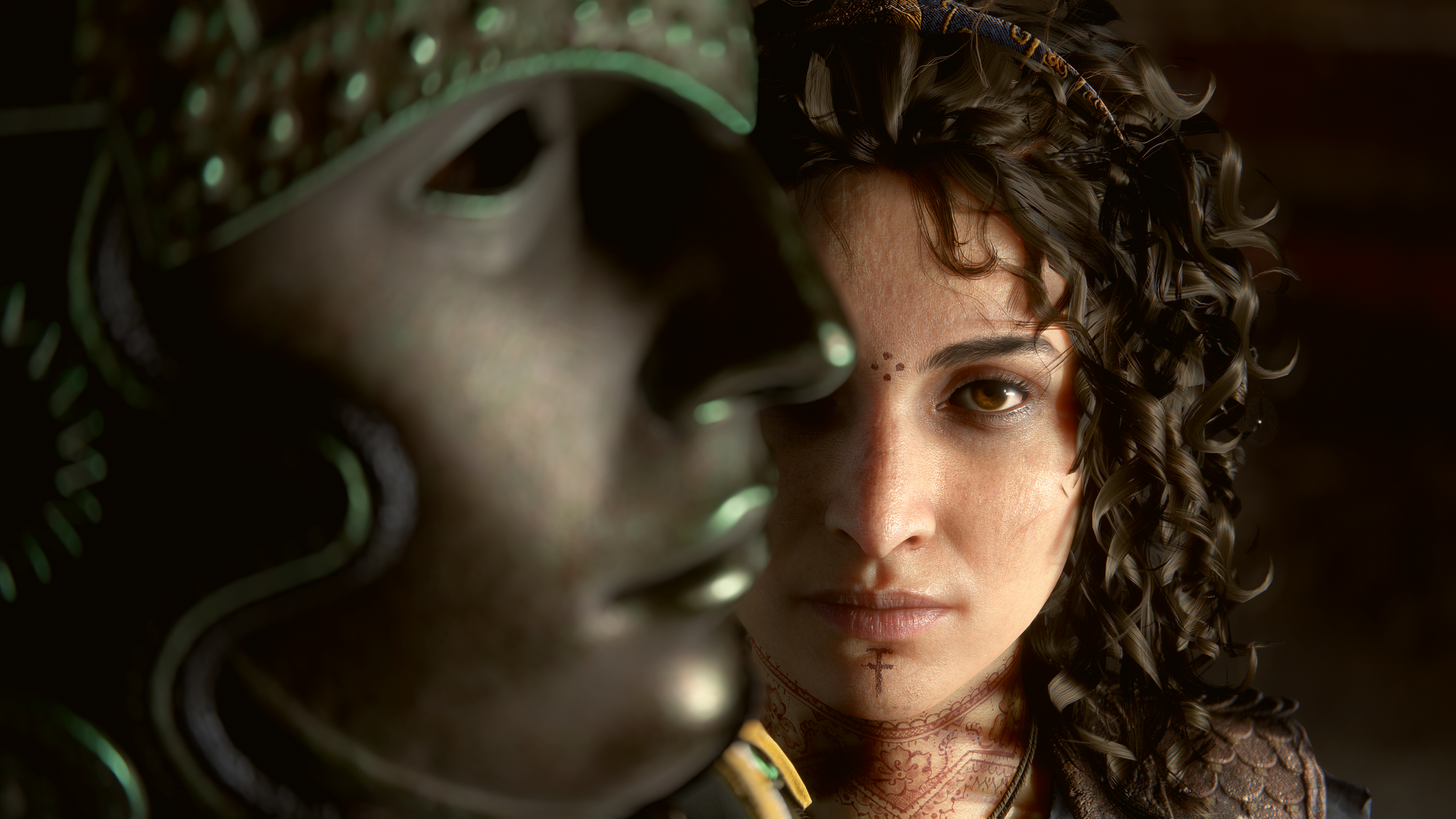
Image: Resonance: A Plague Tale Legacy - Sophia
While these elements have already been shown in an extended gameplay trailer a few months ago and the recent story trailer, if you don't want to hear vague information about these mechanics, please skip ahead to the score.
Even though Asobo Studio has successfully tried a new action focused gameplay style, they haven't forgotten one of the biggest elements of the series. Since her childhood, Sophia's visions have brought her glimpses of something terrible on Minotaur Island, and it's Asobo's way of deepening the mythos of the Macula curse and honouring what came before.
Hours into the game, Sophia encounters a creature in the rotten depths of the island. Bodies look like stones and sharp rocks suffocate light and block many paths. So, the only way to survive is to use light like Amicia did with the rats. But here, something more terrifying lurks and forces you to take cover to avoid detection as it patrols. But if it gets close and detects you, Sophia must run to reach the nearest light source. But if you run in a straight path without jumping over gaps, cutting through walls, or swinging across grapple points, the creature will devour you.
Asobo Studio mixes the slowness of stealth with rapid think on your feet escapes, to mix the best of both worlds. While it feels similar to the older games at times, it keeps Sophia's adventure feeling new. And luckily, everything they tried works. There isn't anything that stands out as bad. Obviously certain people won't gel with the combat, even though it is solid, but the heart of what makes A Plague Tale game tick is as strong as ever. And personally, I'd much prefer Asobo Studio takes risks so that the franchise remains fresh.
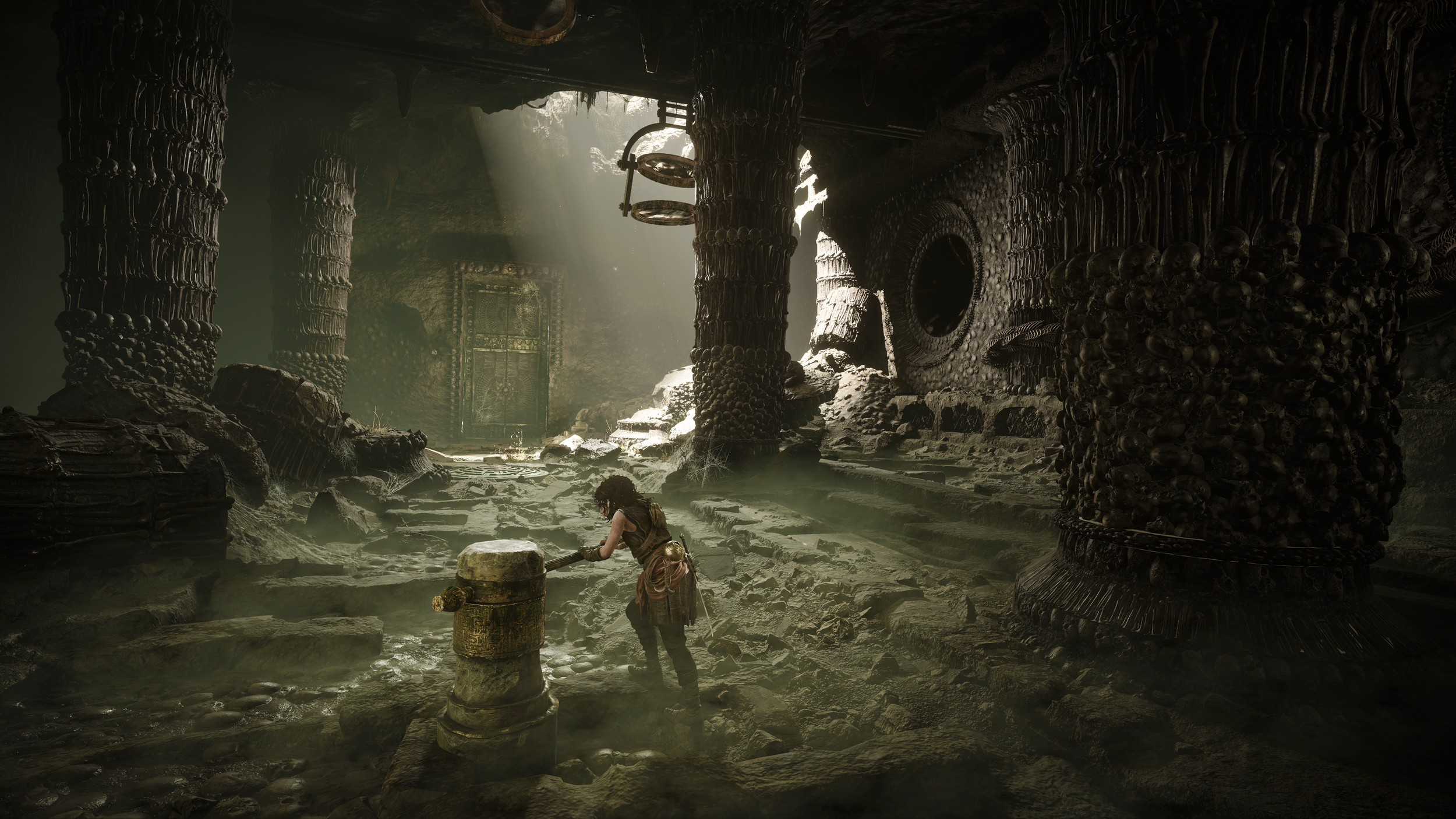
Image: Resonance: A Plague Tale Legacy - Lever
Although, Resonance: A Plague Tale Legacy isn't without a few technical issues. While the performance and visual fidelity is fantastic on PlayStation 5 Pro with PSSR activated on a Variable Refresh Rate enabled television, I did experience some texture pop-in and flickering, and a few occasions where Sophia's animations got stuck as she attempted to push through a gap in the wall. But other than this, it's an extremely polished game.
Due to how Resonance keeps building on gameplay mechanics, there's a lot more I could say. But it's better for fans and new players to discover the many mysteries of Minotaur Island for themselves. As it's truly another wonderfully told story in the A Plague Tale universe. I just hope people give it the chance it deserves, so Asobo Studio can keep making more. As it's rare for anyone outside of the biggest AAA studios to develop narrative focused single-player titles like this.
Resonance: A Plague Tale Legacy is another worthy addition to Asobo Studios games catalogue. While changing gameplay mechanics is a risk, they're all as confidently developed as you'd expect. Yet Asobo Studio continues their trend of emotionally gripping stories in a beautiful and horrifying world. It might play a little different, but it's a worthy spin-off that understands what makes A Plague Tale game special.
*Review Code Provided By Publisher