
Since the resurgence of CAPCOM with their switch to the Reach For the Moon Engine, and in particular, the Resident Evil series from 7 onwards, survival horror fans have been patiently waiting with bated breath for the announcement of the return of cult favourite series, Dino Crisis.
Seeing a massive gap in the market, in comes the Playstation 5 exclusive, Code Violet, that looks to fill the void at a lower budget, and give survival horror fans, the dinosaur game they've dreamed of for decades.
So, let's see if Code Violet satiates players' jurassic appetites, or if it is a real Dino Crisis.
Code Violet is a third person, action survival horror video game from developer Team Kill Media - a small independent studio made up of four brothers from America.
In Code Violet, you play as Violet Sinclair who is kidnapped from the past and brought into a future on the brink of extinction to be a surrogate in a colonisation mission to birth new life into the world. One night, years later, Violet wakes to find the laboratory under attack by dinosaurs, and in order to survive, she must uncover the mystery of the program that she's a part of.
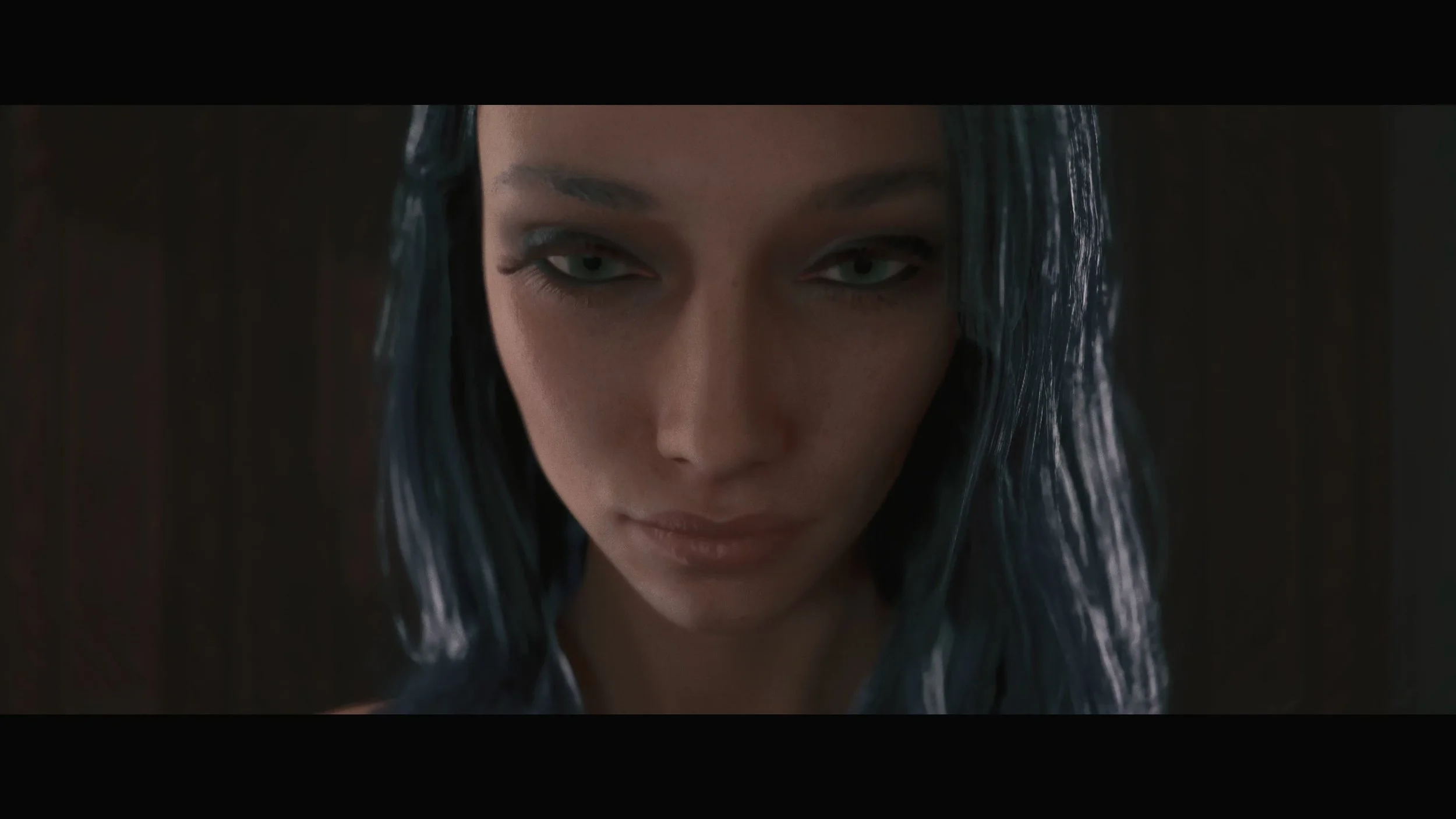
Image: Code Violet - Violet Sinclair - TeamKill Media
It's an ambitious story setup that involves time travel and a difficult plot of kidnapping women to be a part of a surrogacy operation - a bold, leap into difficult sci-fi territory that requires the deftest of hands. But it's important to go into Code Violet understanding the budgetary limitations and small team, to give context to many rough edges and to give praise to the elements that do work. Although, the story developments in the later game go places that needed better setup and more time to breathe.
Unfortunately, Violet herself isn't very fleshed out beyond the focus on her appearance. She's supposed to be a modern version of a strong-willed, Jill Valentine-like, final girl archetype, but Violet rarely has any real agency and doesn't express her feelings or opinions beyond the extremities during major underdeveloped story beats.
However, actor Alaina Wis did an admirable job without much character driven material to work from. During longer conversational pieces, both Alaina Wis and the actor playing Conners, did a lot to keep me invested as much as possible given the undercooked story. I hope Alaina gets the opportunity to demonstrate her talents in other gaming projects soon.
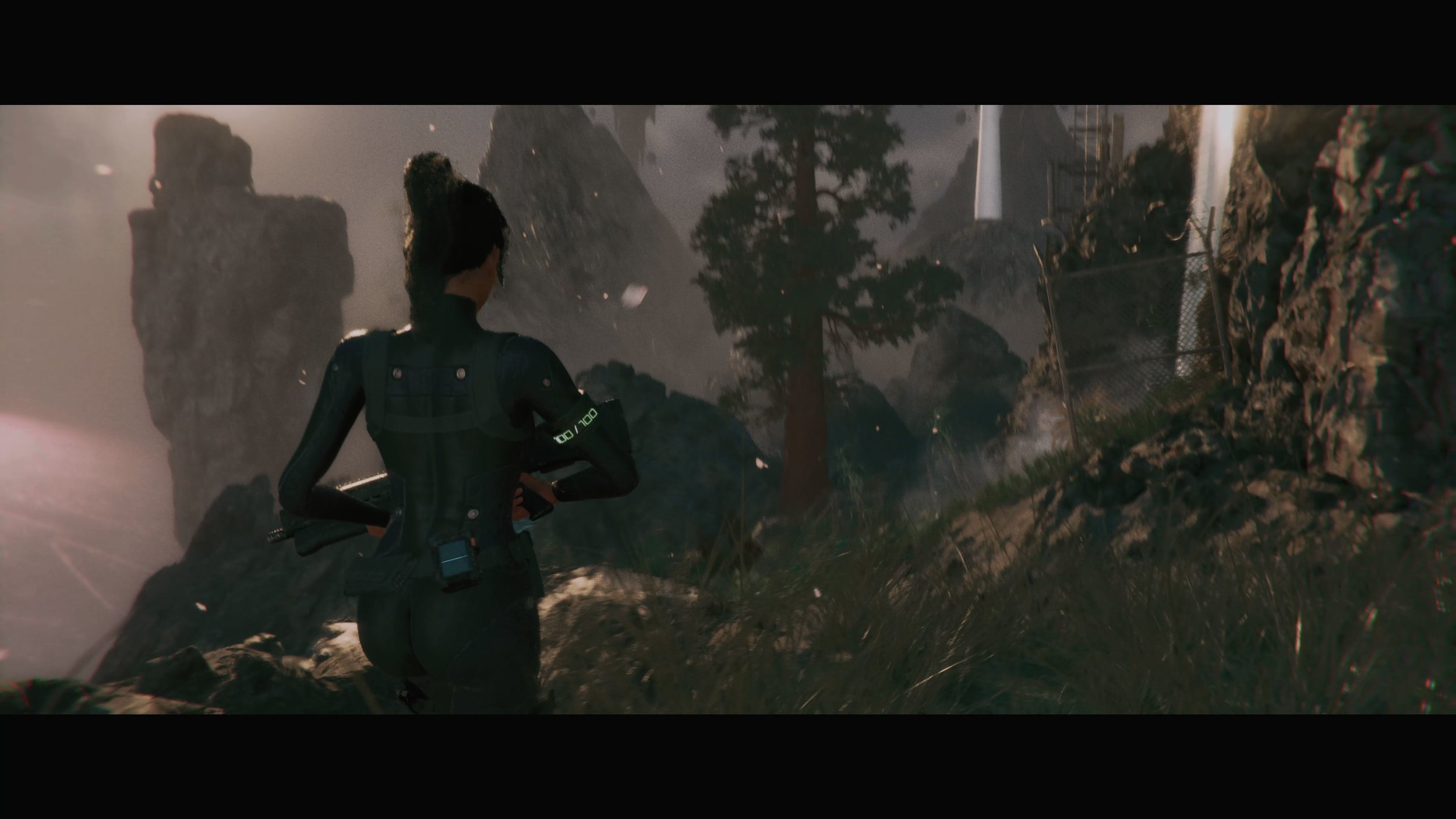
Image: Code Violet - Violet Outside - TeamKill Media
It's obvious Team Kill Media can invent worlds that appeal to many players who want to buy their games. Code Violet and their older projects all have intriguing gameplay hooks, but don't come close to mastering the execution. But this time, they do hit the key areas of their influence, Dino Crisis: a sci-fi story, a female protagonist, survival horror gameplay, and dinosaurs. All with a far-future, science fiction tilt. The script delivers heavy exposition and dialogue, that's a little too schlocky and on the nose for my tastes. However, there's been a good effort to spread lore documents throughout the world, expanding the mystery surrounding the facility and Violet.
There's also been an effort to include frequent cutscenes, but the animation quality and camera work varies dramatically throughout. There are some nice shots like Violet entering an office, and then some that get lost in leering at Violet's appearance over the service of the story. Obviously, there's a time and a place for all of that, but I just hope that going forward, the team can progress it's storytelling methods a little bit with each upcoming release.
But as a small studio, the far out sci-fi twists and turns in the later parts will appeal to many people.
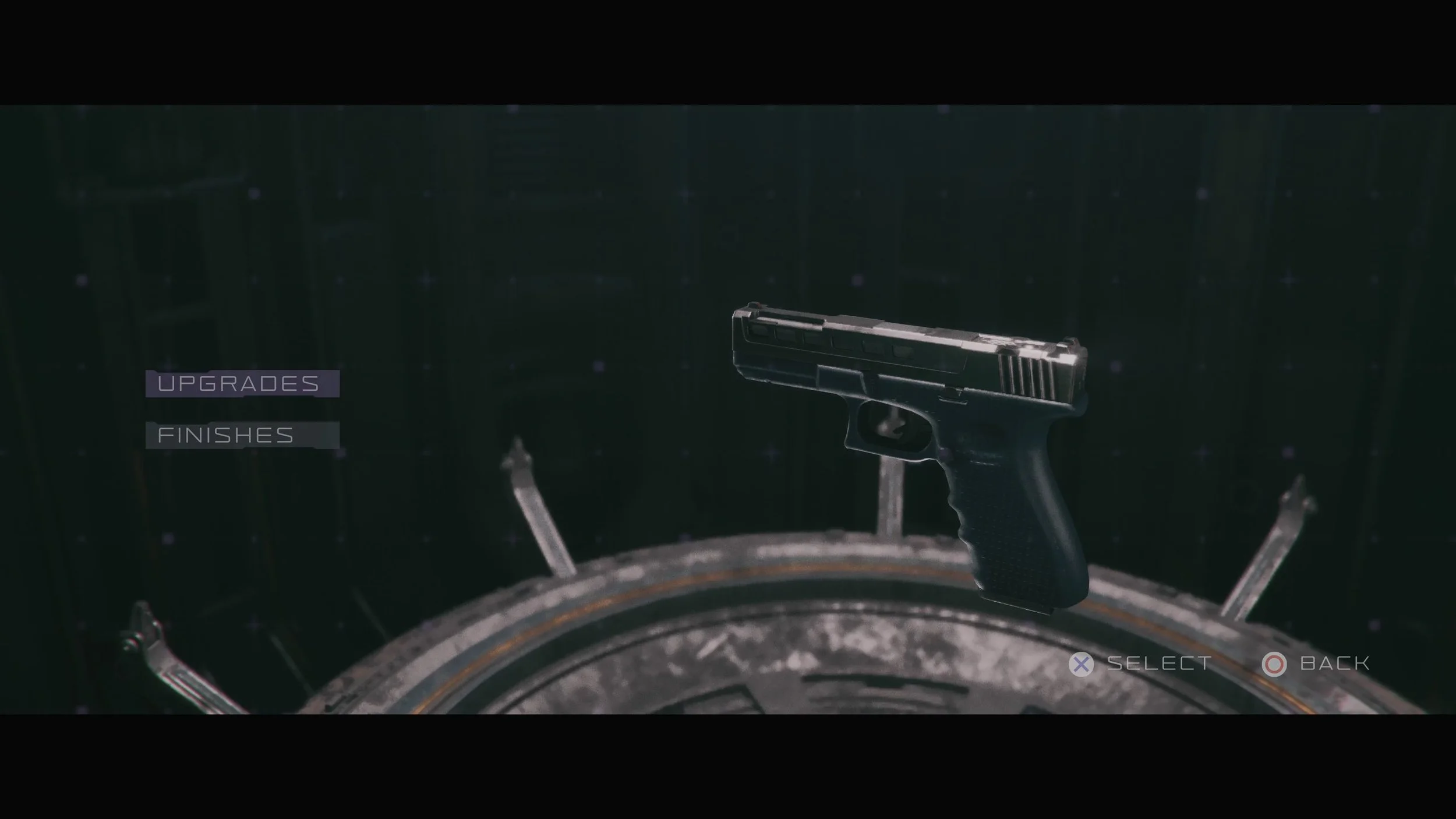
Image: Code Violet - Armoury - TeamKill Media
At its heart, Code Violet has a core gameplay loop that mimics a 90s survival horror game like Dino Crisis: a competent protagonist who uses a map to explore the environment and find key items to progress through locked areas, all the while, battling dinosaurs and needing to manage your limited supplies and inventory space. But let me be clear, that gameplay foundation is there. It simply needed a lot more time and work to refine it, which is a pattern that follows through every part of the game. Being a survival horror fan was the reason I bought the game and it was the aspect of the gameplay that kept me playing until the credits.
These mechanics feel more at home when Violet is exploring the interiors of the facility. Exploring labs, sewage facilities and other locations. Each indoor level acts on the same principles of level design: a simple layout where a route is blocked by a locked door that requires a key card or a biometric scan. You explore repetitive corridors and locations with continuously reused assets, whilst searching for ammo, health items, crafting materials, weapons, tools and key items. It's in the interior exploration where Code Violet feels most at home with the genre, even if it doesn't quite replicate it.
Team Kill Media have aimed to create a retro experience that doesn't hold your hand. But the interior maps detail everything you'll need to complete each level's simple design, and when a full instruction manual is in the pause menu, I would've added an optional toggle to introduce the controls and in-game systems during gameplay. As there's a difference between onboarding and telling a player how to complete a level.
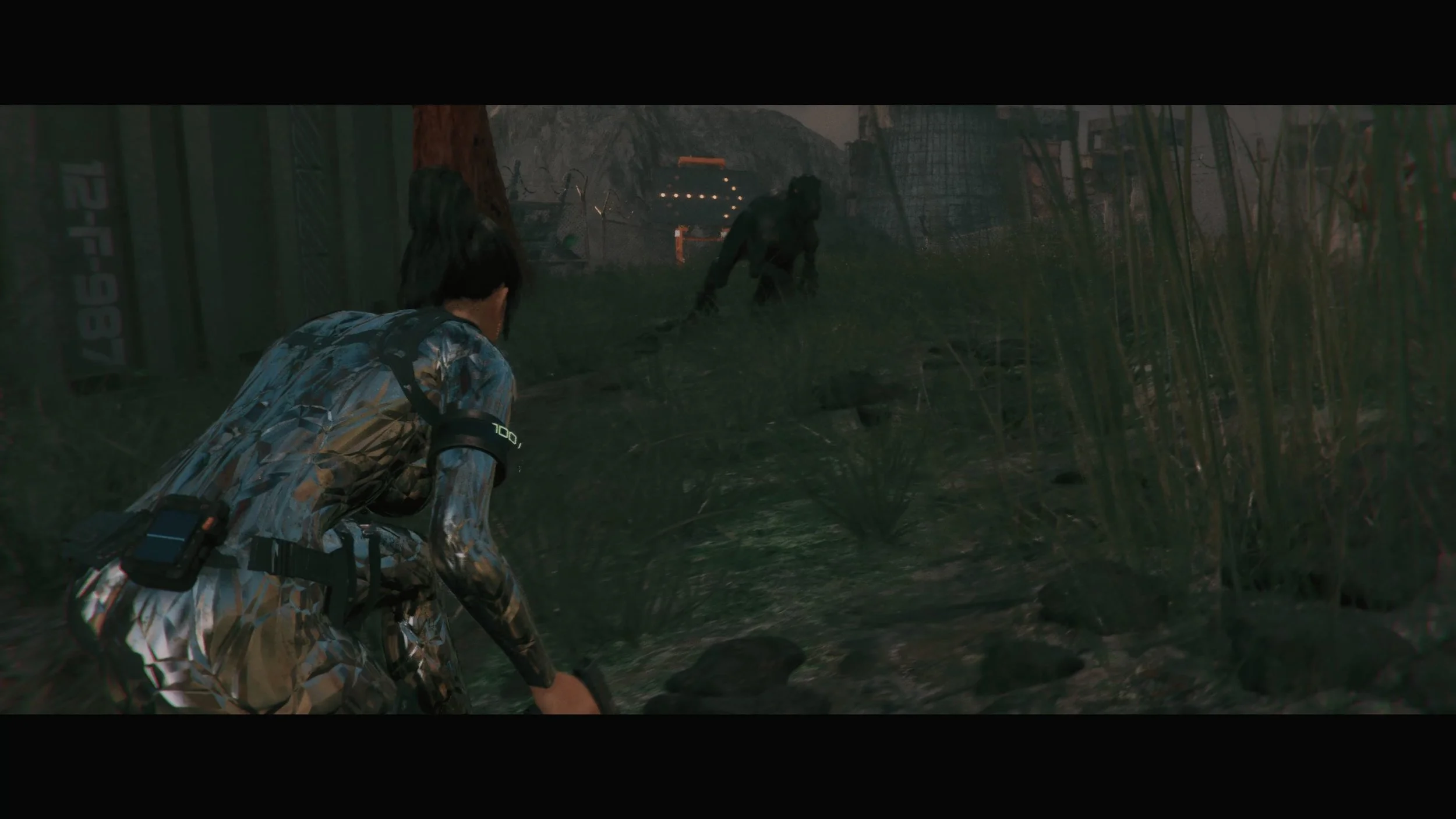
Image: Code Violet - Stealth - TeamKill Media
One of your first experiences in Code Violet is an attempt at a setpiece, where Violet is chased down a corridor by raptors. This is a clunkier and unexciting version of Crash Bandicoot's infamous level where you run away from a boulder. Here, Violet is given the ability to sprint and move side to side as well as dash to avoid the leaping raptor attacks. But unfortunately, the dashes stunt the feeling of momentum.
Similar setpieces return later on in a failed attempt at heightening the action. There's even a Tomb Raider like water sequence where Violet is swept down a river, and a classic moment where you shoot at a big enemy from a vehicle. Both examples feel overlong and monotonous, even in their short timespan. Again, I do value the attempt at gameplay variety, but more polish needed to go into every aspect to make them fun.
But as Violet finishes exploring a level, either a cutscene or a boss will begin. Apart from an early attempt at making the tyrannosaurus rex intimidating by having the dinosaur smash its head through glass panels, which requires the player to simply hold down a button to close metal shutters, the design of every other boss is fairly rudimentary. Poor AI means they continuously attack you. It makes for an easy fight on easy, a little more challenging on normal, but for hard, I'd have liked better attack patterns to make the challenge feel earned.
Inadequate AI continues to harm every other dinosaur encounter. Violet confronts a disappointingly small selection of normal dinosaurs. None more aggregious than the raptor: programmed to form an orderly queue to incessantly charge and jump at you, attempt ineffective jumpscares by bursting through vents, and unfair placement and patching that means enemies can be in your face when you enter a location. Whereas, spitters launch poison from a distance, which poisons Violet and requires you to administer an antidote; one of two afflictions, poisoning and bleeding, that require fixing within a time limit - a nice feature that adds to the survival horror feel. Lastly, the small ankle biting dinosaurs that charge at your legs, nip at your ankles, and then retreat before repeating their attack.
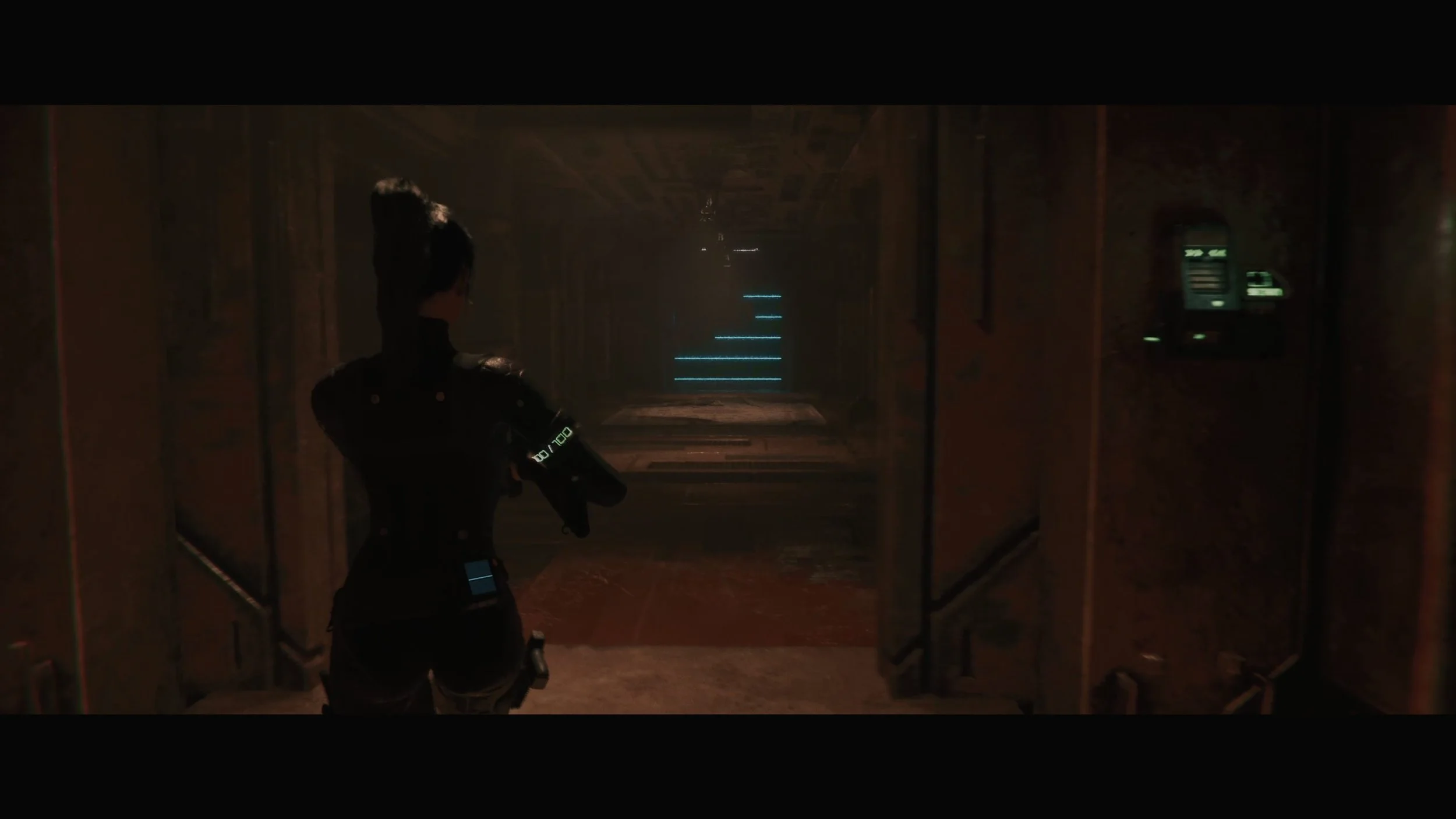
Image: Code Violet - Indoor - TeamKill Media
This would be partially excusable if the shooting functioned better. Violet herself is agile and can back and sidestep to give her breathing room against the prehistoric foes. But bugs and poor camera implementation hamper any enemy encounter that isn't in open space, forcing you to take undeserved damage. Survival horror games are supposed to be a challenge, but you should never be fighting against the game. The camera continuously collides with any barrier or wall behind Violet, making any moment you aim down at the smallest dinosaurs infuriatingly unfair as the camera clips and merges with Violet or the wall. Only worsened by the implementation of the flashlight, which is attached to the axis of the right stick instead of the gun or Violet's body. There should never be a moment where you're playing tug of war against battling enemies and poor implemented features.
But when it comes to weaponry, Code Violet features a wide selection of guns like the typical pistol, shotgun, submachine gun, to more prototype weapons. All of which can be upgraded in the armoury using a currency called mites. These can be found from the bodies of enemies or hidden around levels. Weapon upgrades range from damage to ammo capacity. And for those who like to change the appearance of weapons, you can choose from a selection of colourful skins.
Team Kill Media try to expand on the 90's survival horror feel by incorporating mini games to unlock doors to health supplies, password and key locks to cabinets, laser obstacles and hazards whilst prone.
The mini game is a simple repeat after me button prompt exercise, that insists you repeat the whole sequence if you slip up. These never evolve and remain the same until the end. It wouldn't be so bad if the rooms didn't contain necessary medical supplies like antidotes and blood bags. These blood bags are another nice touch, that are needed to restore Violet's maximum health after being inflicted with bleed has lowered it. Another item which adds depth to the classic implementation of inventory management.
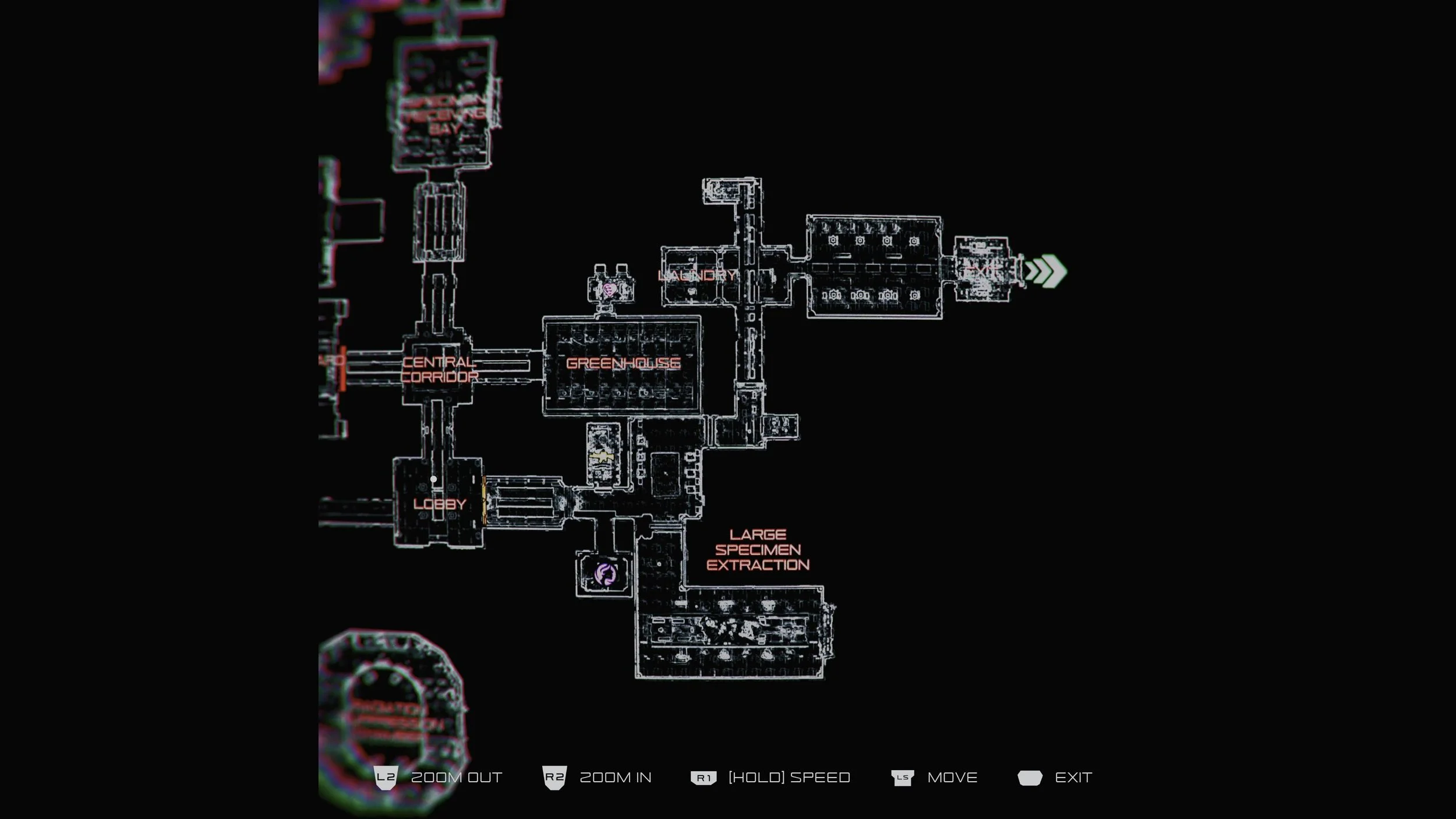
Image: Code Violet - Map - TeamKill Media
Cabinets locked by passwords and keys are also spread around the interiors. Most include ammunition or crafting materials, but some contain inventory expansion and new weapons. However, it was during a password lock that the overlay bugged and remained on screen until the game was restarted.
But I did find Code Violet's laser obstacles a nice addition in the beginning. These require the use of a blacklight to show where Violet can progress without getting dispatched. It's a nice addition, but by the time it returned later on, I had forgotten about them. The blacklight is used for a few other parts, but I would have liked to have seen it used in other ways.
But one gameplay mechanic I really didn't enjoy was the crawling sequences. These slow moving sections require Violet to crawl forward whilst rolling from left to right to avoid a fiery blast. These aren't hard, they're just uneventful. It only happens a couple of times, but I still felt they distracted from the experience.
The final key part of the interiors are the dressing rooms. These are nicely detailed safe rooms, where you can save the game on an old school rotary phone, admire the collectibles eggs and animals you've found on a wooden cabinet, store items in a storage box, and change Violet's appearance.
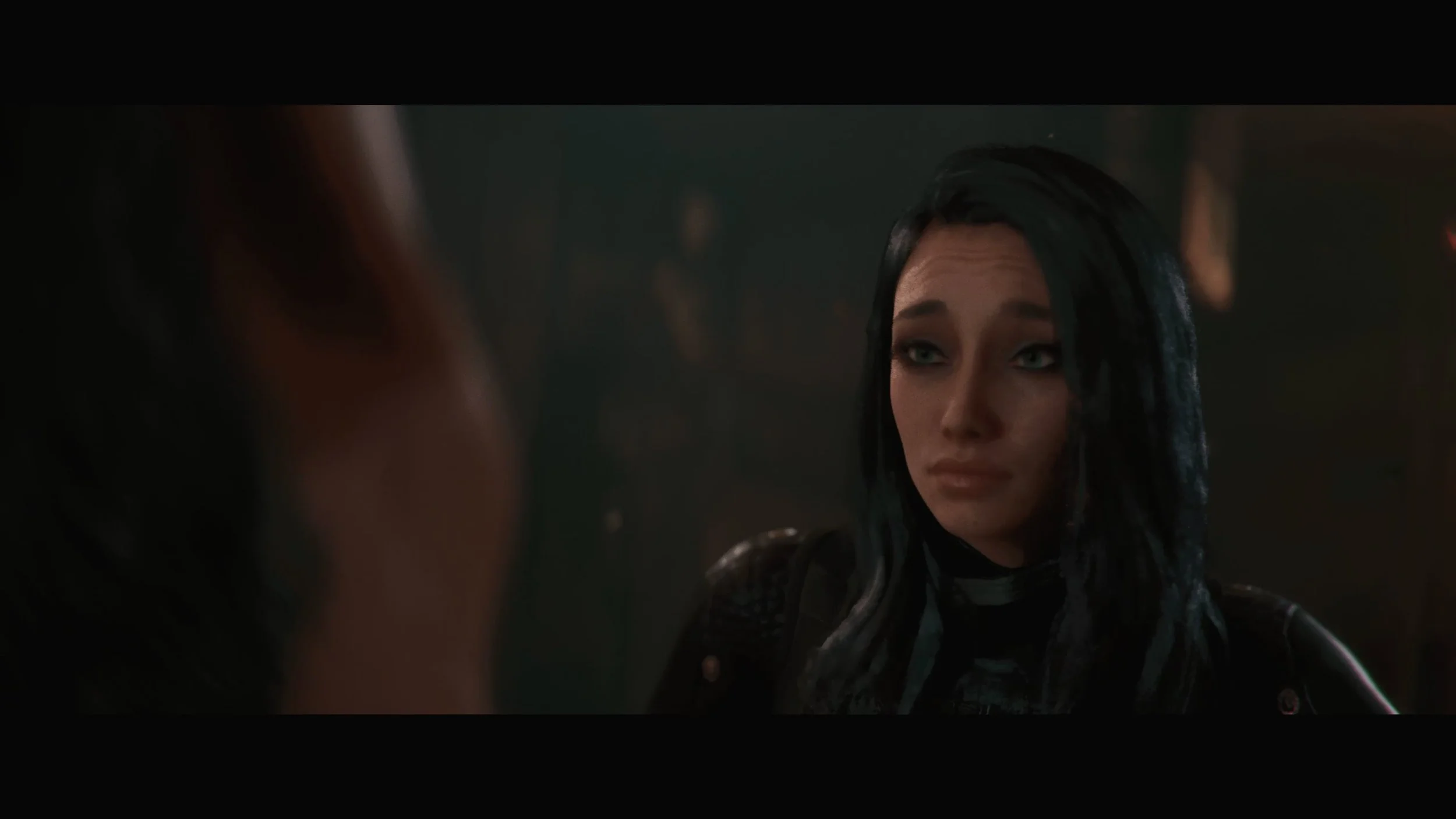
Image: Code Violet - Cutscene - TeamKill Media
Great effort has clearly been put into Violet's appearance and costumes. Plus, Team Kill Media deserve some praise for including the once deluxe edition DLC into the standard version of the game due to the last delay. You can select earrings that offer perks like increased stamina. Whereas, every hair and clothes option are cosmetic. It isn't a particular feature I found interesting in Code Violet or other games that focus on a character's appearance like Stellar Blade. But where Stellar Blade had amazing gameplay, Code Violet's concentration on outfits feels out of place when Violet herself isn't a well characterised protagonist. But I understand these features are important to many, yet, I can't help but wonder if this effort could've been time better spent getting the game into a polished state.
Away from the interiors, the outside initially impresses as large floating rocks fill the skybox. But on ground level, bland tall grasslands fill the space between gigantic trees. These outdoor sections act as intermissions between the main interior levels. Tall grass is everywhere to encourage the use of stealth. To crouch walk through grass to quieten your footsteps and avoid raptors, or to use another item that activates a camoflage. But I never found myself favouring stealth when dinosaurs seemed to magnetise towards me, asking for a quick onslaught of bullets.
You also don't have a map outside, not that you even need one. As the main path hardly offers the chance to divert to find secrets, and before you can even get lost, huge out of place construction signs point the way forward. It's here where I used the high ground for cover to attack a raptor below, and it jumped into the air and hovered in place on an invisible ledge. Every time you try to use the environment to your advantage, the game bites back and breaks the immersion. The only semblance of variety was a miniature hedge maze, that quickly escalated the issues with the camera during combat.
I played on a Playstation 5 Pro for my whole playthrough, and the frame rate seemed near 60, except for a few sections that included water. But I am not an expert like Digital Foundary, yet to my eye, it felt fine most of the time. The resolution was sharp enough to highlight the good and the bad in the environments. But close up, it made metallic and other surfaces kind of muddy.
Although, some environments like the dressing room were nicely designed with better lighting than most parts, even if they felt out of place with the game that came before them. It's odd really, as detailed statues and lamps weirdly adorn office spaces and an intricately crafted manor. There's a massive disparity between textures, objects and art between levels. Even some character models look better than others. It's clear that the team prioritised Violet's character model over others.
But what struck me throughout was the oil paintings found all over the place. They spoil the aesthetic of each environment as the artstyle is entirely different from the rest of the game. After the first encounter, I entered Code Violet's no thrills photo mode (which they say will be improved) to look at the paintings. I'm not a specialist so I can't know for sure if something is AI or not, but the weird fingers and other details give me pause. But I hope it has not been used here or in other creative ventures within the game. As although AI is a nuanced topic and ever-evolving technology, I dislike the thought of an AI using a human artist's artwork to create a hybrid copy, when someone could be hired and paid to make something human and original.
Sound is another key part of any horror game, and unfortunately, the sound design isn't completely functional. Atmospheric audio meant to immerse you, like lullabies and rushing water, seep through walls long after you've left the area and ruin the immersion. I also found the continuous use of a cockerel audio cue incredibly out of place whilst fighting dinosaurs in the forest. But the score offers a generic sci-fi tone, while some tracks like the credits song resembles a simplified patterned version of a song from the rock band Evanescence.
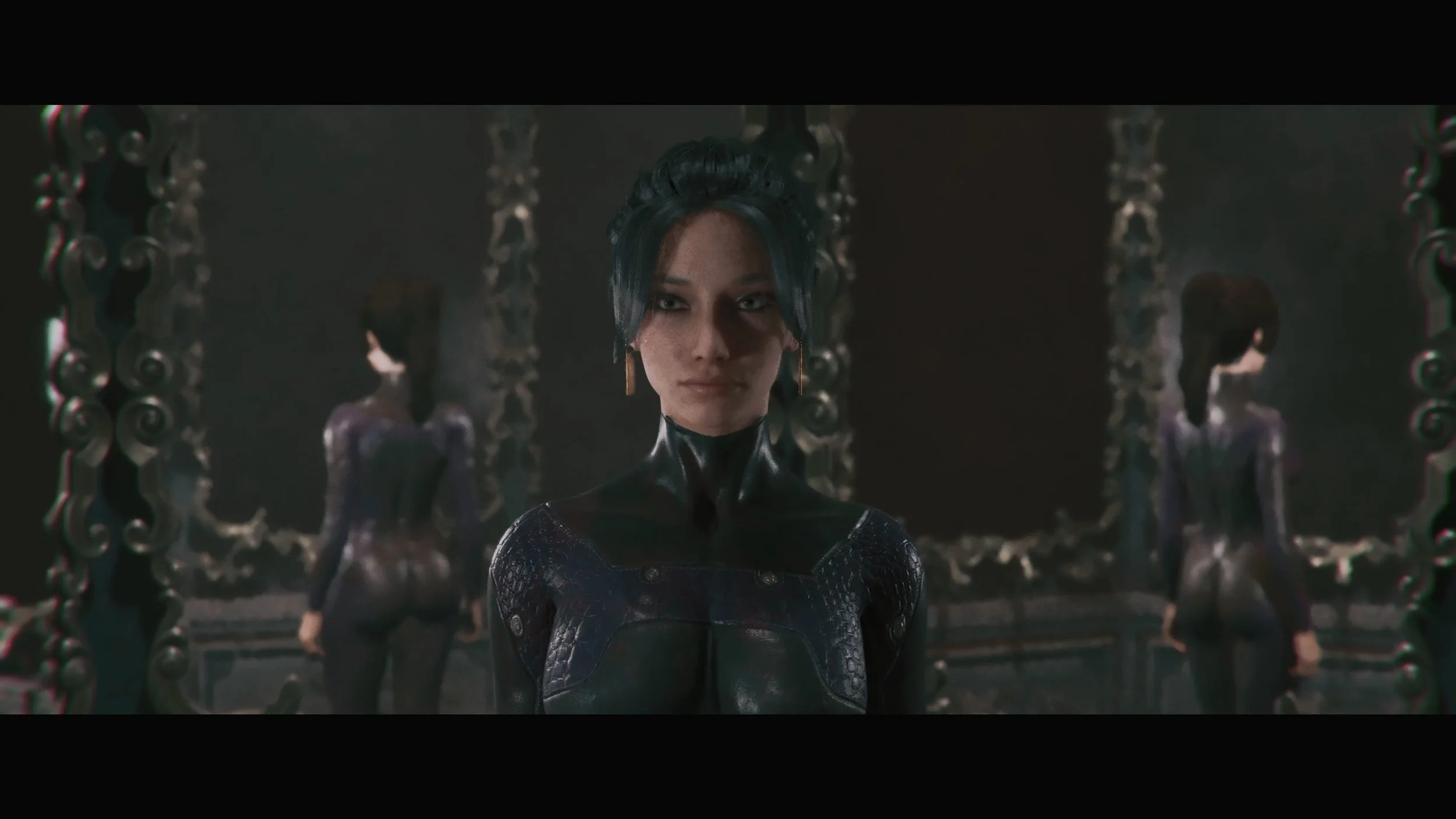
Image: Code Violet - Costumes - TeamKill Media
The music, art and other creative outlets are why I wished the credits offered a detailed description of what was used to create things, and who performed and sang the end credits song. To fully understand the creative process and if and how AI was used to create anything. I understand that it doesn't matter to some people, but as an appreciator of the creative mediums and the education that goes into becoming a game developer, I prefer inventive programming and meaningful art created by humans.
Lastly, the dinosaurs were not the only thing I was battling throughout my six to seven hour playthrough of Code Violet, which would be more on the hardest difficulty. Aside from camera glitches in combat, I encountered countless bugs throughout my playtime. Frequently when a cutscene played, Violet's hair would flicker and make her bald; raptors and other enemies would float in mid air; Violet would get stuck in prone and I would need to reboot the game; the HUD would be stuck on screen; the audio would glitch out and much more. But it's important to note that Team Kill Media have already put out one patch since I finished the game and continue to work on other bugs.
The survival horror gameplay loop shows potential, but the biggest issue is how unpolished it is. But it's overwhelmed by repetitive level design, an inconvenient camera and undercooked narrative design.
One thing is extremely clear, Team Kill Media are as passionate as they can be about making the games they and their audience want to play. Obviously, completing and publishing any game is an admirable feat most people will only dream of accomplishing, and as a small team, the challenges increase exponentially. Although, I do believe that regardless of team size and budget, if a video game is released, it should be in a bug free and polished state. If that was true here, Code Violet would've scored slightly higher across the board.
Code Violet fails at being a spiritual successor to Dino Crisis. The promise of the world is better than the messy and undercooked narrative delivered. With the beginnings of a solid foundation hidden underneath way too many bugs and underdeveloped game design, Code Violet isn't a game that I can recommend at the current price I paid of £39.99. But if you really want to play a new, dinosaur survival horror game, I'd make sure to align your expectations and wait for it to be updated to the standard it should've been in at launch.