
Review - Fishbowl
Fishbowl is an indie, visual novel game and the first video game from I Miss My Friends Studio; a developer duo of Rhea Gupte and Prateek Saxena who decided to make a video game influenced by the COVID-19 pandemic and other life events. It presents the possibility of being emotionally resonant with everyone due to our shared experience during the pandemic and topic such as depression, self-doubt and cancer.
The storytelling in the trailer drew me to the title, and must've attracted Playstation to include Fishbowl in their India Hero Project. It's difficult to discuss the intricacies of Fishbowl without spoiling the plot, but I will try my best to keep spoilers to a minimum.
Fishbowl centres around the protagonist, Alo, a young woman who has recently finished her degree and moved to the big city to start a new job on a month's probationary period. From her youth, she's been a passionate and avid poet, until something changed within her. Something she keeps suppressed in the darkness. However, since her grandmother passed away a month ago, everything feels different. Every moment feels wrong - a powerful grief that prevents her from seeing past the clouds.
Whenever she tries to write, she despises her words and scribbles them out. Loathing herself. Her supposed lack of talent. Her foggy brain. All of her self-doubting thoughts leaking through to the surface. However, when Alo settles into her new, roomy but lonely apartment and begins her job as a junior video editor for the famous influencer, Sitara, the world immediately shuts down as the global pandemic takes hold. Alone in a new city and afraid, Alo has no choice but to transition to remote work and survive inside her apartment, unable to call the grandmother she would've reached out to for comfort.
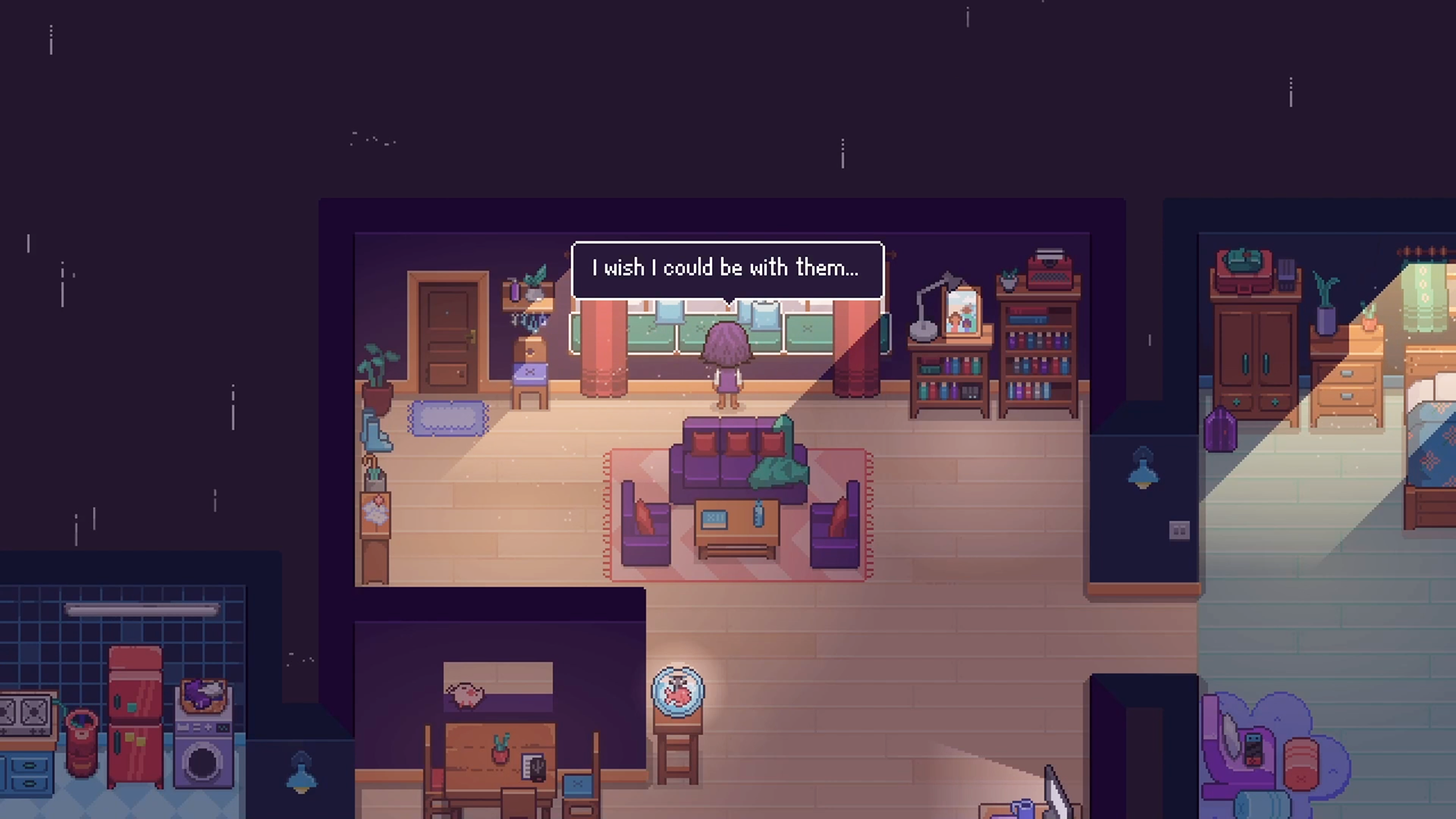
Image: Fishbowl - Apartment
This is where Fishbowl truly begins. After a video call with her mother, Alo receives a huge shipment of boxes that contain all of her grandmother's belongings. Seeing her grandmother's life reduced to boxes hits her hard, but she hopes unboxing and remembering her life will be a cathartic experience to finally accept the mammoth loss.
One of the first things you unbox is Paplet, a toy fish that lives in a fishbowl. But unlike when she was younger, Paplet is able to communicate with Alo during her loneliness. Slowly helping her talk out her feelings of depression, grief, inadequacy, guilt and self-doubt - a therapeutic tool to help her remember the good times with her family and the bad times hearing arguments, and seeing her grandmother go through a battle with cancer. Many things that will resonate with countless people.
This sets up the basic day-to-day gameplay of Fishbowl: you complete a small number of daily compulsory tasks and can choose to complete a vast number of optional ones. Every day Alo must complete her daily work and unpack one of her grandmother's storage boxes.
Alo's workday consists of logging onto her computer to first video chat with her colleagues at Sitara's firm, then, completing her video editing duties in the form of a matching game. You control different coloured rectangles that travel along horizontal, colour-coded rows. Your goal is to correctly match the rectangles with the right row - a purposely simplistic and repetitive mini game to replicate the feeling of going through the motions at work as tasks become harder when superiors apply pressure to their employees.
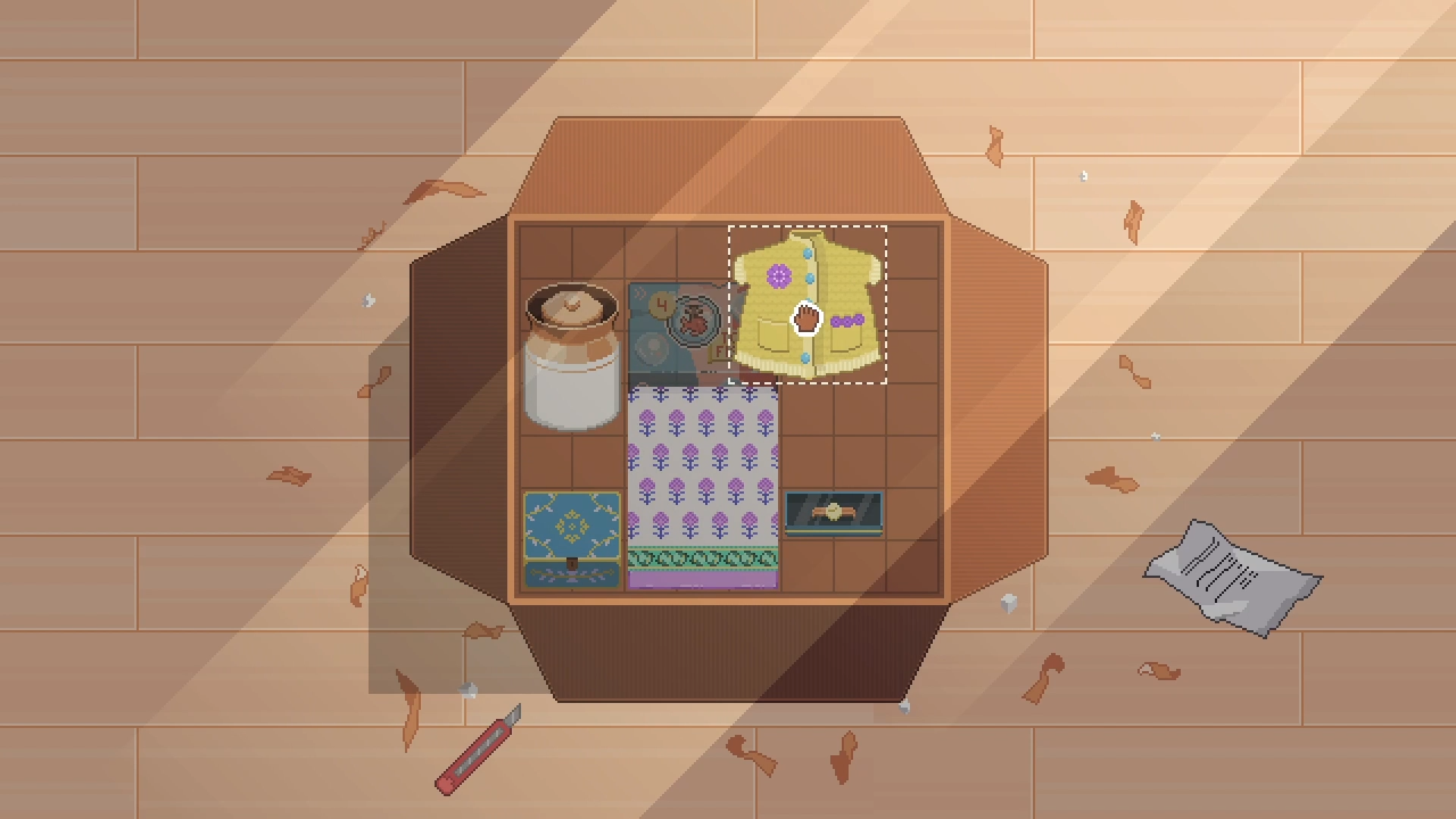
Image: Fishbowl - Box
The second mandatory task is unpacking Alo's grandmother's keepsakes, one box at a time. You complete a grid-based, unpacking mini game, where you must move overlapping objects until the key item underneath is uncovered. Once completed, you're given a concise description about each item, and a playable childhood memory about each key item from Alo's upbringing.
These poignant and emotional flashbacks layer so much shared history between the core cast of Alo, her mother, her grandmother, and her two best friends. We're transported to happy memories of Alo collecting seashells on the beach. And melancholic, murkier memories where Alo remembers hearing arguments but not being old enough to understand why they were happening. Each memory helps to slowly unravel Alo's family dynamic - a group of realistically imperfect relationships.
You can also receive and make video calls, which like certain flashbacks, lead to dialogue choices. These decisions can impact relationships and determine Fishbowl's ending. But the developers are quick to emphasise how every ending is valid. No ending is bad. You simply get the ending you're meant to get. This also creates a lot of replayability if you want to see how Alo's story could go differently.
Beyond mandatory tasks, Alo can complete optional activities to look after her physical and mental wellbeing and her home. You can clean your apartment and wash your clothes, or take a bath after cooking a proper meal, and much more. Each time Alo unpacks one of her grandmother's boxes, Alo talks to her toy fish Paplet to remember something important from her childhood, or sinks into a deeper depression.
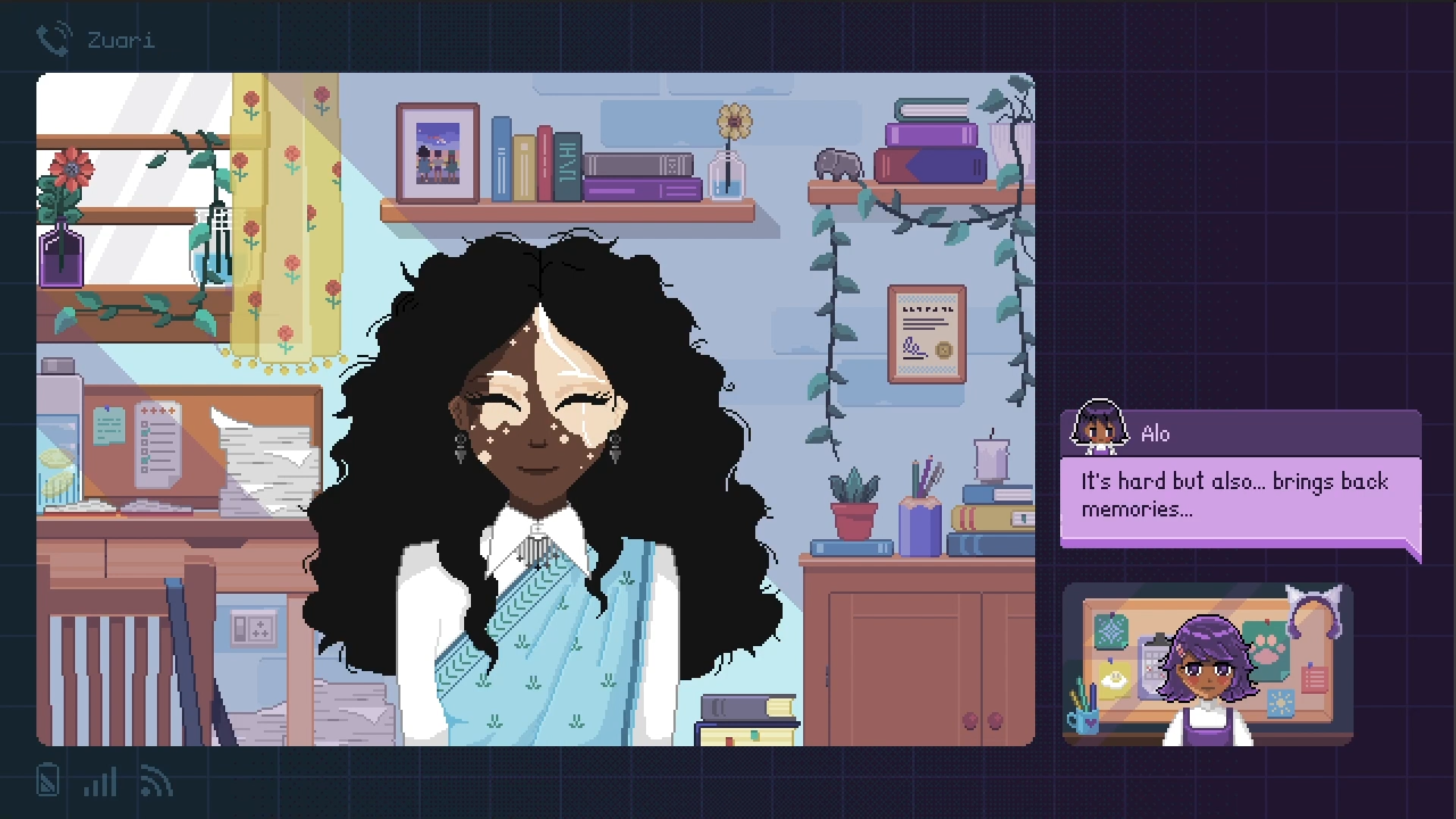
Image: Fishbowl - Video Call
Fishbowl represents the outcome of these decisions in a bar that appears at the top of the screen. It increases whenever you do something positive for Alo, like making a cup of coffee or taking the initiative to catch up with friends via video call. Or decrease the meter when you fail to write again, or remember an upsetting memory from your childhood.
As the one month probation continues, the more objects Alo discovers that can enrich her life. Much like in real life, you gain as much from Fishbowl as you choose to put in. You can ring Alo's friends daily, or you can ignore them aside from when they call you. But with deep, emotional writing throughout and distinct characterisation, I was eager to learn more about the main cast that has been touched by a believable shared history. If you ignore these aspects, you would miss out on what makes Fishbowl special. As in life, it's often the small, inconsequential moments that mean the most: an unexpected phonecall, the smell of your favourite meal on a bad day, a photograph you had forgotten existed. Reminders that people care about you.
All of this is supported by a strong visual and audio foundation. Colourful environments and distinct characters all stand out from each other in a beautiful pixel art style. Even the optional activities like watering plants or using the toilet are shown via small images that act as multi-step directional button prompts to complete an action.
Although it's during Alo's moments of despair or thoughtfulness where art and especially colour composition, takes the spotlight. Flashbacks lack the same colourful tones to add a realistic fogginess to old memories. Whereas, upsetting nightmares are colourless voids that attempt to swallow Alo's remaining hope by echoing her biggest doubts and regrets - reminders of the worst moments of her life. But then, moments of immense clarity and wonder are shown in a dreamlike full face render that contrasts against every other frame of the game.
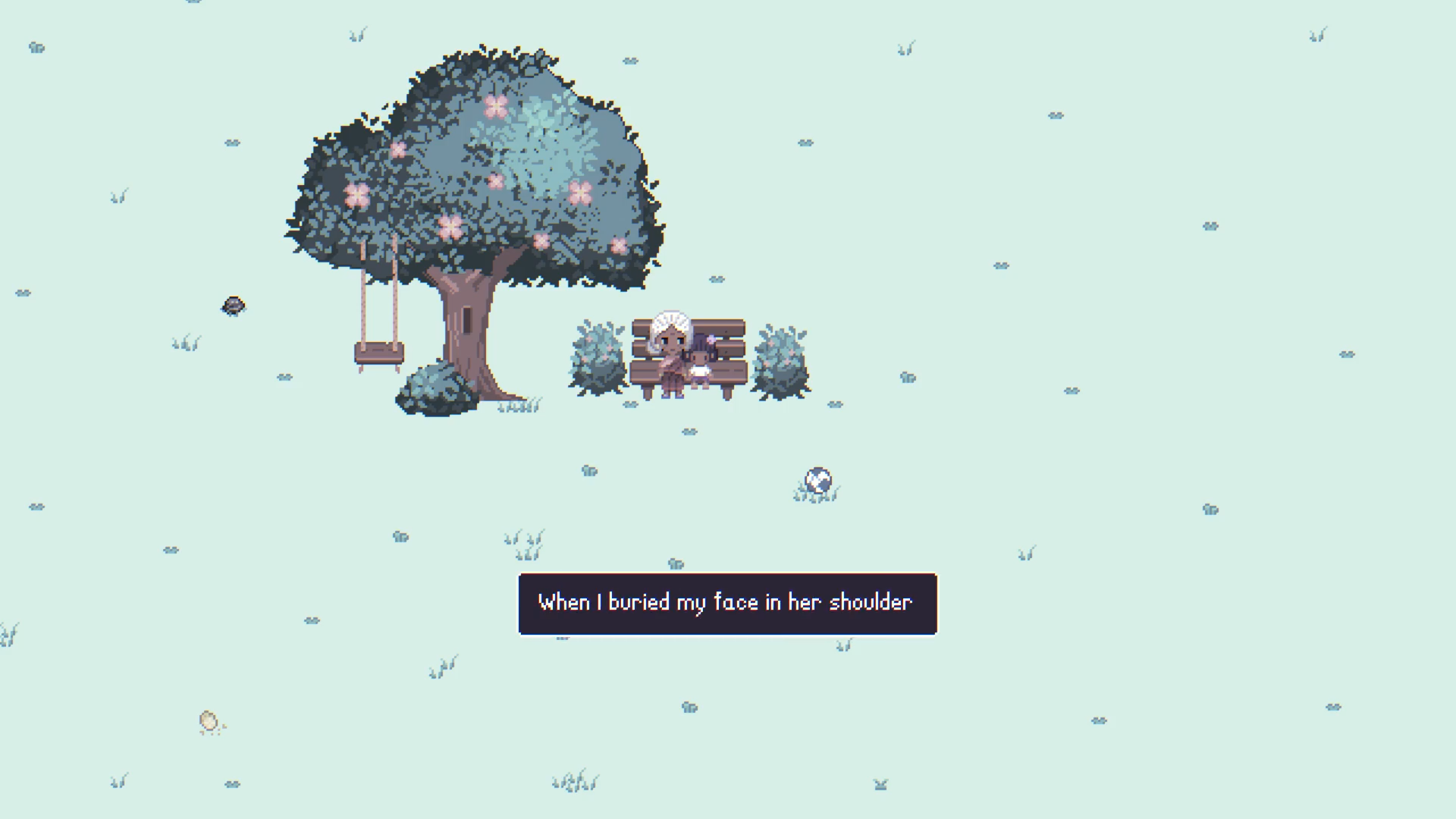
Image: Fishbowl - Memory
The developers also apply a cosy lo-fi soundtrack to the entire game. Never overbearing or intrusive. It encourages you to experience Fishbowl at your own pace as you decide how Alo should live her life. This same outlook is applied to the decision to exclude voice acting, too. A smart decision for a small studio of two people, but I also believe it wouldn't have been additive to the experience. As reading every carefully written word let me absorb the nuances of the story, like a good book where you reread impactful passages.
It's this intricate interweaving of plot and characters that makes Fishbowl so emotionally resonant. Every character - even the ones with less interactions - has a deep story to tell that interlinks with Alo's emotional turmoil and Fishbowl's overarching narrative as Alo is forced to withdraw from the world. That's the real joy of playing Fishbowl. They successfully replicate the feeling of getting to know someone, and how it's the conversations you have once you truly know them that leave a lasting impression. But I won't spoil any of the heartfelt subplots, as that's what the journey is about. But it's clear from over seven hours with Fishbowl, that Rhea and Prateek at I Miss My Friends Studio put their entire hearts into making a very cathartic game.
But I wouldn't find it unreasonable if certain players don't gel with the player agency in the game. Some people will undoubtedly expect more gameplay elements to be added in the later days. However, the repetition didn't bother me as I saw it as a plot device to encourage me to continue to help Alo and her friends as I reached the natural ending of my choices.
Fishbowl doesn't just transport Alo on an introspective journey, it lets players think back on a time most want to forget. It's mature and empathetic storytelling that enriches video games with its existence and holds a mirror to the player without judgement - a good example as to why indie games will always remain relevant. If you are searching for a seven hour plus story with replayability, relaxing gameplay and already know you like visual novel style games, Fishbowl is a must play. Otherwise, it's purposely repetitious gameplay won't appeal to everyone, but I would recommend Fishbowl to people on the strength of its storytelling alone.
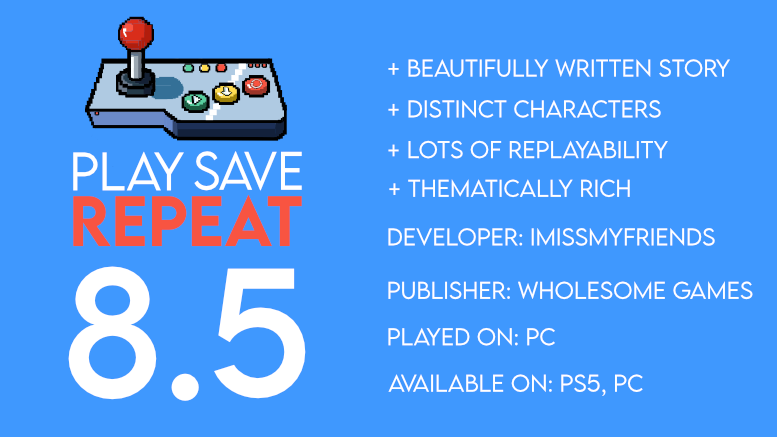
Image: Fishbowl - Score - 8.5/10