Since their rise in the 2010's, cinematic puzzle-platformers have become an unexpected favourite genre of mine in video games. Often shorter experiences; perfect vessels for emotional and atmospheric games that attempt to synchronise gameplay and story. With the likes of Limbo, Inside, and recently, Reanimal, using the genre for darker horrors, Planet of Lana 2 is a welcome continuation in the beautiful and colourful sci-fi world, Novo, created in the original.
Developer Wishfully returns players to Lana and her little round companion, Mui - a few years have past and Lana is more inquisitive and the world is just as mysterious. Planet of Lana 2: Children of the Leaf is set some time after the original. Human factions are spread across the Earth-like planet; some live peacefully off the land, others use dangerous robots to incite fear and selfishly mine the lifeblood of the world.
The sequel doesn't waste time in getting players up to speed with a short prologue. A subtitled opening explains what happened in the original, but beyond this, Wishfully maintain resolute to use a made up language without subtitles, to leave the story open to interpretation. Encouraging players to pick at story threads through the immediacy of the gameplay.
Planet of Lana 2: Children of the Leaf is once again a 2.5D cinematic puzzle platformer. Like most sequels, the developers haven't made a drastic departure from what worked, instead, they've used a bigger development team and years of experience, to refine and evolve every aspect of the game.
We first reconvene with Lana inside the guts of a wrecked starship, as she is playing big sister to a little girl called Anua. Lana willingly indulges Anua's playful and adventurous spirit by playing hide and seek, before the realities of the dangerous world arrive and Lana must escort her back to the safety of their hometown.
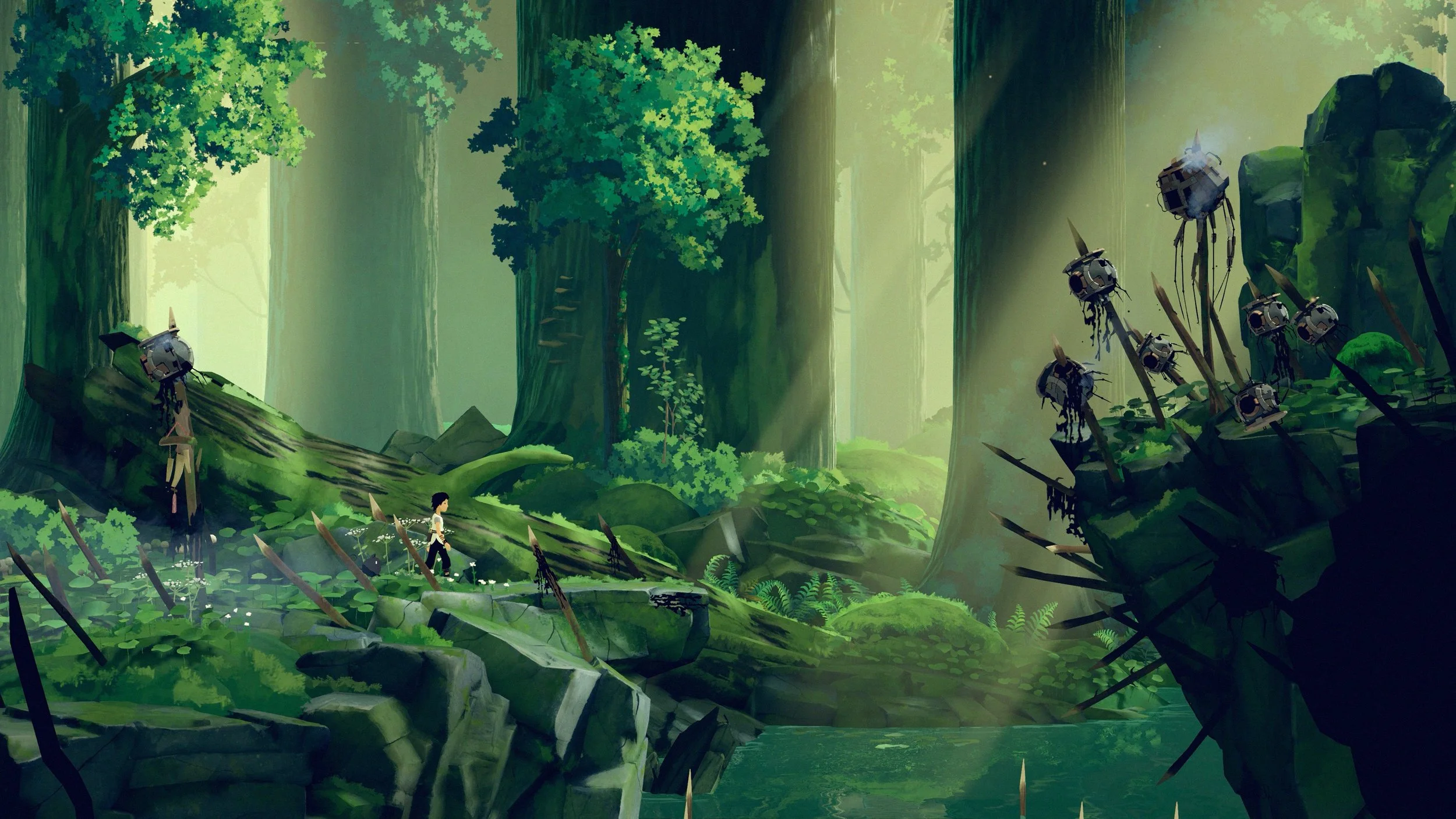
Image: Planet of Lana 2 - Forest
This first level carefully integrates tutorials around story beats for a more sophisticated moveset. It makes actions feel important. Learning to sneak and slide through grass feels significant due to Lana's need to entertain Anua; trapping a threatening creature behind a light is more important because you're keeping Anua safe.
But as Lana returns to her waterside home, disaster strikes and her older sister Elo forbids her from helping defend their home from their robot aligned aggressors. But Lana ignores her sister and sets out on a quest to find key items to save another person she cares for.
Although the initial hook might seem similar to the first game, it's made distinct by a clear improvement in gameplay and level design. Lana is a little older; a little more savvy. She understands her environment and its animal inhabitants. Moving her with the left stick feels more agile, less weighty. She doesn't feel anchored down when you jump. Everything feels fair and precise. Plentiful animations bring this robust movement to life, like the propulsive slide and added wall jumps.
However, the biggest addition is Lana's ability to swim. Opening up a whole new arena to explore - a unique environment that Mui cannot traverse without Lana's support. But as you'd expect, Lana has to manage her oxygen intake and only has so long until she needs to either surface or find a spot underwater expelling air bubbles. This risk reward system always feels like it gives you enough time to explore and attempt to solve a puzzle.
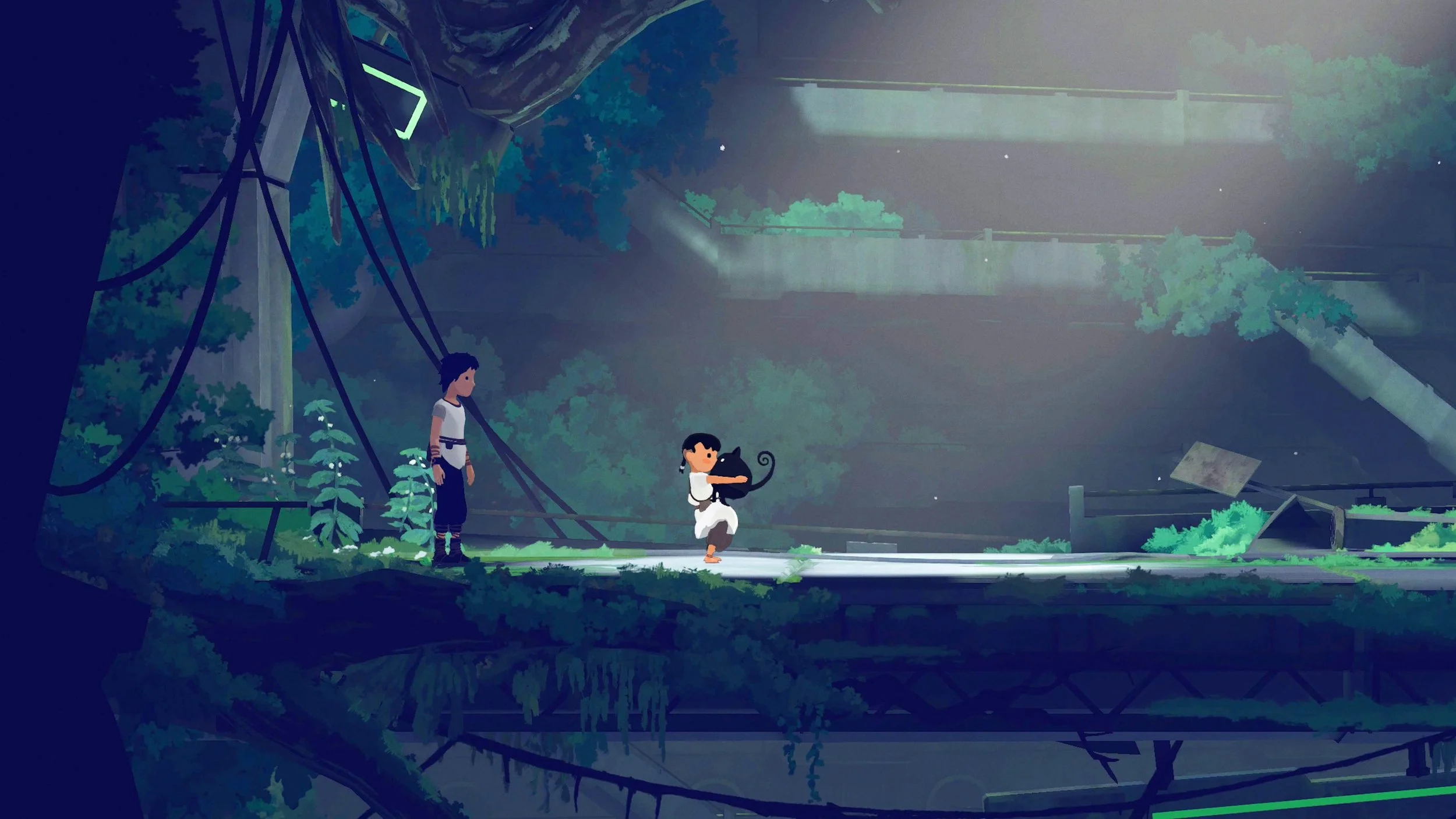
Image: Planet of Lana 2 - Anua and Mui
You generally find yourself unblocking underwater passages or locating a tree trunk to carry Mui across the water's surface, or a special plant that can envelop Mui in a fleshy, protective bubble. The bubble allows Lana to transport Mui underwater and out onto new ground.
The underwater sections aren't always safe for Lana. Frequent deadly enemies block her path, and if seen, it means instantaneous death. This is where Mui gets involved: the right stick and a tap of a button directs him. But when you place him near a pool of black fish type creatures, he can possess them and let you direct them towards the deadly creatures blocking Lana's path. Although still vulnerable to attack, the fish can expel an inky cloud to obscure the creature's vision. Then, you switch to Lana and swim past the creature to safety. These puzzle elements reoccur and evolve into more complicated scenarios.
Eventually, Lana finds herself able to use a submersible vehicle and expand the depths she can explore. Then, Lana can dock in submerged ports. This allows Lana to instruct Mui to do things like undo ropes, press switches and more. Then, Lana can use the vehicle to use a magnet underneath to lift metal obstructions or place metal girders to create a metal circuit to unlock a door.
This possession ability develops throughout: Mui can control other species to help Lana traverse gaps, and Lana can hack robots, to assist Mui. Without one, the other is incomplete - a themeatic bridge that runs through the entire game. Levels dynamically change to never get stale, so Lana needs to use Mui's possession ability to navigate past crushing platforms, lure deadly machines away to give Lana enough time to undo a vent and guarantee Mui can safely rejoin her.
Every puzzle feels instinctual and scales alongside your knowledge of the game's concepts and mechanics. However, rushing through levels isn't advisable. Scouting a scene is vital, as patience and methodical thinking are rewarded. Although puzzles and enemy encounters are fair and logical, a simple mistep can mean an untimely death and force you to try again.
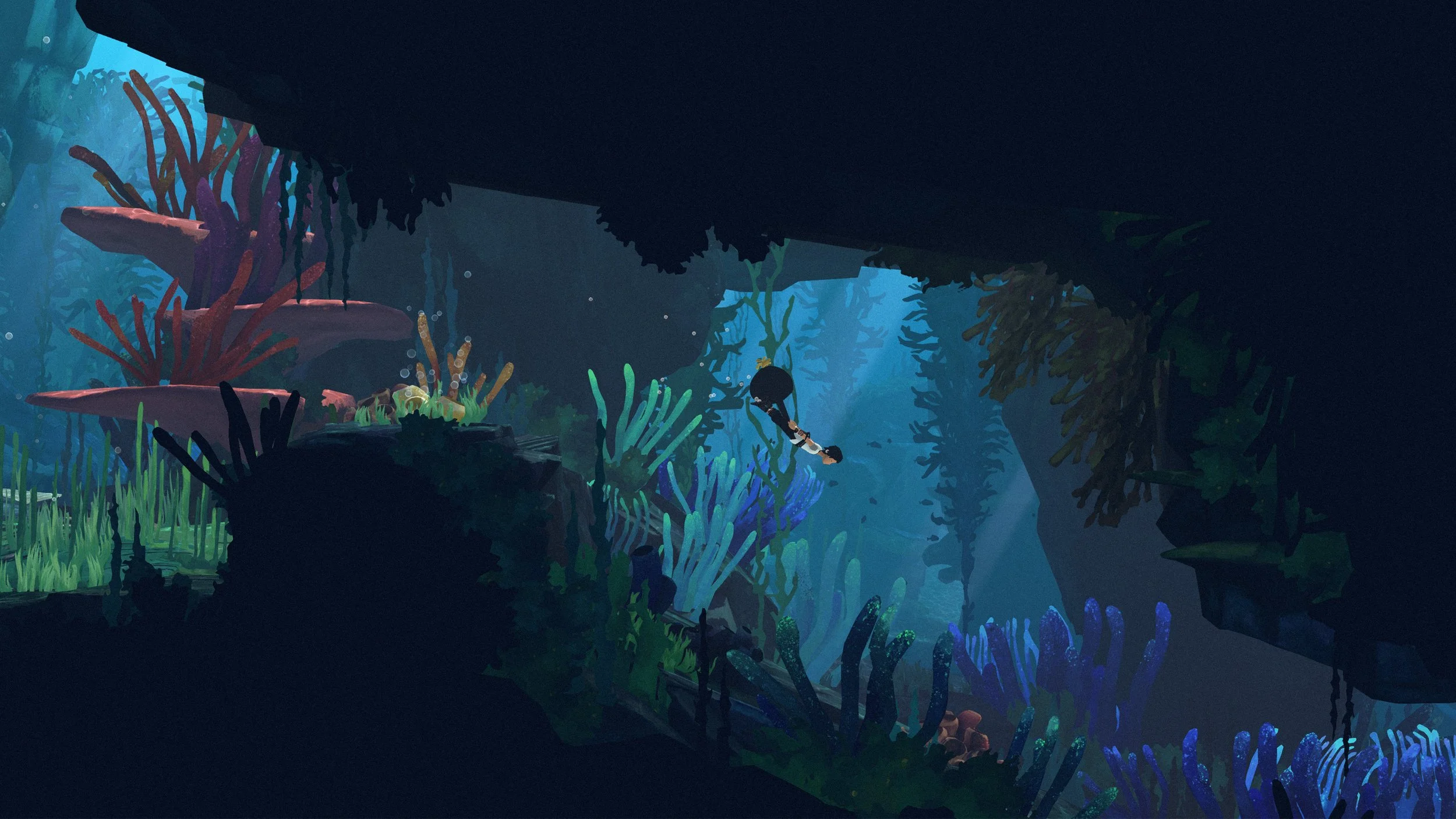
Image: Planet of Lana 2 - Swimming
The whole game design is meant to serve the thematically rich story. It permeates through every gameplay decision. Like when Lana lures hulking construction robots by attracting them with glowing stones mined from the planet - the machine's purpose to strip the resources from the lush, natural world. These interactions showcase the cyclical nature of humanity: good and bad, machine and human, nature and destruction. Humankind's ouroboros, where goodness is forever chasing its tail when selflessness isn't a predominant feature as different groups have individual perspectives.
Wishfully let us experience this through Lana's eyes. Moving amongst the various groups living within the world. It's emotionally gratifying to see trinkets and tools unique to each group's culture, customs and craft. Some revere the ecology of the planet; others destroy whatever stands in their way. Each new level expands the lore and widens our understanding of the world crafted by Wishfully. Lana befriends people, and heeds their customs in gameplay - a powerful solution that shows how the balance of power and control can shift with even the gentlest of pushes.
Wishfully cement their strong narrative focus by continuing to exclude real language voice work or subtitles - a symbiosis between story and gameplay. However, I don't believe the inclusion of subtitles or real world language voice acting would've taken anything away from how the narrative is received. But what the made up language does do, is force you to focus on each emotional shout or cry. It makes every obstacle Lana faces an unavoidable factor. It proves not all powerful sentiments need words.
I did find the story of the sequel to be quite straight forward, but still very poignant and thematically deep - a tapestry of familial bonds, social connections, cultural enlightenment, artificial intelligence, and mostly, a commentary on how we treat our own world.
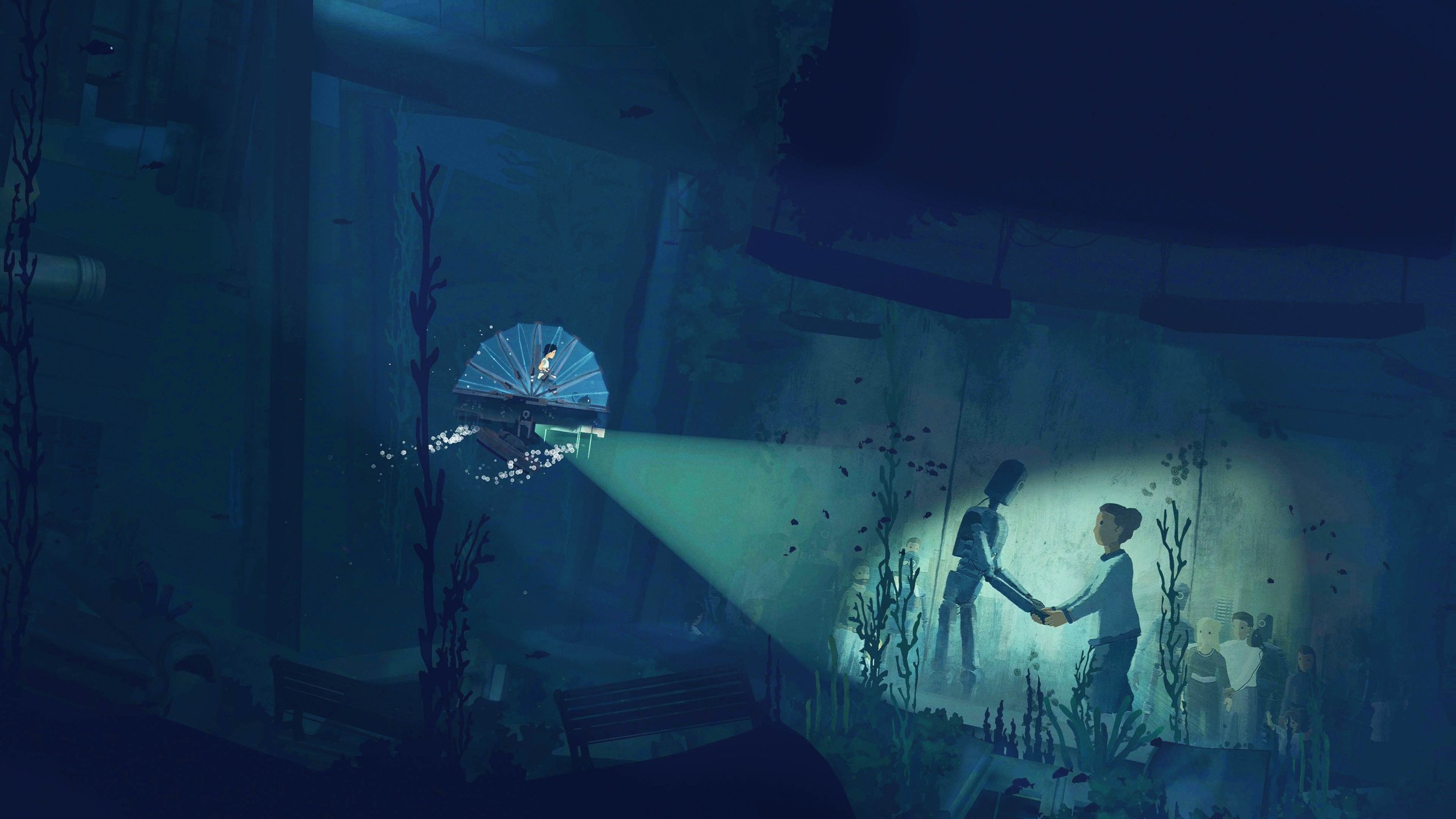
Image: Planet of Lana 2 - Submarine
Together, both Planet of Lana games feel like a mix between an environmental opus and a coming of age story - similar to the James Cameron Avatar franchise and how Amblin films used to show a child's journey of self-discovery.
Not content, Wishfully also includes extra lore to discover, in the form of artistic murals occasionally left by previous civilisations. But if you stray from the main path, Lana can stumble upon secret orbs that contain part of an illustration: a leftover relic which requires all the pieces to unlock the full picture.
But like everyone else, it was the eye catching hand painted art style that drew me to the original game. And somehow, Wishfully have improved upon something that was already great and turned it into something truly impressive - a moving painting that resembles the background art found in Hayao Miyazaki's Studio Ghibli movies. Intricately detailed with more layers than you would expect, which creates a fantastic depth to the world. It feels almost tangible as jet powered aircrafts fly between layers of trees, and trains cruise behind buildings.
Everything is attuned with the appropriate colour composition to illicit an emotion: grey, pale mountains imbue the loneliness Lana feels, a comforting cobalt blue water winks in the sunshine, a vibrant green forest is alive in all its ecological majesty.
Stylistically, character models maintain their simplified designs, which works perfectly with the top class backgrounds and animation work. Wishfully's artists really are masters of their creative discipline. Even with their simplistic faces, Lana and Mui's body language express their every feeling - giving a real important physicality to the sci-fi world.
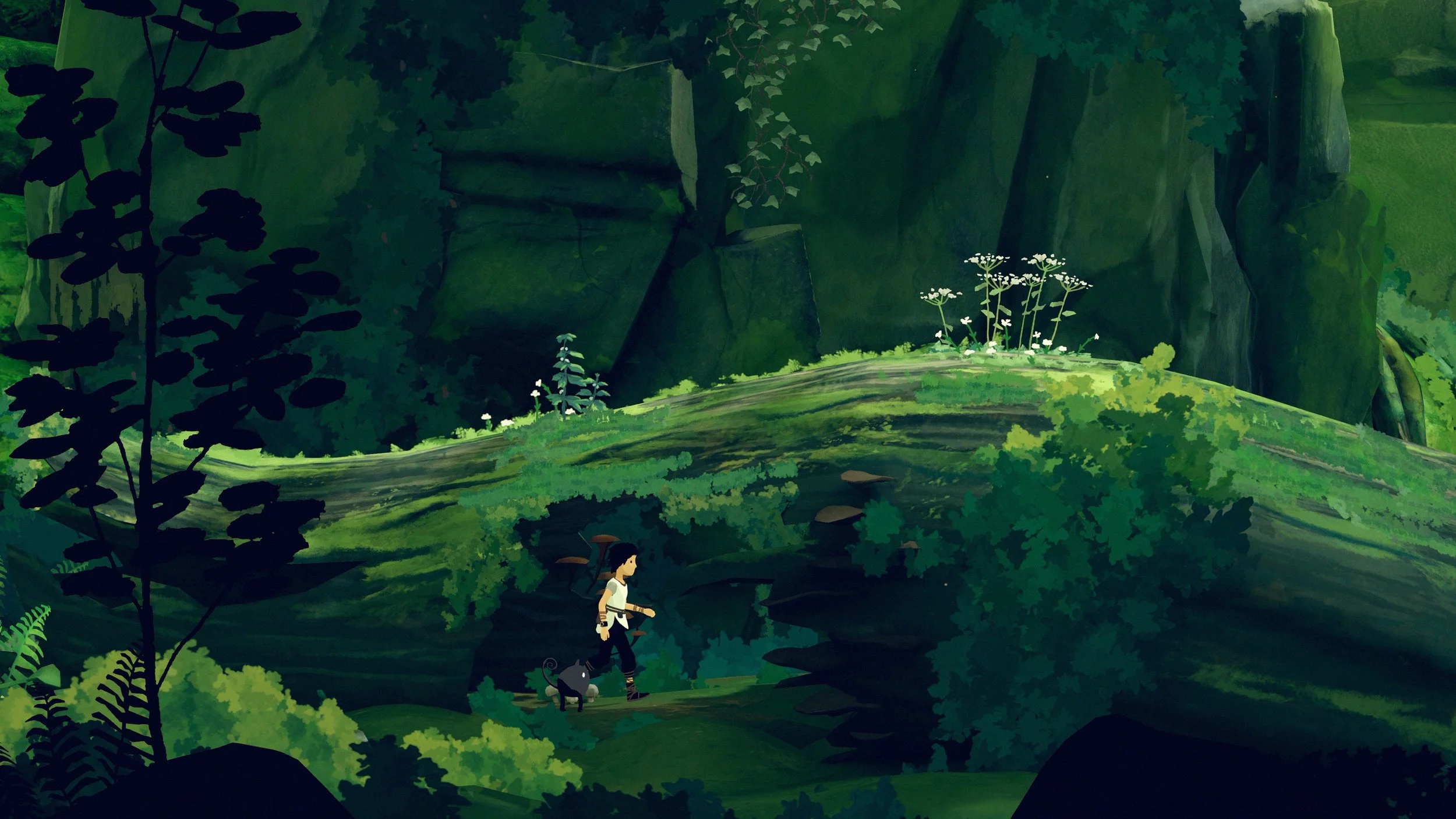
Image: Planet of Lana 2 - Tree
Also, the sequels upgraded lighting improves every frame: warm sun glistens off blades of grass, tunnels underwater to light Lana's way, stones glow with a life of their own, and raging fire devours the scenery.
Then, there's the impeccable sound design. The heartbeat of Lana's adventure that ties everything together - a world with an omnipresent musicality. Every repeated utterances becomes familiar like an old song, and rythmic tunes become a universal language between man and machine - even being used for copy and repeat musical puzzles. While creatures afraid of light squeal in pain, robots interact gleefully to Lana's controlling lullaby. Music represents a thin line between harmony, freedom and control - a further glimpse at how perspectives can change in an instant.
The score emboldens the themes of the game. My favourite track uses wistful horns which evokes the brewing unease summoned by Disco Elysium's Revaschol theme, met halfway by the tones of some of Star Wars' quieter, contemplative moments. Frequent peaceful moments as Lana takes in the vistas of swollen moons and insurmountable snow-capped mountains. It's one of the best cinematic scores I've heard in a long while. Every emotion Lana undergoes is echoed back to the player - it's sublime synchroncity at work.
My only minor quibbles were the underwater sections feeling a touch too floaty in some situations, and the odd frustration when dying during some cinematic running sequences. This meant restarting and repeating short sections numerous times, but I didn't encounter any egregious runbacks. Most of these failures were due to my overeagerness or getting too far ahead before the scene played out.
After spending six and a half hours in Lana's world, I completed Planet of Lana 2. It might not make any groundbreaking changes to the formula, but it improves on almost everything to make a sequel worth playing. It's easily one of the more memorable games of the year so far; a reminder as to how fantastic a creative vision can become when every aspect is on the same page. With fluid gameplay that never feels restrictive, superb movie quality visuals and a well-told story that continues Lana's journey of self-discovery, it's a fantastic sequel in every way.
Planet of Lana 2: Children of the Leaf is the perfect example of art - a perfect coalescence of visuals, sound, story and gameplay within the medium. If you enjoy cinematic puzzle platformers or you liked the first in the series, it's a must play game.
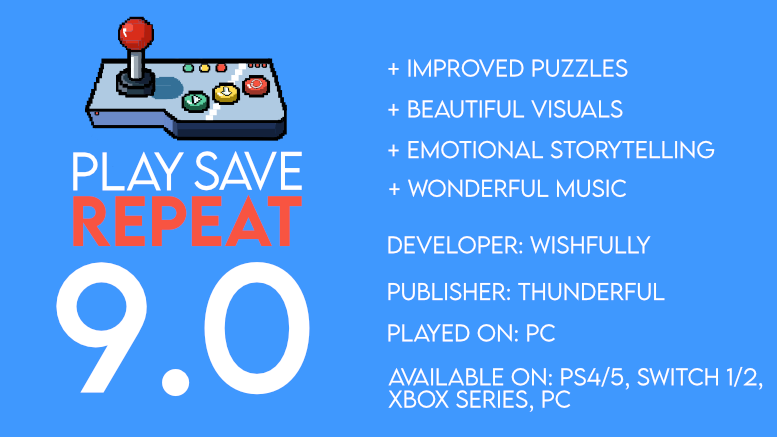
Image: Planet of Lana 2 - Score - 9/10