
Review - Scholar Adventure: Mystery of Silence
2025 has been a big year for point and click adventure games - a miniature renaissance of sorts. We've had The Drifter, oozing with John Carpenter influences; the return of detective Kathy Rain in Kathy Rain 2: Soothsayer, the brilliant Old Skies, and the nostalgic and spooky Foolish Mortals, just to name a few.
Now comes the turn of Scholar Adventure: Mystery of Silence - the first in the planned Scholar Adventure saga. The game is purposely designed to be on the shorter side at 1 to 2 hours, which is reflected in the lower price point of 7.99 dollars. But even with a lower budget, Mystery of Silence sets high ambitions to deliver a thematically rich short story with pixelated background art, that at times, reminded me of a chiaroscuro aesthetic, famously used by the likes of Rembrandt and Goya.
In Mystery of Silence, you play as William, a young writer in the pursuit of his first literary breakthrough. On his travels, he finds himself at an ancient abbey, where a once musical sanctuary is now blanketed in silence and secrets remain unsaid. Soon enough, William discovers the story he's been searching for, even if it's more than he ever expected.
Made by solo developer Ayose Trujillo of Making Enemies, with music and sound designed by Antonio Vozmediano. Mystery of Silence is made on the PowerQuest add-on for Unity which in itself was made by Dave Lloyd of Powerhoof, the creator of the brilliant The Drifter - a tool used by the great Loco Motive, as well. So, Mystery of Silence shares some similarities in UI, save system, cursors and controls.
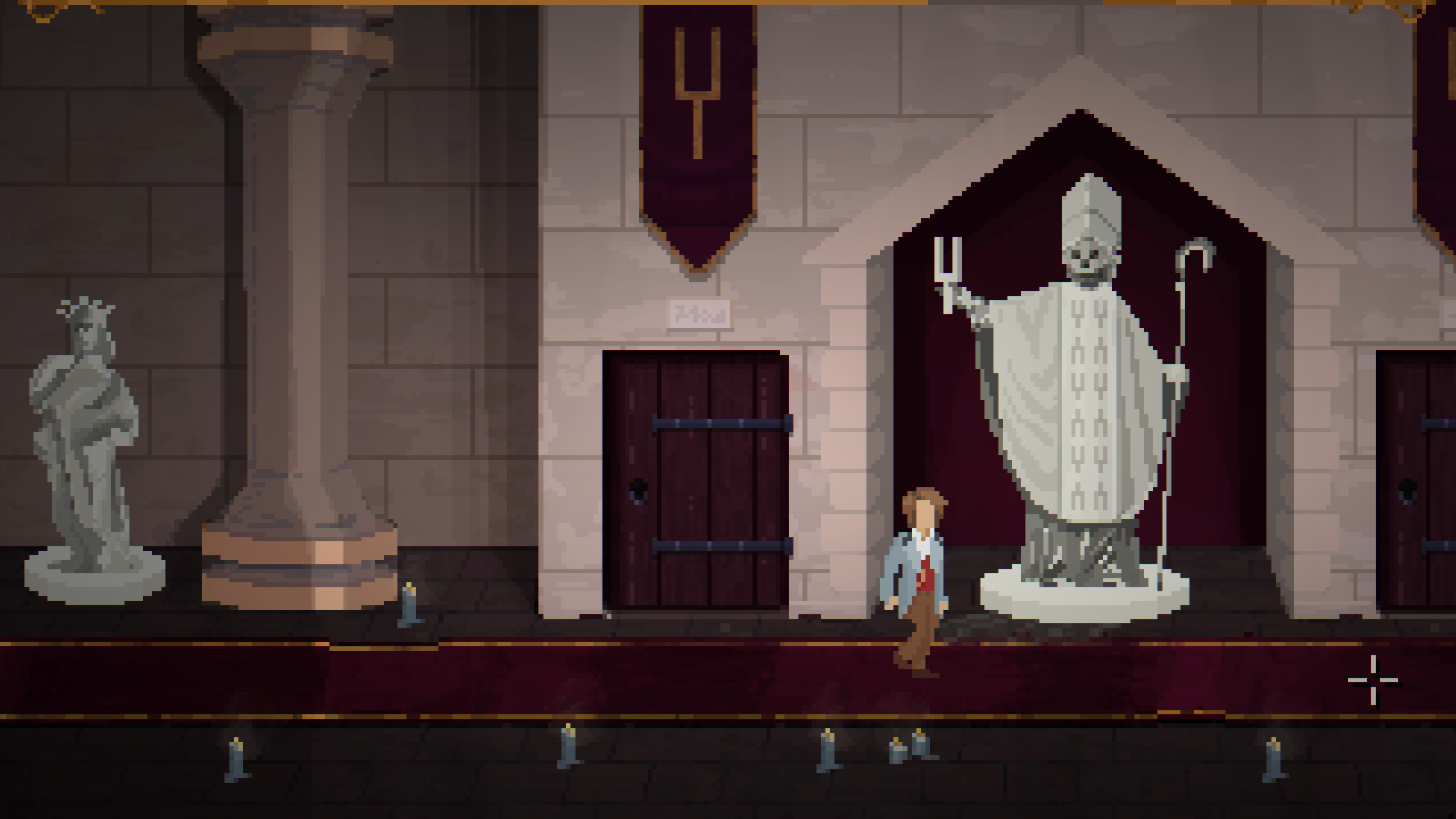
Image: Mystery of Silence - Devilish Games
Unfortunately, Mystery of Silence doesn't include many accessibility options or the modern gameplay bells and whistles of The Drifter. The game is predominantly controlled by a simple left click of the mouse to walk around scenes, pick-up items, analyse scenery, and combining items to use. There is no double-click to speed up through landscapes or double click to quick exit out of scenes, or even the ability to highlight hotspots. Although, due to the smaller size of the environments, the movement speed was never a frustration and added to the slow building dread of the abbey's mystery.
Some players might find the exclusion of modern hint and hotspot systems a big negative, but I never found myself needing hints as the puzzles were very logical and straightforward. Although I grew up playing a lot of point and click adventure games, so it's muscle memory to thoroughly scan each environment for items and interactive points of interest. Despite this, the flow of exploration and puzzles feels natural and easy to get through if you pay attention to the scene and read everything for clues.
Mystery of Silence is clearly inspired by the pixel art games of the 90s, which also transitions to the familiarity of the puzzle design. You explore your surroundings by carefully examining the pixels on screen, to find usable items or interactable parts of the world. Puzzles vary from combining items to open up previously inaccessible areas, figuring the correct route through a maze, memorising the order of musical notes. Nothing here is new, but it's done well and is very nostalgic as a fan of old point and click games. And it would be unfair to mention all the puzzles when Mystery of Silence is a very short experience. I didn't have an issue with the length as it's advertised as a short game with a low price, but I do hope that any future entries in the Scholar Adventure saga includes longer, story relevant multi-step puzzles. But for the first game in the series, it's an ideal video game to complete in one night instead of watching a movie - offering a darkly comforting adventure, with game mechanics and stylings I'll always be happy to see being made.
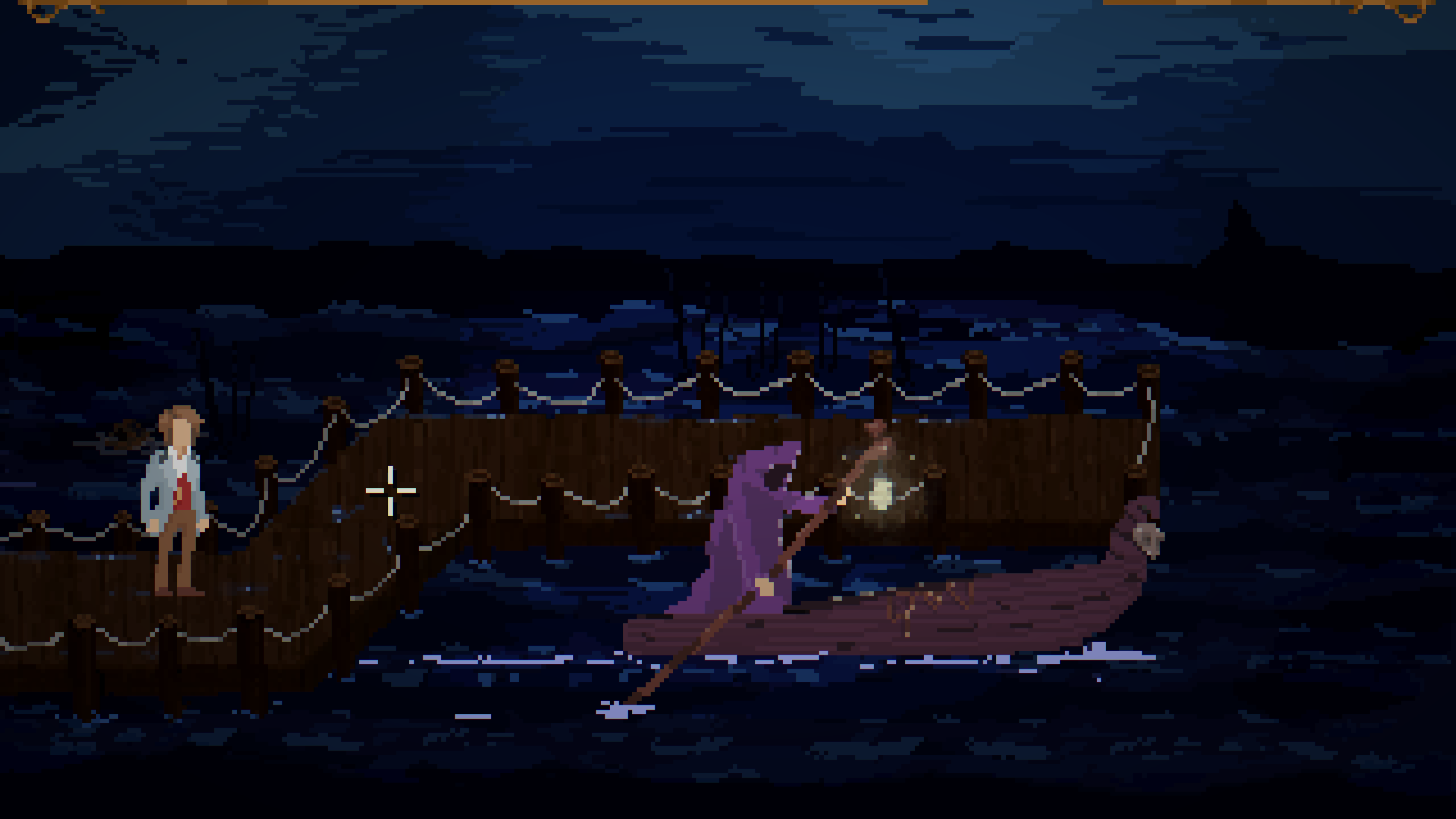
Image: Mystery of Silence - Devilish Games
But where Mystery of Silence sets itself apart is the narrative. For a smaller scoped game, it intelligently uses what it does have to create a haunting short story that creeps along nicely until it reveals its themes and intentions. Although I do feel the writing succeeds in demonstrating a poetic verve that suits William's character and the time period. But there are times where the translation can feel overly crisp and precise.
However, I really like the idea of a point and click series of shorter video games. With William as a writer and the Scholar Adventure series a kind of a playable anthology, Ayose has started his own haunting version of Chaucer's Canterbury Tales in video game form - another story of creatives going on an adventure of discovery.
Most of the story is told by William's thoughts, his few conversations with the speaking groundsmen outside the abbey, via well-written notes that tell fragments of a separate story, and good environmental storytelling. Thankfully, William is imbued with just enough personality to understand his creative endeavour and to entertain with his quick witted responses during the rare dialogue options that adds a nice sprinkling of welcome dark humour.
The few characters able to converse make a huge difference to the game. They help colour-in the atmosphere and inhabitants of the abbey. It's also welcome to have a few dialogue options, even if it's to give the illusion of player choice. But surprisingly, Mystery of Silence does include multiple endings that thoughtfully ruminate on the story as a whole - a nice, unexpected touch for a smaller experience.
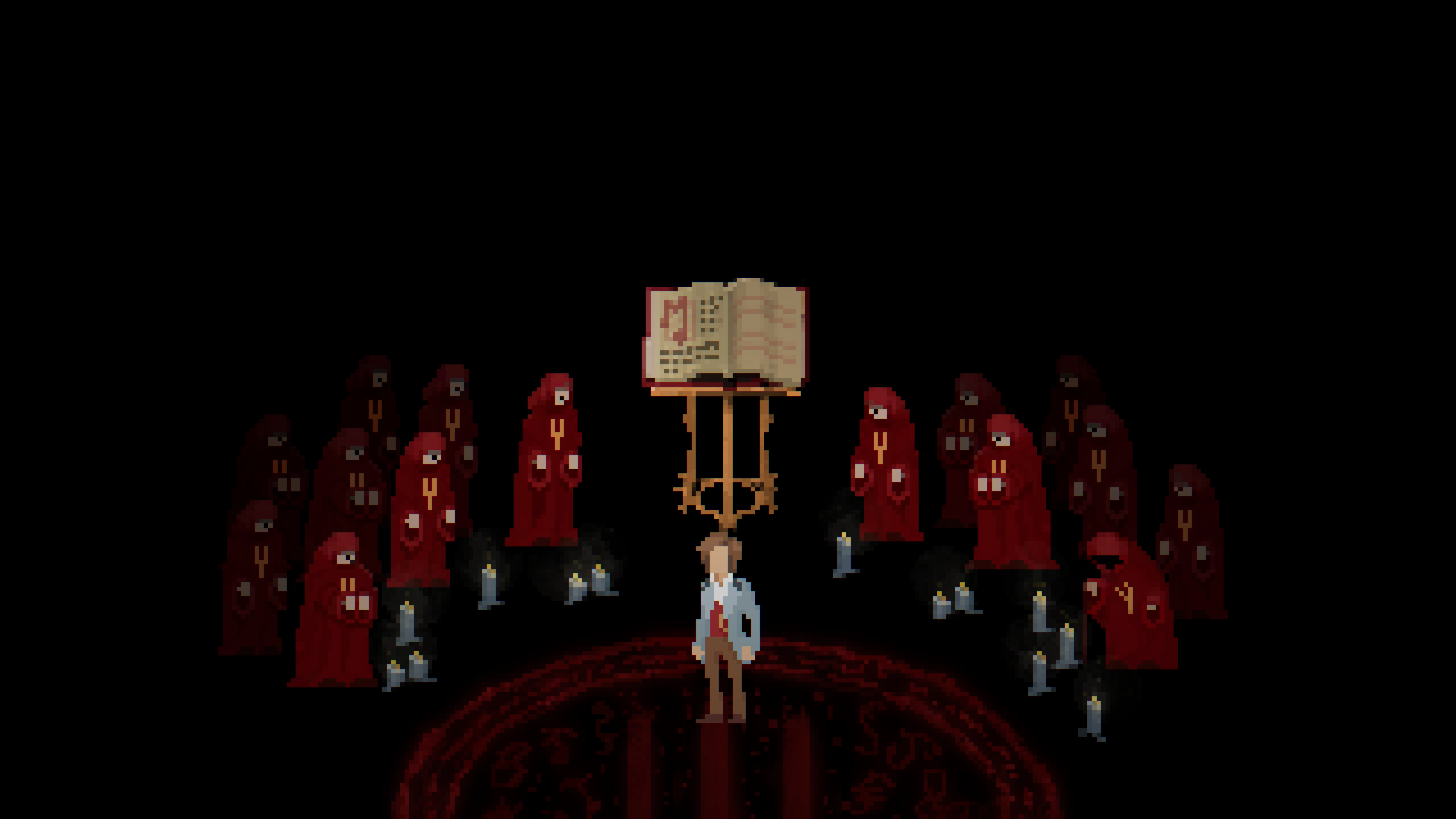
Image: Mystery of Silence - Devilish Games
This is why I feel it's important to go into playing Mystery of Silence, knowing it's a smaller scale project for a lower price. To circumvent these limitations, the conceit of a silent abbey does fit the absence of conversational voice acting. Beyond grunts, the omission of voice acting helps emphasise and fulfil the game's themes of fear, acceptance, chasing your dreams, and the importance of independent voice.
Despite this exclusion, the sounds and music in Mystery of Silence are very well done. Sound effects are purposeful and heighten the mysterious atmosphere, like when a cloaked inhabitant of the abbey slams his walking cane on the stone floor with a booming clack. But the real atmosphere comes from Antonio Vozmediano's great score. My favourite track is from near the end of the game, when something big occurs in the story and the score builds the tension, and thrusts you towards the final sections.
Also, as a solo developer that does everything except for music, Ayose Trujillo has done an impressive job. Understandably, the backgrounds and characters aren't as detailed as bigger point and click titles. But he uses his inspirations to form his own style: a smart use of colour, silhouettes and minimalist lighting. All of this makes a clear visual identity, which works to make all puzzles and environments distinct and visually identifiable - a huge deal when searching for clues and interactive spots.
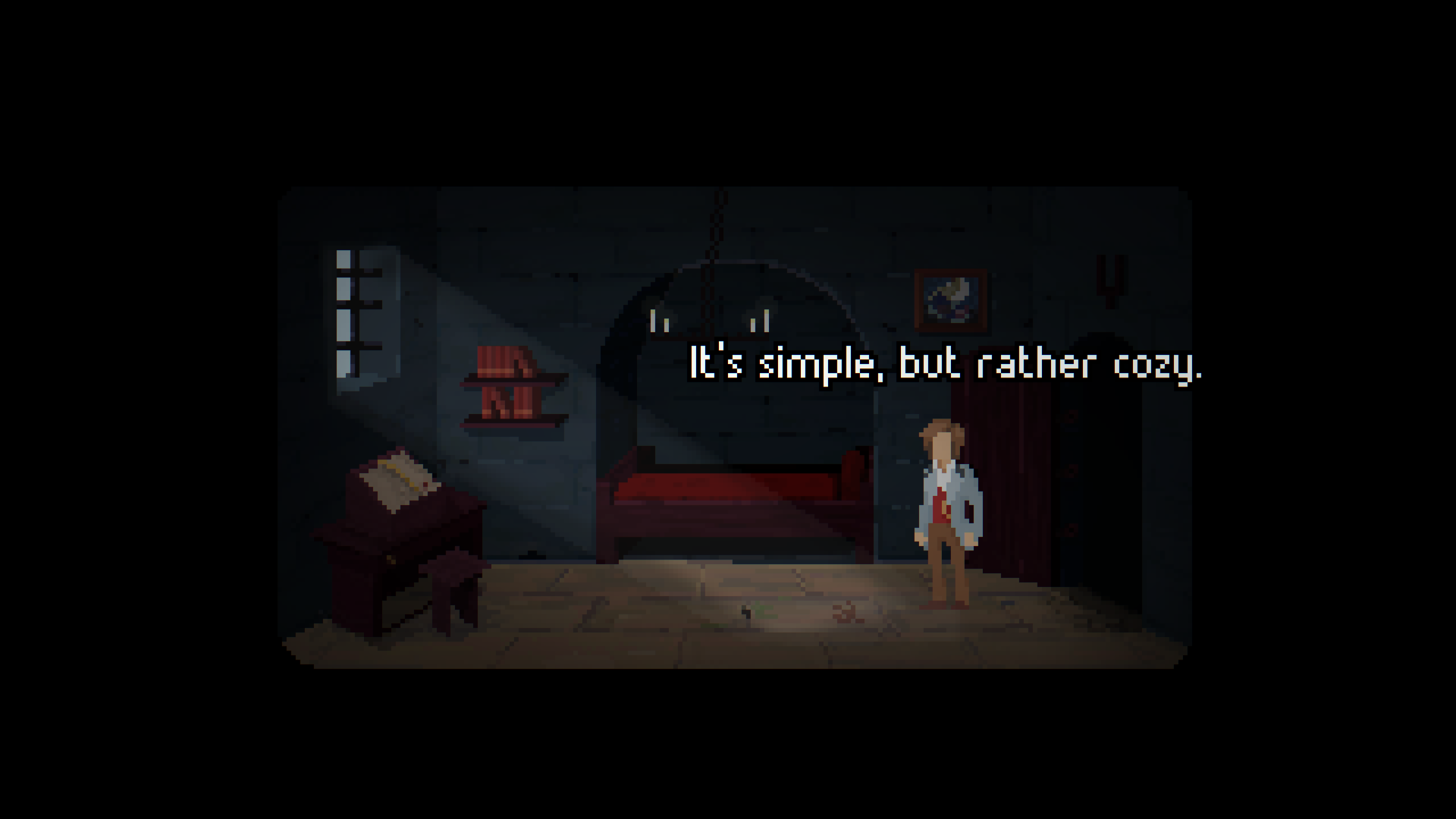
Image: Mystery of Silence - Devilish Games
After I finished Mystery of Silence, I felt the game had a lot going for it, but it also has a lot of things to improve upon, like puzzle variety and interconnectivity. But that's not always a bad thing. It leaves me optimistic that as the Scholar Adventure series progresses, Ayose is able to work from the very strong foundation he's created, to keep evolving all the other parts to improve the series.
So, Scholar Adventure: Mystery of Silence is an easy game to review because it says a lot in its short runtime, but a difficult game to score. As a short 1 to 2 hour experience at a lower price point, it's a nice one evening playthrough with heaps of nostalgia, for any fan of older point and click games. But without the adoration for the genre, I would remove a point from my score and struggle to recommend the game without the modern touches such as voice acting, hints and hotspots. However, I encourage those who enjoy light puzzles and interesting stories to give Mystery of Silence a chance, as it breathes the developer's passion, and there's high potential for it to grow into an even more entertaining and evolving series. I genuinely look forward to what comes next.
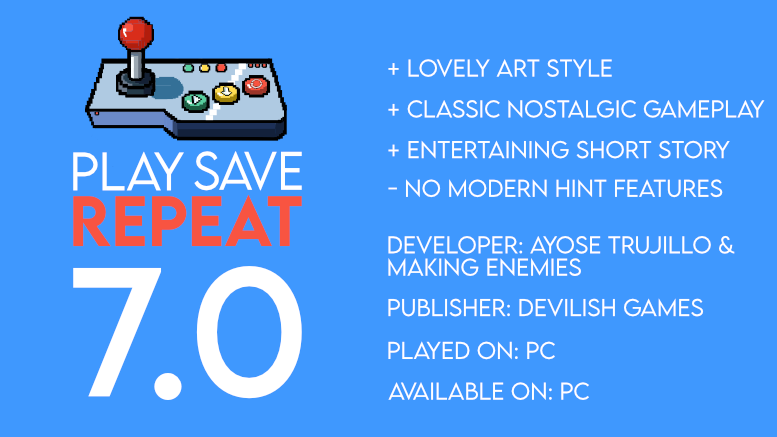
Image: Mystery of Silence - 7.0/10
*Game provided by publisher