

The Alighieri Circle: Dante’s Bloodline Review
Since Dear Esther and Gone Home popularised the narrative-driven genre known as Walking Simulators, developers have used the genre to deliver highly immersive and emotional experiences with limited gameplay mechanics.
Italian developer One O One Games uses their experience in the genre to create a reinterpretation of Dante Alighieri's classic poem, The Divine Comedy. The Alighieri Circle: Dante's Bloodline sits somewhere between narrative-driven exploration and a light puzzle game.
One place One O One Games excels is the concept. You play as Gabriele Alighieri, a descendant of Dante Alighieri; a normal man who's been weighed down his entire life by his family's curse. Every 33 years a member of the Alighieri family is bound to venture through hell to complete a ritual - a surreal journey through Gabriele's traumatised psyche. His objective is simple: gather the magical pages of The Divine Comedy to reseal the gates to hell. But at what cost?
Like any good narrative game from the first-person perspective, The Alighieri Circle features many explorable environments. You split your time between a realistically rendered luxurious manor in Italy, and an area called The Dive: interpretations of the layers of hell born from Gabriele's memories and traumas.
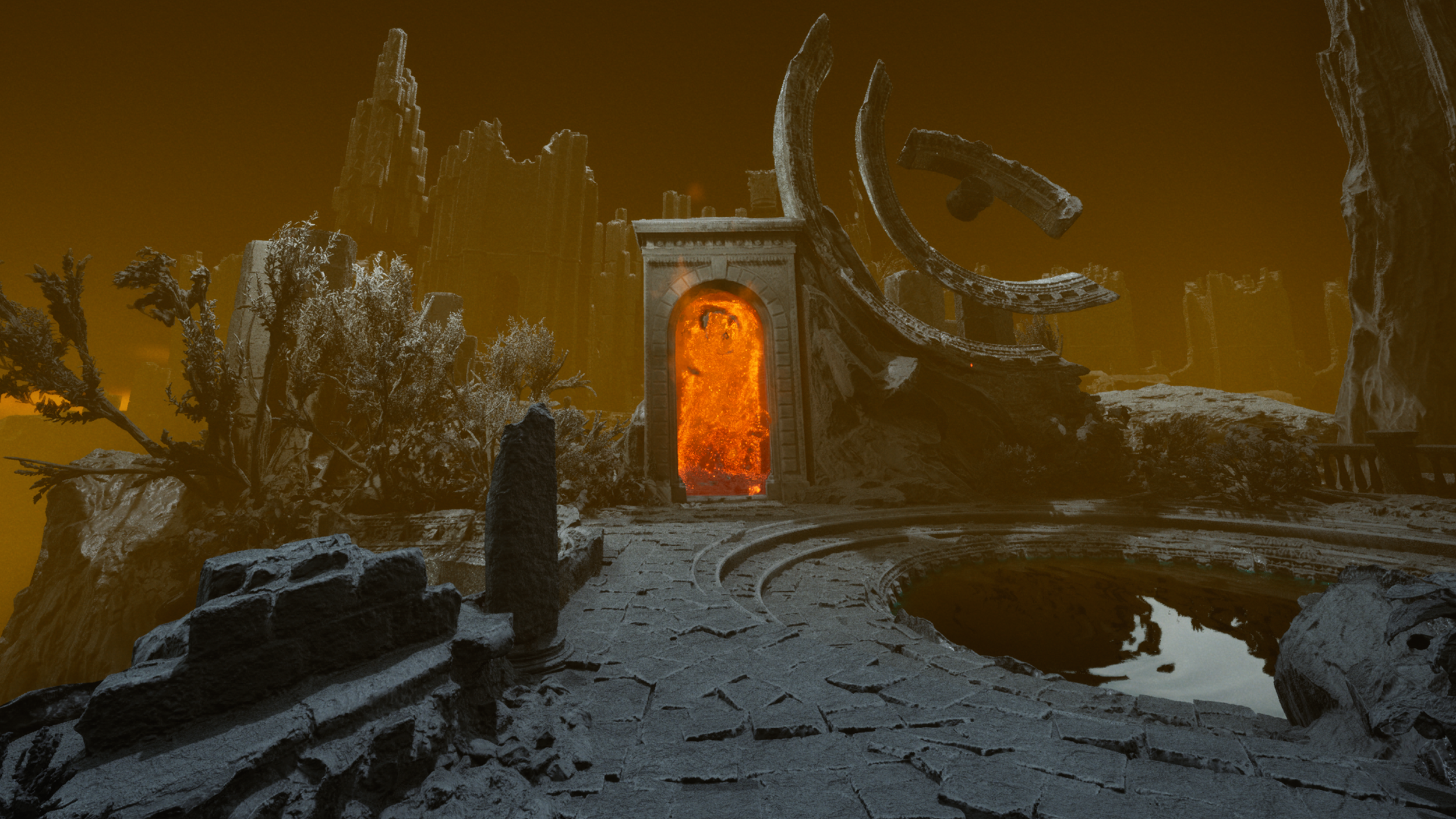
Image: The Alighieri Circle: Dante's Bloodline - Portal
You are immediately invited to access a basic map of Gabriele's ancestral home to acclimatise to the vast layout from a library to a creepy basement. The Alighieri Manor is an old structure swollen with history; floorboards whine and doors moan, as if the past lurks just out of sight. Unsettling atmospheric sound effects that summon a growing sense of mystery and dread.
This unfortunately doesn’t extend to the gameplay. There's a disappointing number of tangible objects to pick up and examine. In a genre that shows as well as it tells, The Alighieri Circle limits its world-building to decor such as library books, statues, and oil paintings - set dressing and nothing more.
Despite this, The Alighieri Circle has a small number of collectibles to locate in each environment. Most areas contain 7 lore expanding notes or trinkets to find. I particularly enjoyed reading the letters scattered around the manor, which told the story of one of Gabriele's ancestors. They hammer home the affect the family curse had on prior generations.
Yet the manor begins to feel empty. It does a good job of building atmosphere, but without much to interact with, the eventual backtracking feels tedious at times. It's important to note how difficult it is to create a realistic space, but repeating the same route numerous times without any fundamental changes beyond new narration does pull the experience down a little.
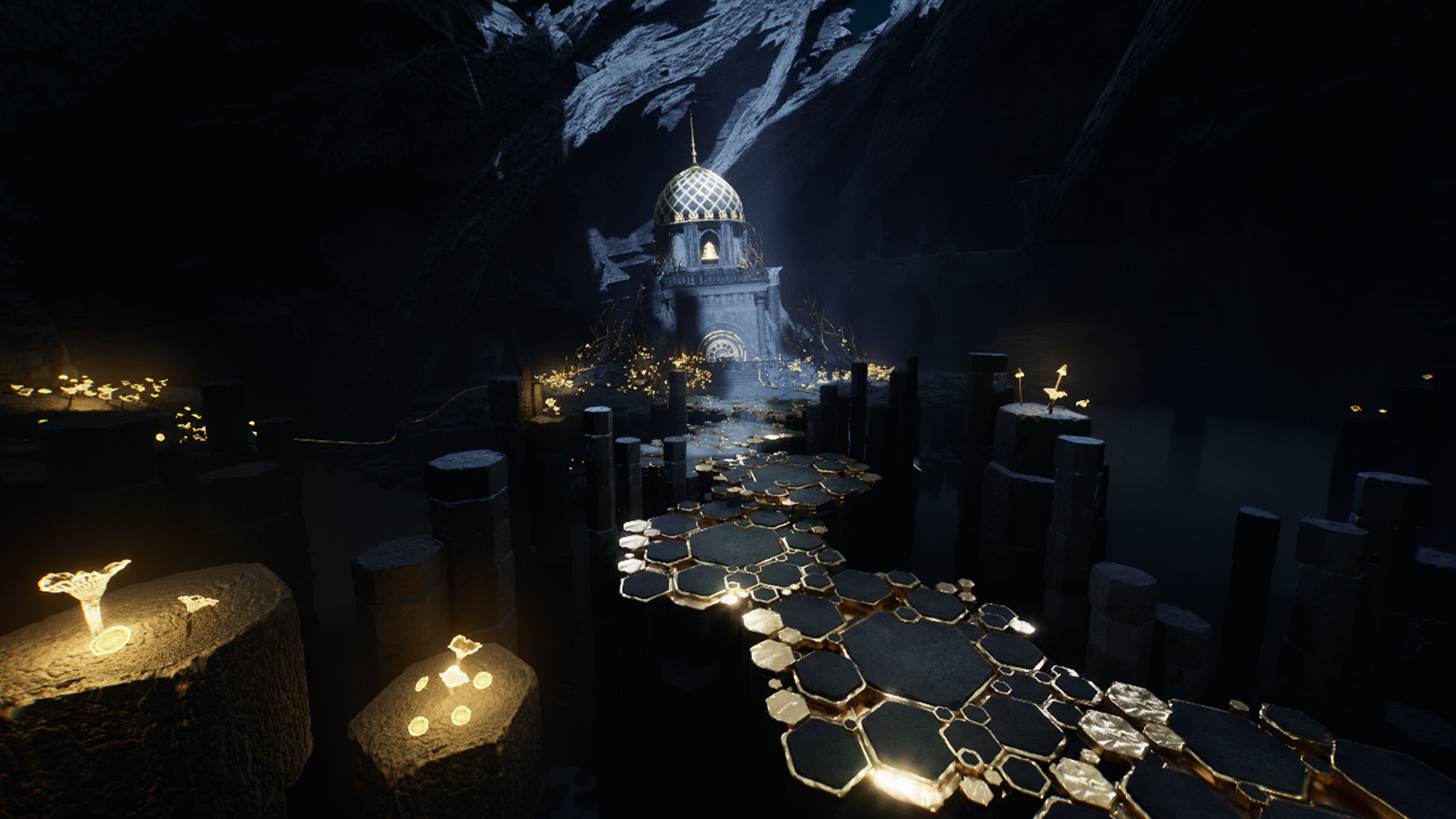
Image: The Alighieri Circle: Dante's Bloodline - Tower
But The Alighieri Circle has multiple locations. After exploring the manor, talking to Gabriele's wife Dalila on the phone, and then, finding the portal to hell closed, Gabriele is tasked to backtrack through the manor to find three statues to open the portal. While I had hoped for more to happen, the slower pace and narration does help characterise Gabriele as an ordinary man and not some fearless hero with exceptional abilities.
After entering the open portal, you're tasked to complete a simple rhythm mini game. It's a harmless pace breaker that doesn't add much to the immersion as it stands out amongst the other game mechanics. Then, Gabriele is inside The Dive: a canvas of white/grey plains and blood red pools. Overshadowed by large visages, human-like statues and real world constructions.
As you begin to explore the linear path, Gabriele is greeted by his guide: a long departed ancestor who previously experienced the ritual. His note perfect omnipresent voice offers Gabriele guidance through unworldly landscapes - advice that forces Gabriele to consider who to trust.
I chose to play the game with English voices, which for the most part evoked the emotional gravitas intended by the developer. Yet certain line deliveries do feel more unnatural than I'd expect, which does take you out of the fully immersive experience from time to time. Although, the script is good most of the time, it can feel on the nose and over melodramatic, which does impact vocal delivery.
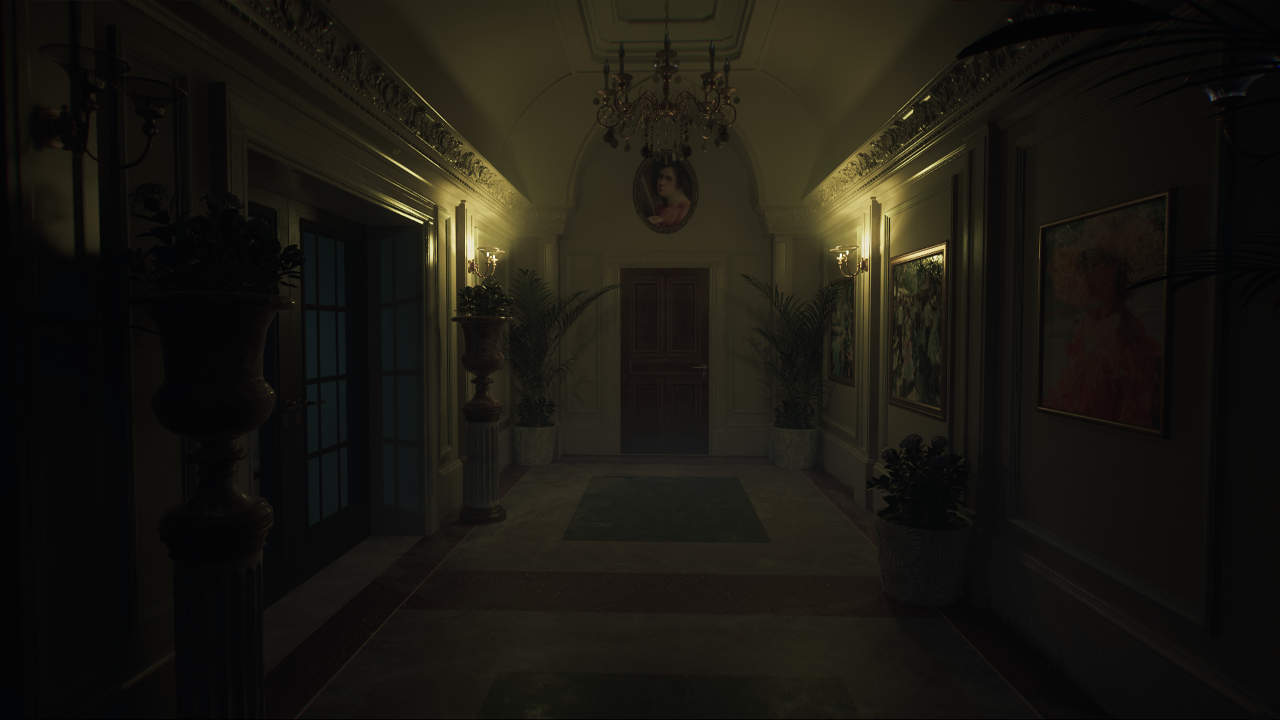
Image: The Alighieri Circle: Dante's Bloodline - Corridor
I also switched on the Italian voice acting to see the difference. The line delivery feels authentic and quite different in tone and emotion. If I didn't need to focus on the puzzles whilst listening to the narration, the Italian version would've been my preferred way to play to further ground the Italian set story.
Back in The Dive, Dante Alighieri's poetic visions of hell are reinterpreted to include Gabriele's memories and traumas, as he follows the linear path to The Alighieri Circle's puzzles. Trials are challenges to test Gabriele's resolve and earn one of three magical pages to be able to complete the family ritual.
This begins The Alighieri Circle's gameplay loop: you explore the manor and talk to Gabriele's wife on the phone, then complete a trial within The Dive, return to the manor and call his wife, and repeat. This unfortunately means an overuse of backtracking or empty spaces.
The Dive also features some overly long walking or crouching sections that purposely slow you down. Perfectly fine elements if something interesting occurs. But while I do think the manor exploration is greatly underutilised, and The Dive spaces could've included more interactive elements and puzzles, it's the trials that knot the narrative threads together. Each one is logical and thematically linked to The Divine Comedy and Gabriele's trial.
The first trial has Gabriele explore a semi-open space to collect paintings of sins and virtues. Everything maintains the feel of a dreamlike surrealist thriller as you follow pulsing veins through limestone caverns, or get unexpectedly startled by moving statues. At first these hellscapes feel surprisingly beautiful and calm, but there's something unsettling bubbling under the surface. One O One Games combine atmospheric sound effects and a great score with a handful of jumpscares. Horror elements that might not be attuned to every player.
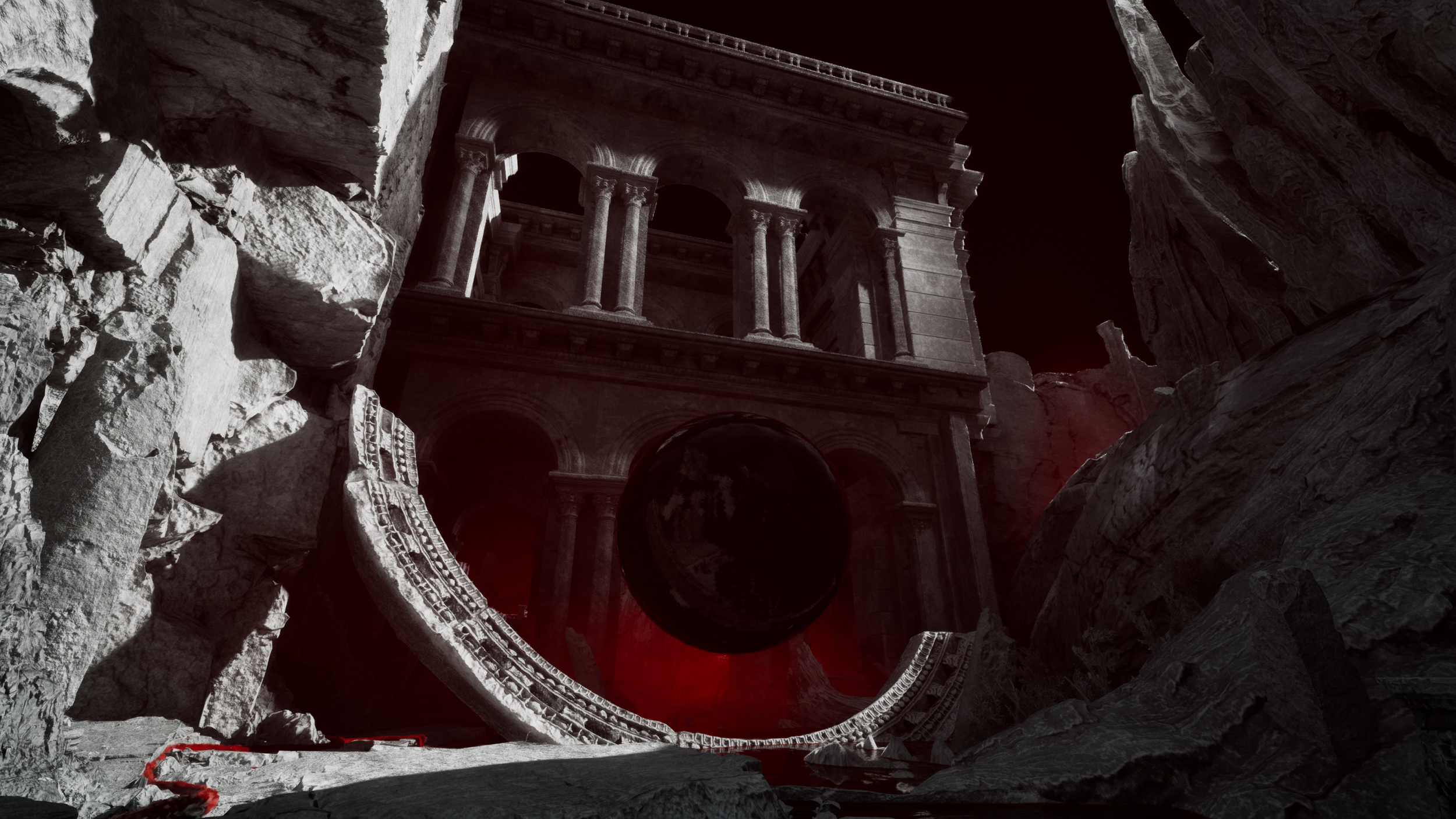
Image: The Alighieri Circle: Dante's Bloodline - Stone
After collecting all of the sins and virtues, Gabriele approaches a circular door with a moveable ring and turnable pictures. You read a stone plaque to learn how to combine the paintings with your new found knowledge to rearrange the symbols on the door. It's a fun and engaging puzzle. Like all good puzzles, One O One Games focuses on logical solutions.
Unfortunately, the manor only has one larger puzzle which is quite straight forward. Mostly the manor is used for narrative exposition to continue the story. Yet, there are a handful more puzzles to complete in The Dive from simple lever puzzles, to a clever sound based puzzle. All while searching the environments for missable collectibles that expand on Gabriele's vulnerable psyche.
But it's this narrative and puzzle cohesion that makes The Alighieri Circle worth a playthrough despite a few shortcomings. As most of the puzzles are well designed, and the story is interesting. I just would've preferred more puzzles, and some noticeable environmental changes during backtracking sequences.
At the time of review, the performance on PlayStation 5 Pro is borderline awful in certain levels. While texture clarity is hit and miss throughout, the frame-rate can plummet in certain scenes to the extent that the screen tearing and staggered motion would've made me feel motion sick if it had carried on throughout the game. It's something that shouldn't exist, but I do hope the performance and fidelity can be addressed before or shortly after launch.
The Alighieri Circle: Dante's Bloodline also features in-game cutscenes from the first-person perspective, and a few animatics done in a painterly style; an impactful way to deliver further story within an indie budget. Like many games in the same genre, it's a solid narrative journey that focuses on its themes of family responsibility and heritage from beginning to end. It's a short four hour journey through a more philosophical and mind bending interpretation of hell.
One O One Games uses Dante Alighieri's work to produce a passionate narrative experience about family, expectations, and the cost of legacy. The Alighieri Circle: Dante's Bloodline might not have enough puzzles, but as an overall package, it's a decent narrative game with enough enjoyable elements for fans of the genre.
*Review Code Provided By Publisher