
The Incident at Galley House Review - A Perfect Mystery For All
After the critically acclaimed enhanced version of the itch.io hit, The Roottrees Are Dead, the development studio Evil Trout return with a completely reimagined version of the haunting, text-based deduction game, Type Help. This time, Evil Trout use their expertise to enhance the game with a visual novel flair, a 3D interface, and new puzzles to solve. Where The Roottrees Are Dead felt like an enhanced version with new content, the now named The Incident at Galley House feels like a whole new game.
Much like their previous project, Evil Trout have made their reimagining of Type Help alongside the original developer, William Rous - a fantastic creative choice to remain authentic to the original vision. This allows the now expanded narrative and additional content and puzzles to flawlessly merge with the original story. It ultimately feels like a natural extension, that feels additive rather than just there for the sake of it.
The Incident at Galley House distinguishes itself from Type Help's text-based interface within seconds, as you arrive alone outside Galley House in a first person perspective much like Myst. But even though The Incident at Galley House features the same core mystery with some brilliant additions and enhancements, the way that it is presented is completely different.
The opening scene explains the differences by allowing you to interact with the exterior of the rundown manor house. You can pick up and read the cover story of the newspaper, which highlights the horrific events that happened inside the building. Or you can inspect the windows, and eventually, try the door.
A dark room awaits you inside, housing a deactivated generator, a mysterious machine, and a computer terminal. This is where you're let loose to discover why you are at an abandoned manor, and to find the purpose of the machine in front of you. Beginning by turning on the generator to power the machine, you solve your first puzzle by following the instructions on the documentation on the machine. In doing so, you create a identification card and learn you're playing as Reya Beckon.
The Incident at Galley House allows you to take your time to understand how the machine operates. You quickly learn that each section of the machine has its own function: one part correlates to when an event took place, another the amount of people in a scene, and the setting of an event. Then you pull a lever to initiate a rippling warp visual effect that transports you into the past, to a random scene that doesn't mean anything at the start. But in actuality, every scene contains crucial information about a tragic mystery from the past.
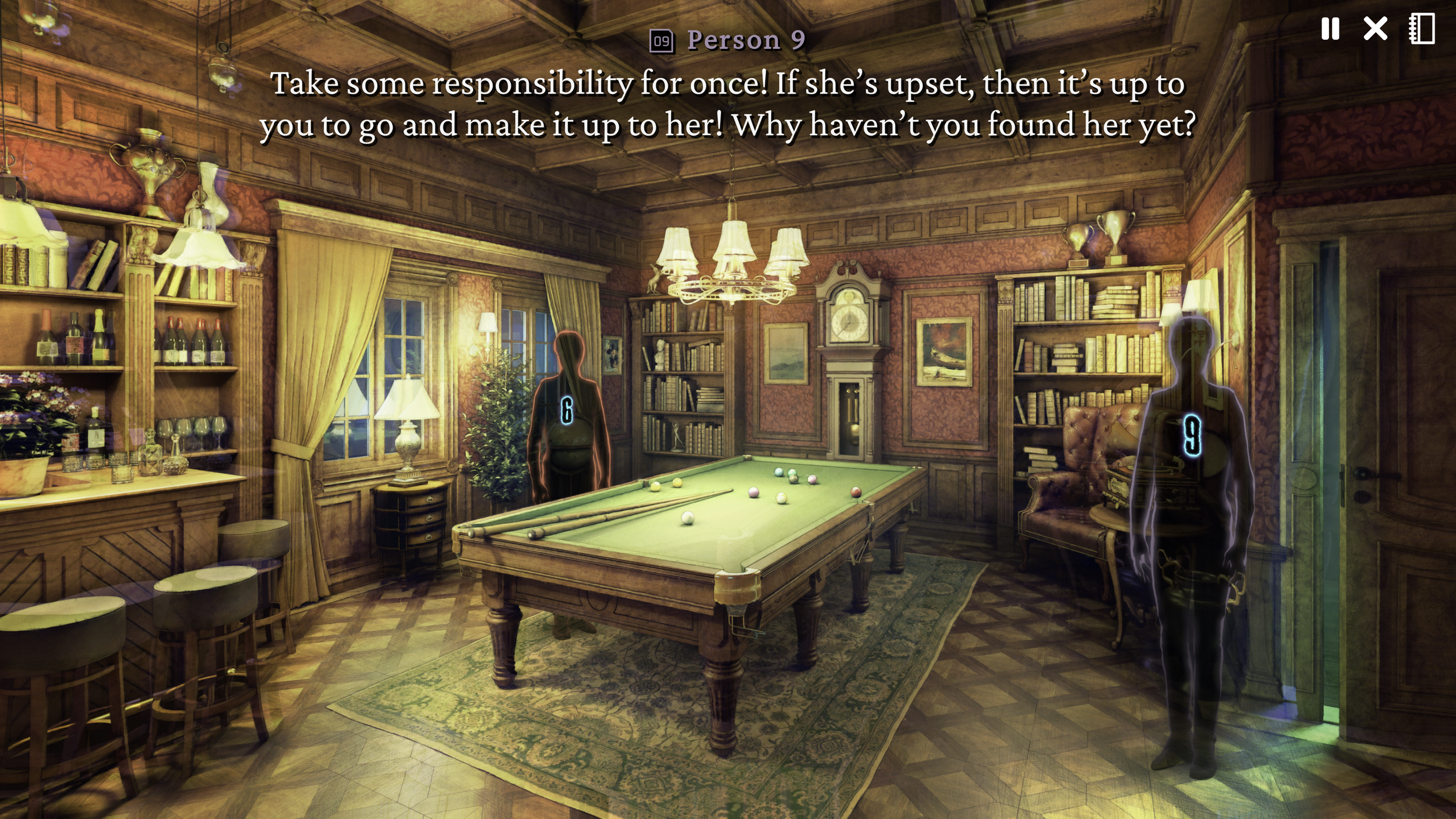
Image: The Incident at Galley House - Billiards
You first meet a man who's been invited to Galley House by someone no one has heard of, and as you're asked to stay the night due to bad weather, you discover a dead body. Beginning a captivating mystery of family drama, secrets, and death - a story successfully embellished by the new development team.
By the time you understand the purpose of the machine, the scenes have already compelled you to continue to deduce the eerie mystery of Galley House. It soon becomes clear how important the smallest details are to piecing together the narrative. The entire gameplay loop is about uncovering codes by figuring out who was where and when, to keep viewing new scenes that slowly solve the mystery at the heart of the story.
Thankfully, The Incident at Galley House, like The Roottrees Are Dead remake, features an intelligent notepad system that allows you to pause a scene and copy and paste, or highlight a plethora of important details from where someone has been or is about to go, their names, descriptions of their physical appearance and more. You can even revisit scenes on the computer terminal and place stamps on any timeline to help you remember key moments. Whilst numbered badges appear on scenes on the computer to tell you how many other connected scenes are still left to be found.
After completing the clever in-world onboarding by following the documentation, you're free to carry on uncovering the mystery independently. After watching each new scene, you return to the computer to type in the names of characters and assign a character portrait that matches the description. This replaces the numbered name tag during dialogue and makes scenes easier to follow, and fills a character's silhouette with a full character portrait. Scenes begin to feel alive.
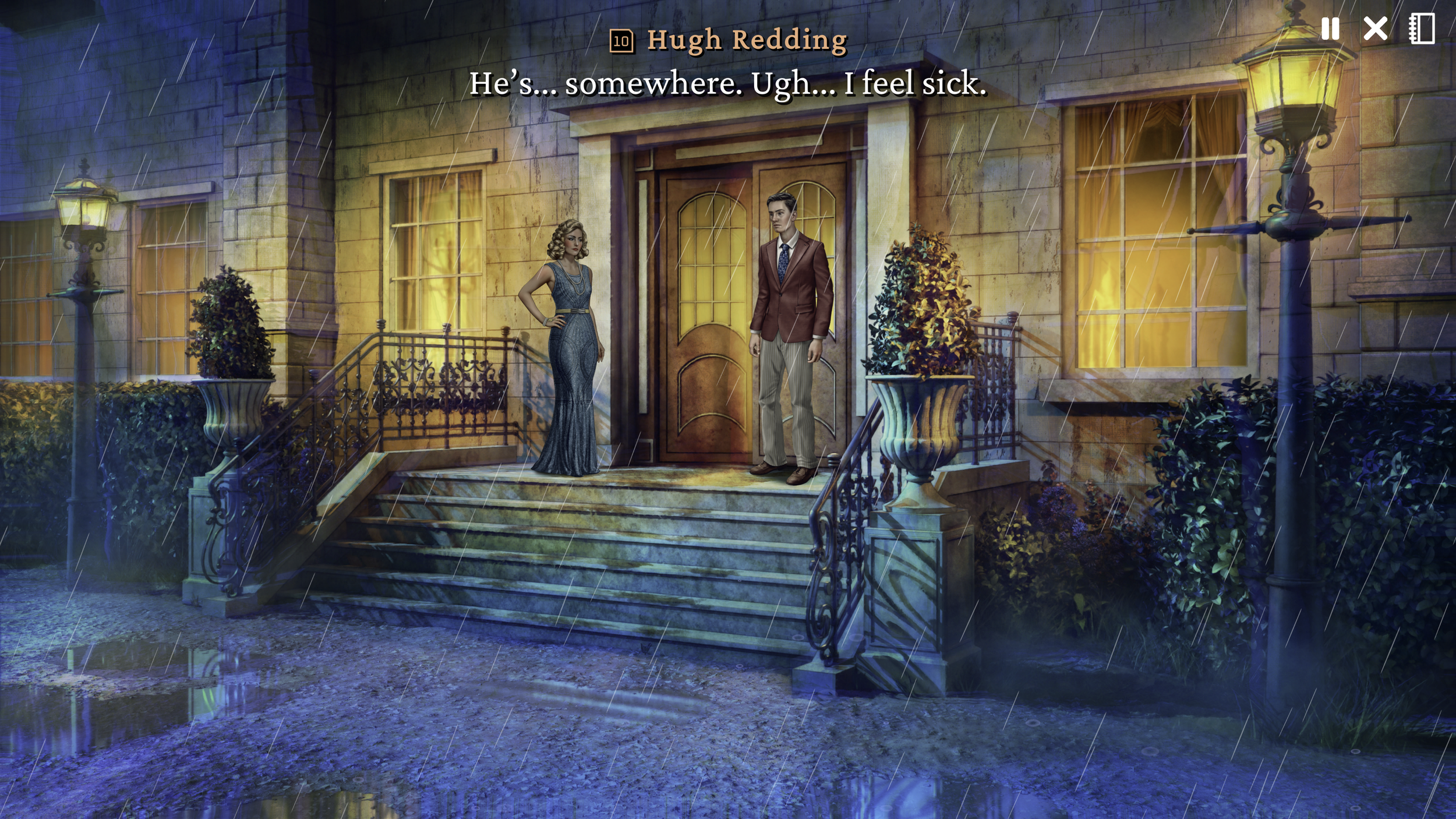
Image: The Incident at Galley House - Entrance Steps
You slowly but surely enter a phase of rhythmic deduction, unpeeling the non-linear layers of the unsettling mystery. The best part is that players will take different routes to the end. Whether big or small deviations, each playthrough will feel like a personal investigation. As scenes begin to take place simultaneously on the timeline, creating an overlapping puzzle to solve. All supported by brilliant writing, a compelling gameplay loop, and a brand new audiovisual presentation.
Having played Type Help and the reimagining of The Roottrees Are Dead, the detailed environments and familiar art style instantly caught my eye. They've wisely chosen to use the same artist as The Roottrees Are Dead reimagining, which gives Evil Trout's games a clear visual identity. However, the developers have taken things up a notch with many 3D models, and good lighting effects.
They also use a ripple effect around characters silhouettes as they talk. This makes it easier to focus on the dialogue and the details. But the further into the game I went, the more engrossing characters' personal plights became. The well-written, period dialogue is delivered tone perfectly by a cast of talented voice actors. Exemplary performances that make it feel like you're taking part in a well-produced audio drama. So much so, that I replayed the first scenes due to forgetting to take notes.
It's easy to see how Type Help must've influenced one of my favourite games from earlier in the year, TR-49, and how Type Help in turn was inspired by the great, Return of the Obra Dinn. Although by using their experience of remaking The Roottrees Are Dead, Evil Trout have enhanced the minimalist visuals of Type Help, to make a more immersive and approachable puzzle game that will appeal to a wider player base. As meticulously detailed environments keep you engaged, while the main room where the machine is has an eerie quality that keeps you on edge.
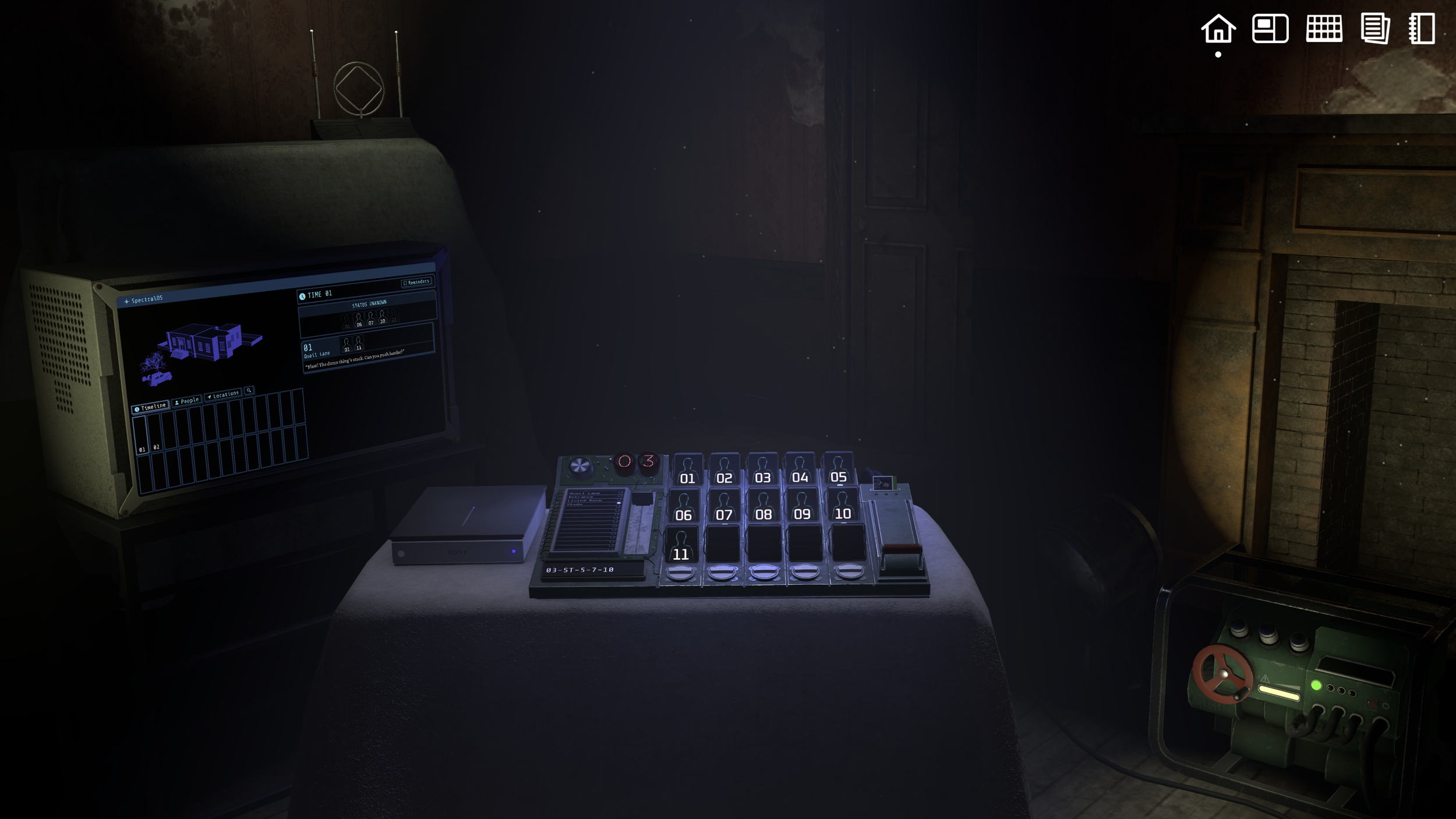
Image: The Incident at Galley House - Machine
Every creative element has been expanded in what must have been no small project. But the masterstroke of a full voiced cast and drawn art give something priceless to the game - an identity to stand on its own. I could easily spend time praising these creative elements that increase engagement in a less hands-on genre, but I'd be remiss to ignore the period appropriate score that ratchets tension and mimics old-timey piano tracks. It effortlessly grounds scenes in their time period, whilst ambient sound effects emphasise what is happening in a scene, or drill home the reality of a ghastly event.
All of which can be controlled by the usual mouse and keyboard combo. But I spent the majority of my playthrough using the intuitive control scheme for controllers. It instantly felt natural, due to the swiftness of using button shortcuts to switch between the machines and the notepad.
But as I said earlier, the notepad is one of the best features. However, if you change tabs, there's a brilliantly designed, multi-step hint system. It slowly nudges you in the right direction, and if you keep asking for hints, it will eventually give you the answer. Trusting players to set their own difficulty by giving them the choice to ignore or use the hint system without punishment. Welcoming players to enjoy the game however they want to and at their own pace.
The Incident at Galley House is another marvellous reinvention of an already compelling puzzle game. But Evil Trout's second reimagining is a transformative experience that evolves the audiovisual presentation whilst somehow improving an already engaging gameplay experience. But when you take into account a brilliant hint system to welcome those who are ordinarily wary of the genre, it's a truly special deduction game.
The development team have created another game that stands alongside the modern greats of the genre. I hope Evil Trout continue with this development model in the future, or if they choose to, use their experience and knowledge from these projects to one day bring a brand new story to life. But until then, The Incident at Galley House is a must play deduction game that welcomes every type of player.