Call of the Elder Gods Review
Having grown up playing puzzle and adventure games, when Out of the Blue Games burst onto the scene with their debut title, Call of the Sea, I instantly played it and became a fan of the studios poignant storytelling and layered puzzle design. So when they followed it up with American Arcadia, a side scrolling narrative platformer, I enjoyed another fun story. But what I really wanted was another title in the spirit of Call of the Sea, so I was ecstatic to see the announcement of the direct sequel, Call of the Elder Gods.
Call of the Elder Gods is a first-person, narrative puzzle adventure game, that aims to improve on the fundamentals of the first game in the series, Call of the Sea. I will include vague story details from the first game that are relevant to the setup, but beyond that, I'd recommend playing the first game as it's very good.
The story picks up more than two decades after Professor Harry Everhart's expedition to save his wife from a mysterious illness. We meet him as a professor at Miskatonic University, struggling to deal with whichever decision you chose his wife Nora to make at the end of the first game, as he spends countless hours contending with his sanity as a black ooze invades his senses.
But when student, Evangeline Drayton meets the professor to discuss strange dreams of an artifact on otherworldly planes, she finds a dangerous third party is also on the hunt for the very thing she wants to understand. Together, they search for answers across the world and the very fabric of time and space.
Call of the Elder Gods blends lovecraftian elements with spycraft, occultists, evil regimes and more, to layer together an enthralling mystery. All brought together by excellent vocal performances: Yuri Lowenthal continues as the grief stricken Harry Everhart who struggles to see past his self inflicted isolation; Mara Junot performs Evie Drayton to show a fearless and inquisitive young woman, who despite her tragic past, strides forwards to solve the many mysteries that haunt her - a relationship that sits at the heart of the game. Showcased in their interactions during cutscenes, exploration and puzzle solving. It's a contentious but down to earth bond where Evie is unafraid to confront Harry, a man consumed by the past, instead of seeking out the future.
Although, it's Cissy Jones' reprisal of her role as Nora Everhart, the protagonist of the first game, that helps the story flow. No longer a player controlled character, Nora acts as the all knowing narrator of Call of the Elder Gods. She interjects at key moments with expositional dialogue and witty remarks.
Every line of dialogue is well written without crossing the line of being too expositional. Even smartly and slowly recapping the key story beats from Call of the Sea, to welcome new players to jump straight into Call of the Elder Gods. Despite this, I'd still playthrough Call of the Sea given the chance, as it's a strong puzzle adventure game in its own right.
But what sets Call of the Elder Gods apart is well-written dialogue and environmental notes that further the story and build out the world. A collection of post War War Two sociopolitical and historically accurate touchstones, such as civil rights, institutional inequality, racism, classism, government powers and more. Making the universe feel lived in before we ever experience anything cosmic.
Out of the Blue Games have also upped the amount of dialogue choices to improve player agency. They don't drastically alter the story, but instead, allow players to paint around the edges of each character's personality. And just like the first game, this opens the path to multiple satisfying endings.
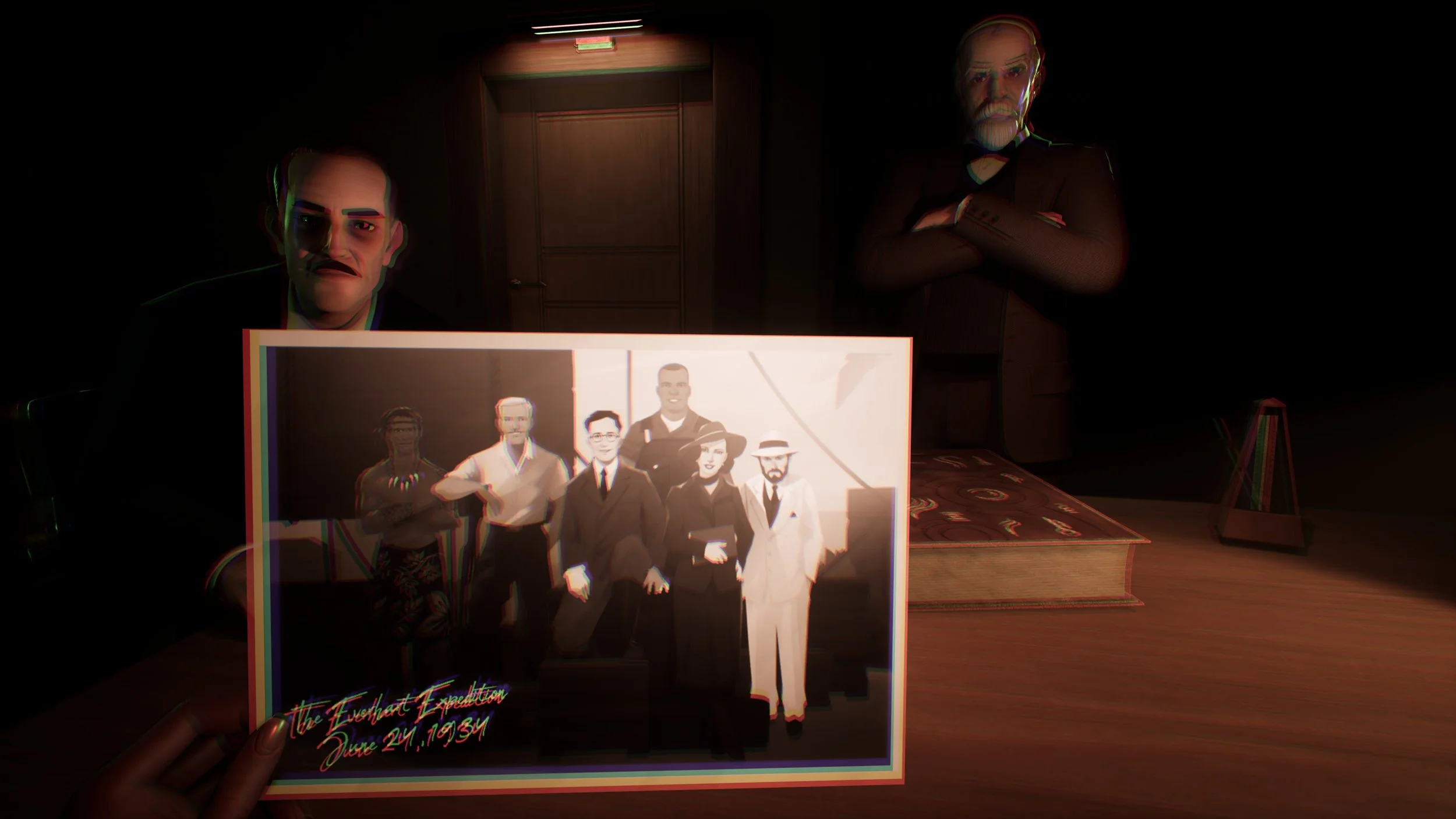
However, in-between levels, the developers chose to use still framed animated cutscenes. I am not the biggest fan of the still frame style, as I believe there's more enthralling methods to use when the style clashes with the beautifully rendered in game visuals. Highlighted more by the handful of in-game stationary dialogue sequences, which do a better job of keeping you present and absorbed in the Lovecraftian adventure.
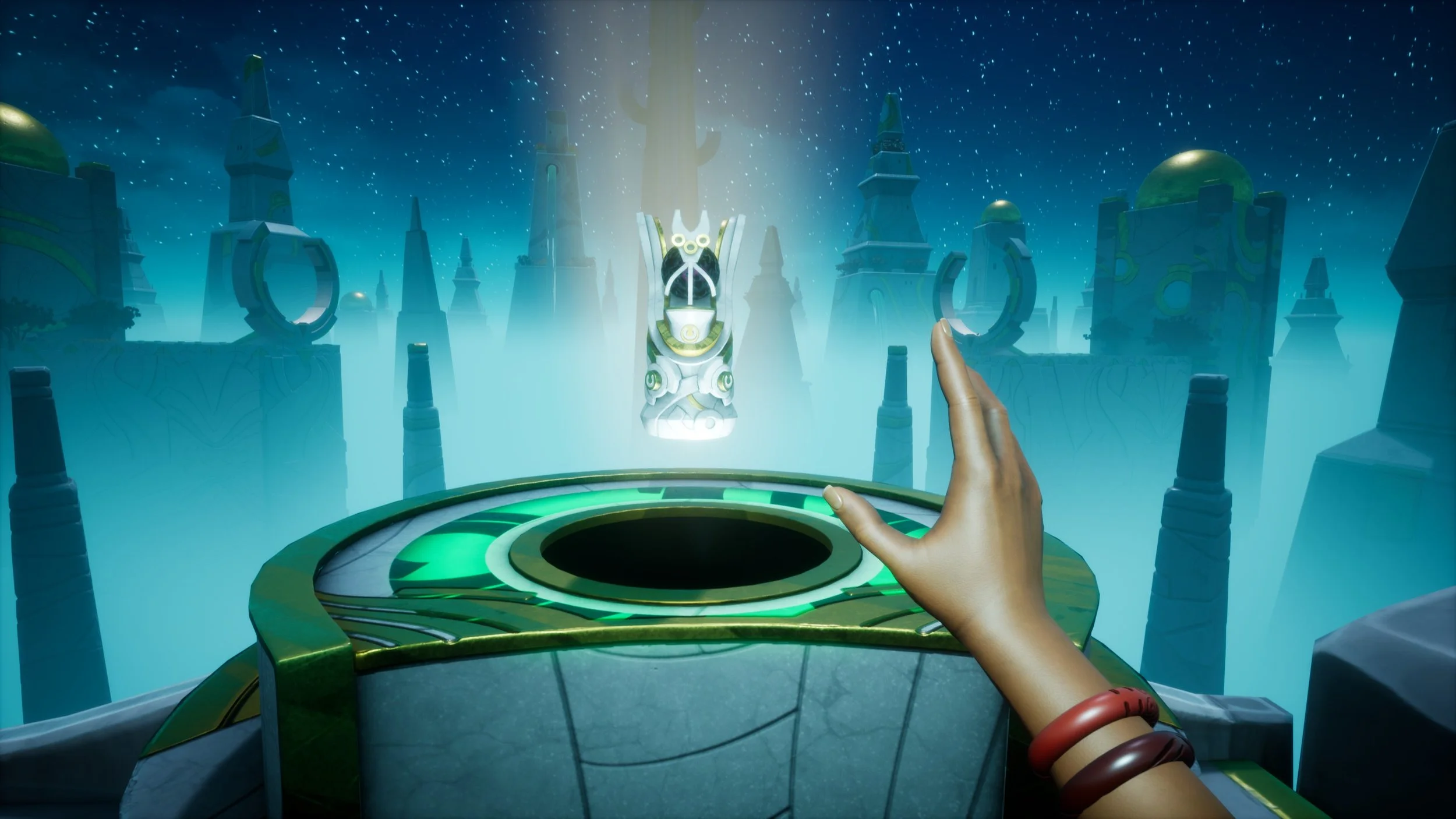
Although, the in-game 3D character models are nicely rendered in a cartoony art style, they're less detailed than the environmental puzzle playspaces - an understandable and sensible choice when it's where you spend most of your play time in first person. But you do notice that light doesn't land on skin like it does elsewhere, but it's still a nice art style. Yet the look and animations of your hands when pressing on interactable objects or puzzles do look good, it just draws attention to the fact that you have no body when you look down.
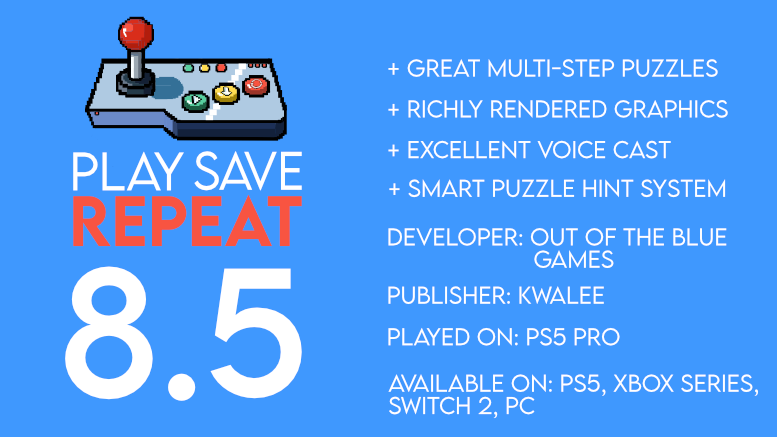
But it's Out of the Blue Games' object and observation puzzle design that makes up the bulk of Call of the Elder Gods' gameplay, which will be familiar to anyone who played Call of the Sea. However, the sequel mixes things up in terms of complexity and approachability.
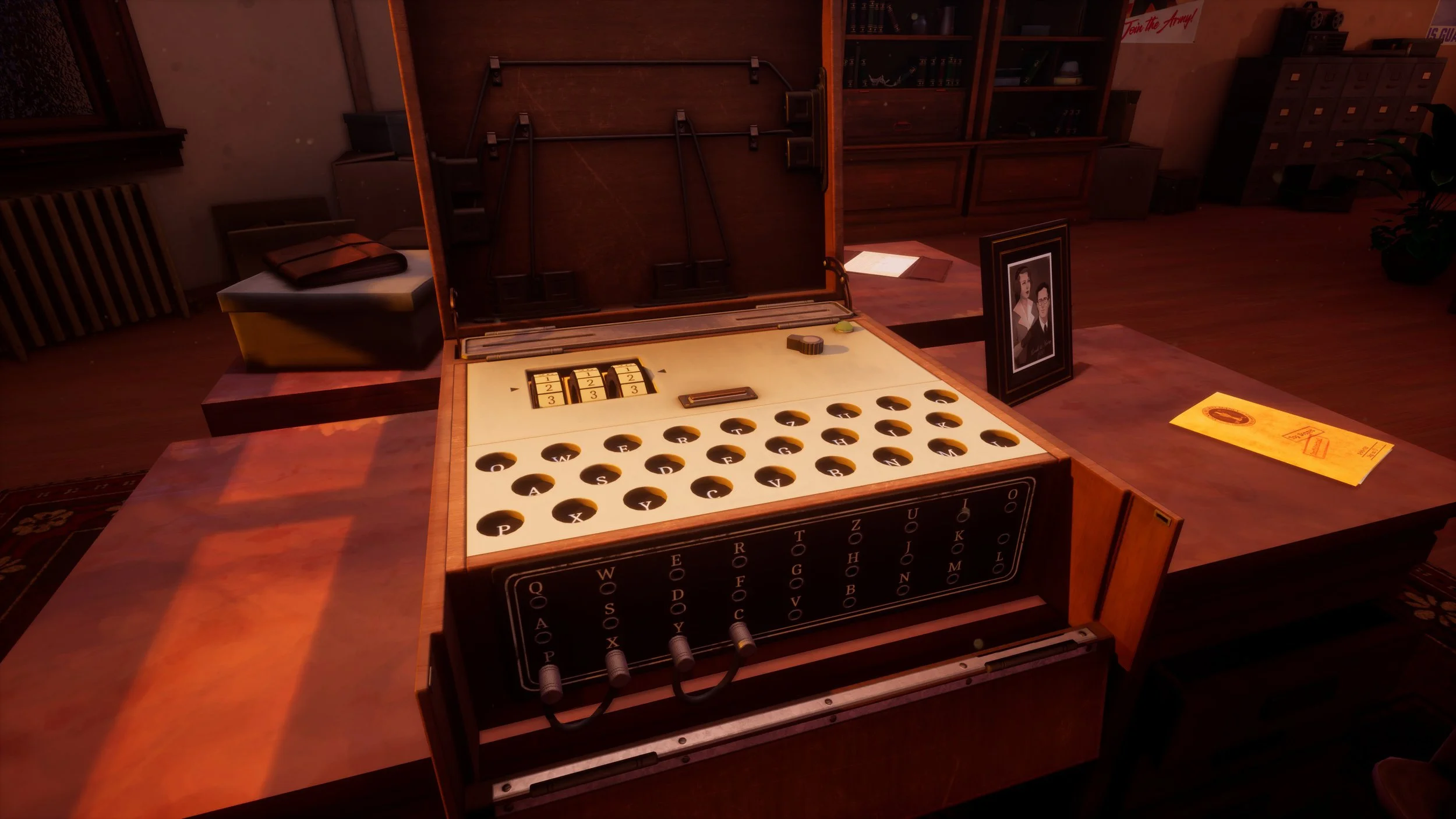
You still embody a character in first person and explore a plethora of locales: from a university dorm, a grand mansion, ancient caves and more. Picking up richly written documents with story details and clues to help solve complex puzzles. Then, you use these clues to figure out multi-step puzzles that require you to pay attention to your environment and consider every clue you read.
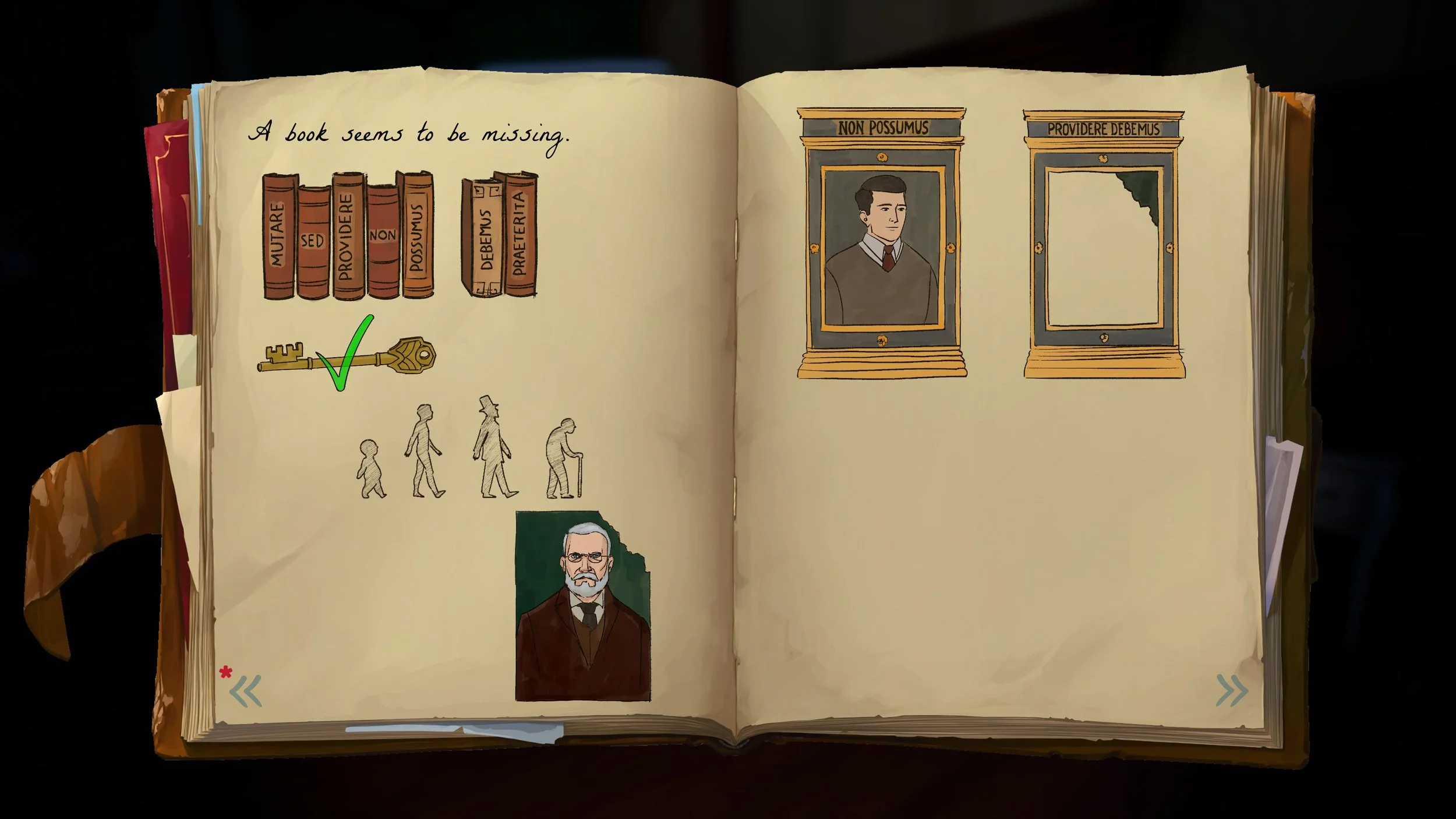
Each chapter of the game slowly introduces new puzzle elements to get you accustomed to them. Such as an early level set in and out of Everhart Manor that leads you to a book puzzle to solve, to be able to access a hidden compartment. This requires Evie to find a missing book and then put the books in the correct order according to objects found in the world.
You find a key to access the rest of the estate and learn to wield a flashlight to illuminate important visuals around the level. You find numerous large picture frames with wording that correlates to the book titles in the puzzle. This is the starting point to finding the solution, that takes you into the gardens to solve more separate puzzles that lead to key items and information to solve the main book puzzle. This multilayered approach keeps you on your toes with diverse puzzles - an intentionally propulsive and engaging level design.
These expansive puzzles grow in complexity once Harry and Evie begin to travel together. Forcing you to switch between them to use their in-game expertise. Although, either of them could accomplish these tasks, it adds to their characterisations. Like when they need to power a antenna station, Evie uses her technical prowess to rewire a circuit while you switch to Harry to visually follow the large cabling in the sky and figure out which order the facility needs connecting to complete a functional circuit.
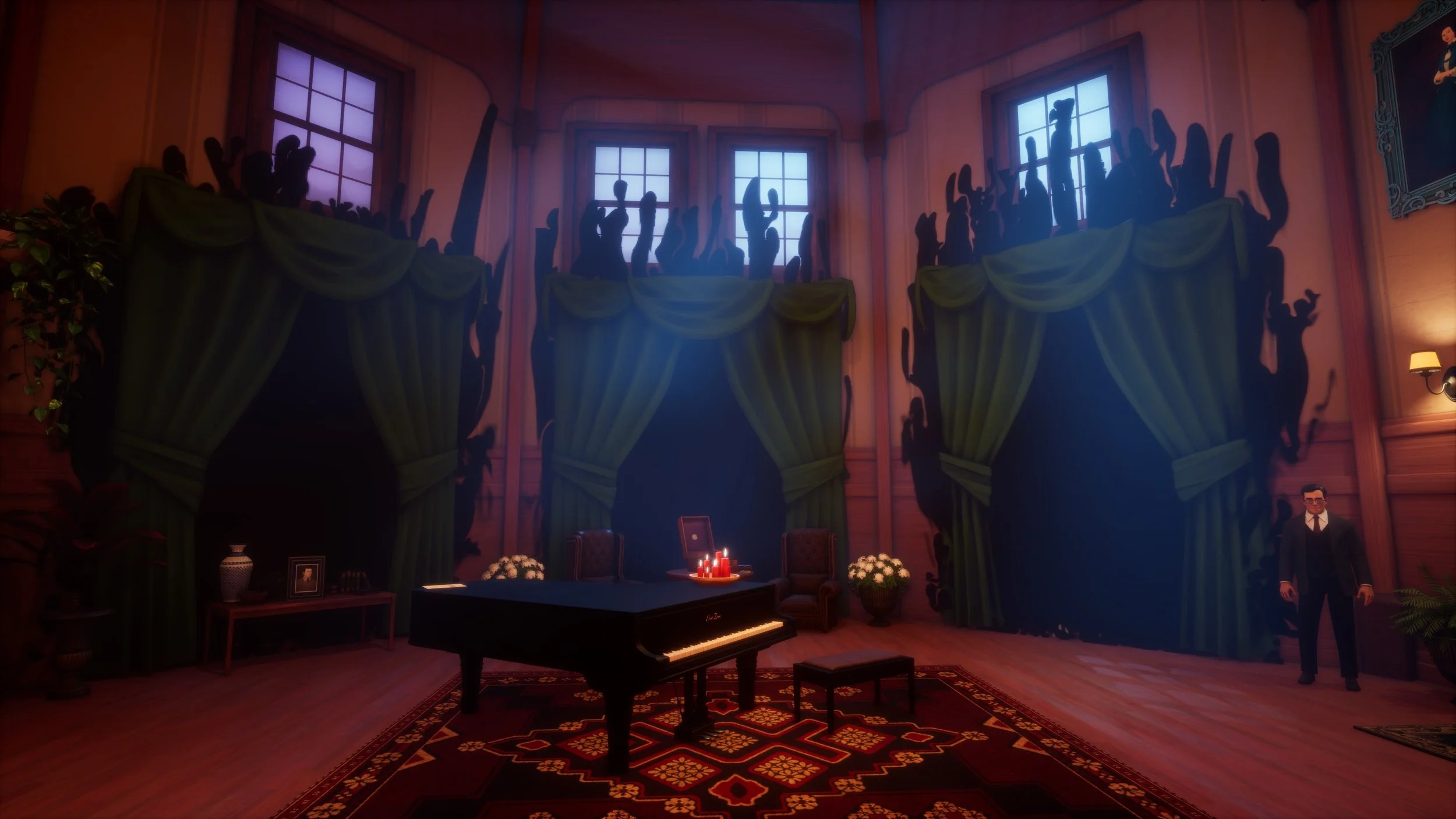
Whereas, other puzzles require translating languages, parsing constellations, rotating and zooming in and out of objects, decoding World War Two secret messages with an enigma machine, guiding light beams to solve timed puzzles, using a computer to input serial numbers to safely guide your partner through a dangerous building and much more. All made more appealing by being set in a vast array of locations: from dripping underground caverns that house Lovecraftian architecture, the dry deserts of the Australian outback, the snowstorms of the arctic and a combination of sleekly decorated indoor spaces. It's like a laid back, puzzle focused Indiana Jones without the threat of combat.
It's the exploration that makes you feel like an archeologist of all things related to the mysterious, Lovecraftian Elder Gods. Sleek animations have you duck into tight passages, climb rickety ladders and submerge into the murky depths of ooze ridden waters. All in aide of searching for clues to solve countless small and large interconnected puzzles.
You interact with ancient murals and notes that are written with creative verve to give each in-game author a unique voice and motivation. All collated in your most valuable item, the journal - a storage solution which Nora humorously claims only exists to help the player due to Evie's impeccable memory.
With an environment scoured for clues and your journal full, you can approach a puzzle and keep returning to the journal to logically use the information to figure out the right solution. However, if you find this makes the game too easy, you can activate a hard mode from the menu that removes the journal. But I don't think that would be a very fun way to play, as some later puzzles become complex and are best solved by writing down additional notes on a real notepad.
Although, if a puzzle ever gets too challenging, the developers have included a helpful request a hint system in the menu. Offering incremental hints that slowly push you in the right direction, until it outright offers you the solution. Fortunately, the puzzles are all very logical and I never found any frustrating if you search the areas and take your time. But it's great to have the option to be pointed in the right direction if you ever get stumped. It's a great accessibility feature that removes the need to search for a spoiler filled guide online, and encourages you to still put the pieces together yourself. Making a welcoming puzzle game that maintains a propulsive forward moment for everyone.
But the puzzles are only one element that makes the world so appealing. Beyond the nicely rendered character models and exquisite scenery, it's the small details decorating each level that made it feel alive with personality: music posters and old trinkets in Evie's dorm room, family photos on office desks, the personal items furnishing Harry's study to show his eternal adoration for his wife, Nora and his diverse interests. Environments aren't just rendered well, they're filled with objects that give authenticity to this historically accurate time period, but Lovecraftian aligned world.
There's even a collectible object to find in each chapter, like a discarded era appropriate comic book, which helps to form a varied trophy and achievement list.
However, none of these elements would be as effective without a good score and distinct sound effects. Every object interaction and sound of footsteps gives weight to the world. But it's the fantastic score that imbues mystery and tension while exploring locations. Swelling to a crescendo at grand story revelations before settling to resume exploration.
While the majority of Call of the Elder Gods is positive, there's a few technical flaws. The familiar texture pop in that I remember in older titles made in earlier versions of the Unreal Engine, now only appearing at the start of levels, and a very rare frame drop in expansive environments. All very minor things that don't adversely impact the overall experience.
Call of the Elder Gods is exactly what I wanted from a sequel to Call of the Sea. Building on a great foundation to configure another narrative heavy puzzle game with improved puzzles and approachability for anyone remotely interested in giving it a go. The evolved visuals, the dual protagonist, multilayered puzzles and emotional story set in a Lovecraftian version of a post-WW2 world, all combine to create a must play sequel. So, if you're a fan of Call of the Sea or have an interest in engaging and logical puzzles, Call of the Elder Gods is well worth your time.
*Review Code Provided By Publisher