

Death at Fleming Manor is a fill-in-the-blanks deduction game from Korean studio, SUPERTHUMB. It immediately feels very similar to The Golden Idol series, but it doesn't take long for it to separate itself with a unique art style and smart ideas that expand on the concept of playing as a coroner.
You play as a community's local coroner who assists the police with a swathe of connected murders. Set at the tail end of the 1950s, the coroner is assigned to the mysterious deaths in the English countryside, but also various other cases, such as a will dispute that turns violent. Each case has its own story, but it quickly becomes clear that there's a connected thread waiting to be picked.
It begins with the coroner inside the local police station; a tutorial to register his name with the force. You learn how to observe the environments that look like old European detective comics, in search of shining spots - points of interest to analyse for clues. Similarly to The Golden Idol series, objects hide a set number of underlined words to collect and use to solve forensic cases. After collecting every word, these shining spots turn into solid green ticks.
The same applies to living people. The coroner can see what they're saying during the chaotic incidents. Remarks that can supply further insight or additional names to piece together what's happened. Much like the best deduction games, Death at Fleming Manor requires players to look beyond underlined words, and rewards observant players with integral visual clues to solve the cases. Intelligently designed puzzles, such as finding the correct time by combining the time of the sunset, the position of the sun and the road.
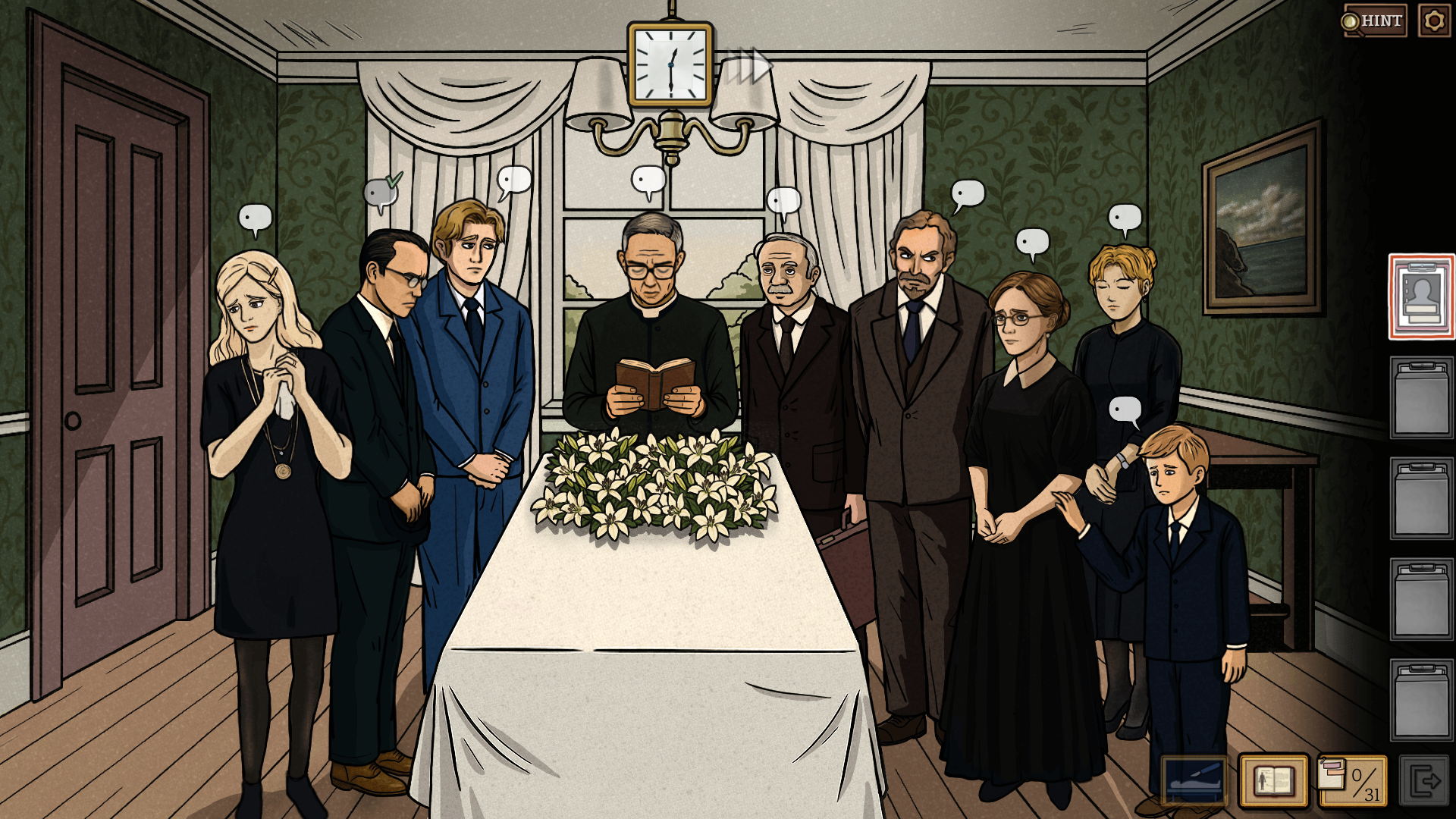
Image: Death at Fleming Manor - Funeral
Cases culminate into the coroner filling in a death certificate and accompanying report. You use the collected words and visual information to fill-in-the-blanks of key identifying information and how the victim has died. Yet it doesn't feel like a simple imitation of other deduction games, as it truly puts you in the shoes of a coroner.
Yet most cases require further medical analysis from a forensic pathologist. As certain points of interest allow you to press on a fountain pen to record evidence to ask your colleague at the morgue. But in order to have a complete grasp of the medical situation, you can access one of the game's unique features: the medical dictionary.
After observing how a victim has died, you must open the medical dictionary to acquire the correct medical terms for their cause of death. Just like the shining spots, the medical dictionary has underlined words to collect as well as vital information about medical procedures and analysis.
Back at the morgue, you examine the body alongside your colleague and ask follow-up questions attained from the crime scene. The pathologist will then offer his expert opinion based on his examination of the victim. Granting you enough information to start filling in the death certificates, which includes the cause of death, time of death, and much more. A true culmination of your observations. As if you haven't paid attention to every little detail, you'll have trouble piecing together whether a death was accidental or a murder.
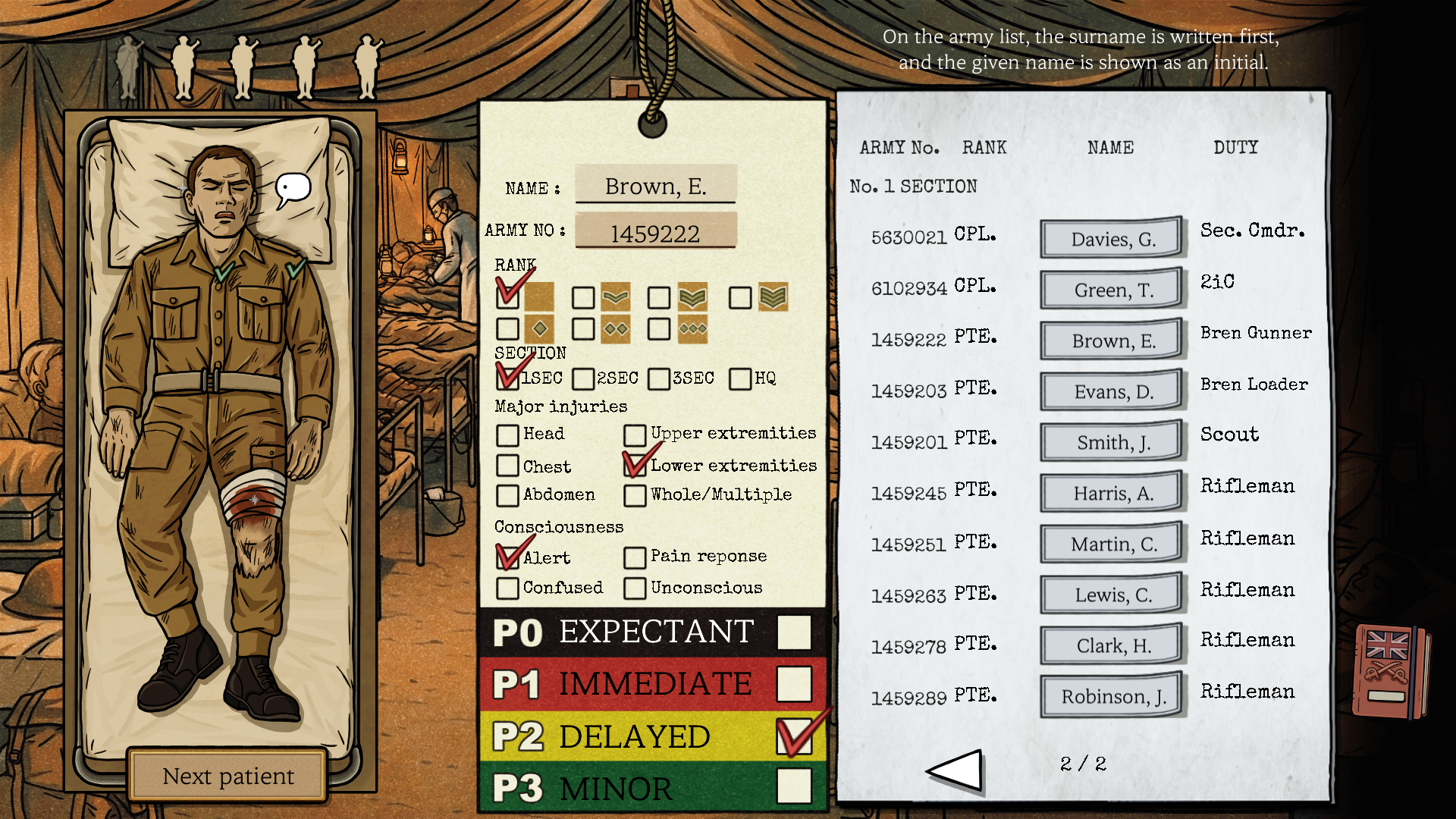
Image: Death at Fleming Manor - War
But if any puzzle feels too challenging, Death at Fleming Manor has 2 assist mechanics: a 3 step hint system, and a unique tea drinking mechanic. The hint system allows players to get 2 clues to gently nudge towards the answer, and then, the answer. It's helpful for trickier conundrums, but it doesn't often give hints for anything beyond the challenging puzzles.
Whereas, the tea mechanic shows the coroner completing his death certificates over a cup of tea. But really, sugar cubes represent attempts at submitting answers, and when all the sugar cubes are gone, only then, will the game inform you which answers on the current page are incorrect. It's a finely balanced system that allows players to work things out for themselves, or get a little nudge in the right direction if they want assistance.
I only wish they had upped the pace when submitting wrong answers, as it repeats a slightly lengthy routine instead of instantaneously showing you the results. You feel this most during one of my favourite cases in Death at Fleming Manor: a World War 2 flashback where you play as a field surgeon at an army base. It's a really unique way to mix things up. You essentially perform emergency triage through examinations to decide which injured soldiers need rapid treatment, have minor injuries, or aren't going to make it. All while identifying them by using records, dialogue, army ranks, and dog tags.
This puzzle added a fresh challenge, but it wasn't without frustrations. As you needed to complete a whole set of soldiers before being able to return to the beginning to correct any mistakes. Setting little annoyances aside, there isn't a moment where Death at Fleming Manor doesn't try to immerse you into the act of solving cases. It successfully makes you feel like a coroner, investigator, and doctor.
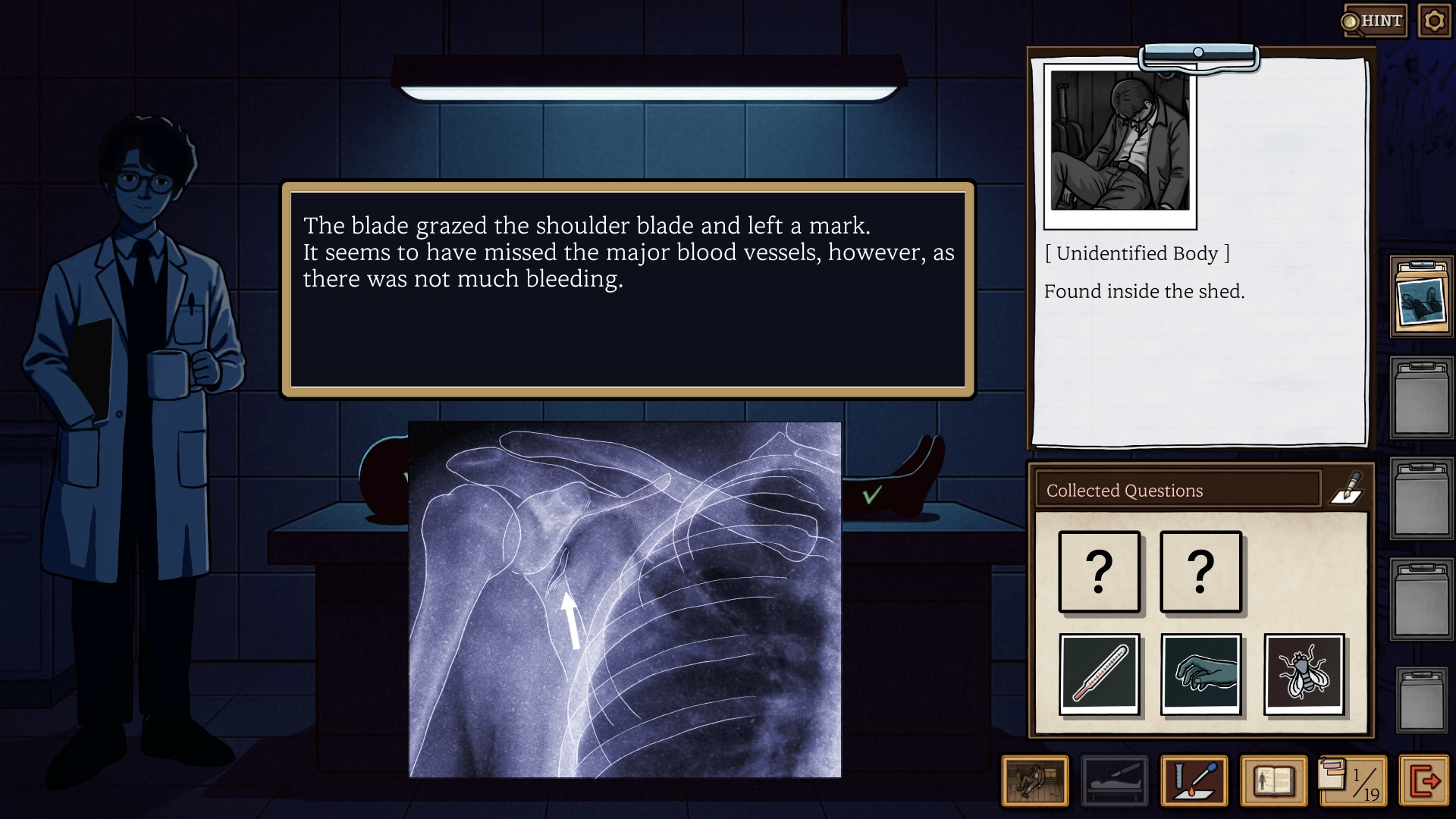
Image: Death at Fleming Manor - Morgue
But back to the main investigations. There are times when the gameplay loop changes to require extra medical procedures or analysis. Outside of learning about new medical terms for methods of death, you also need to use the medical dictionary and expertise of the time to compare blood and fingerprint samples.
While blood analysis did eventually lose its appeal, fingerprint analysis combined pictures from the medical dictionary with incomplete identifying information to create a satisfying challenge. There were also times when you needed to compare handwriting to determine if a letter was a forgery, confirm the inheritance of a will, determine a child's psychology, and organise a box of medication. Added gameplay mechanics that keeps Death at Fleming Manor feeling fresh throughout.
For a narrative deduction game with 12 cases and multiple endings, it does a good job of being visually distinct. Cartoon style environments, character portraits, and multi-frame animations make levels feel alive with personality and motion. And with no generative AI disclosures, SUPER THUMB uploaded videos of their artists creating scenes and environments by hand to counter AI use accusations.
However, while the overall plot is interesting and successfully links cases together, the writing can sometimes feel stiff and unnatural. As the dialogue doesn't feel distinctly from the era or region it's set.
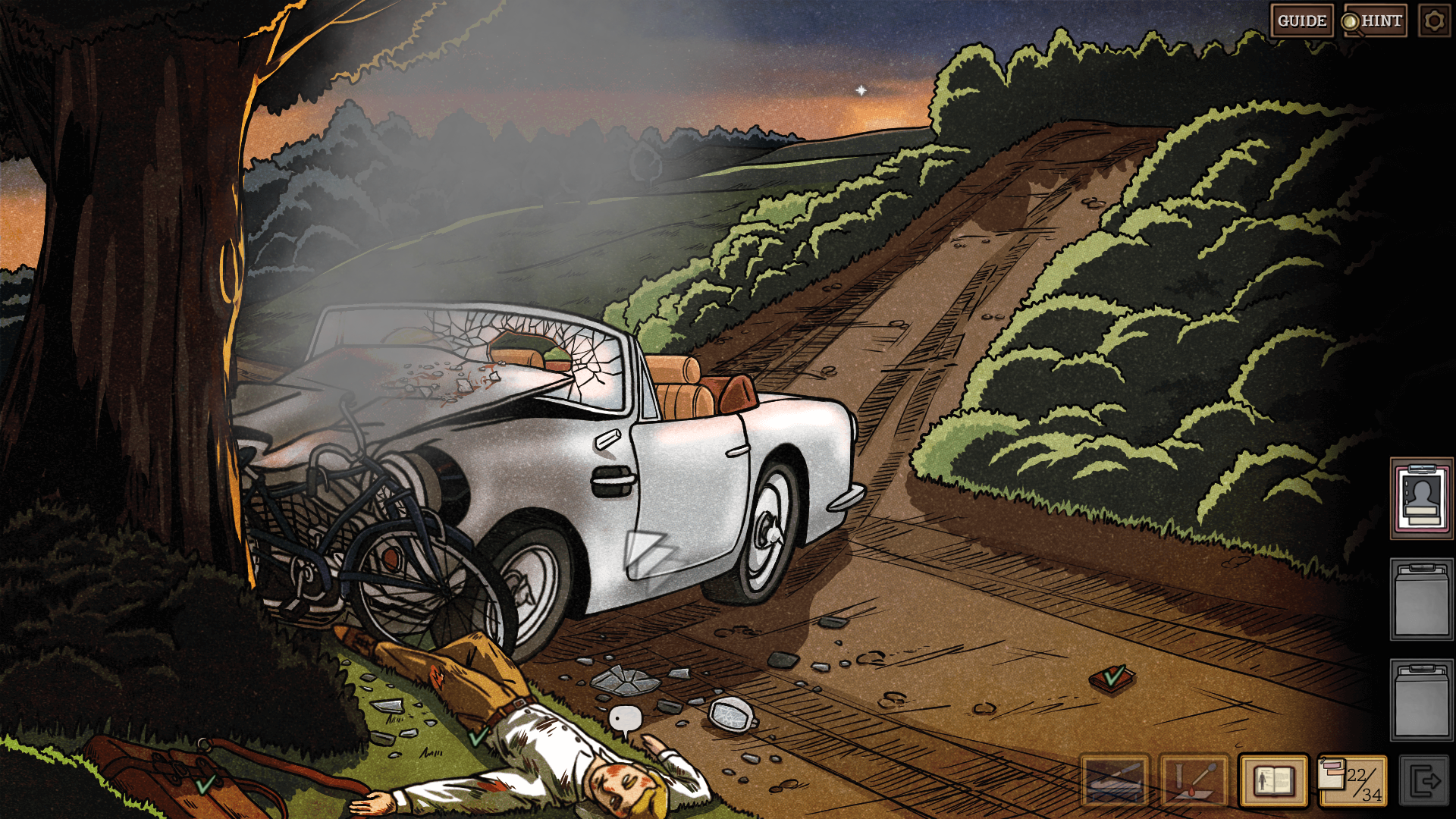
Image: Death at Fleming Manor - Car
Despite this, Death at Fleming Manor excels in its puzzle design. It's puzzles are quite complex compared to some in the genre, especially when you're tasked with completing multiple reports per case. But they are logical, and if anyone gets stuck, the 2 assist systems should help.
But SUPERTHUMB also understands that cut and dry cases would be boring, and builds cases where the initial reports can be contradicted by the building evidence, such as accidents that become murders. Your understanding of the case is then put to the test by the police chief who quizzes you on the details of the case. These sections allow you to get answers wrong, but feel rewarding when you lay out the truth of the case. It's yet another aspect that makes players feel like a true coroner and investigator.
It's a video game where the atmospheric score and lack of spoken dialogue actually focuses you into reading the details of the scene. As by reading the contents of newspapers, letters, and more, you become absorbed into the mystery.
Death at Fleming Manor has imperfect writing and a few frustrating elements, but it thrives when it comes to bringing to life an investigative fantasy. It envelops you in the role of an Agatha Christie style protagonist and doesn't stop presenting clever and satisfying puzzles until the end. It is perfect for those who enjoy soaking up every detail to reach the satisfying conclusion of solving a well-designed puzzle.
*Review Code Provided By Publisher

Image: Death at Fleming Manor - Score - 8/10