
After recent deduction and puzzle greats such as The Golden Idol series, The Roottrees are Dead, and Duck Detective games, these genres are thriving and continue to inspire more brain-teasing video games. But unlike the more adult stories in The Golden Idol series, indie developer Nightwell Games have chosen to design a similar game for all ages in Deductopia.
Deductopia is mechanically similar to The Golden Idol series, where you go to and from levels to see an in-progress event; searching environments for clues to solve fill-in-the-blanks puzzles.
Nightwell Games starts with a tutorial that teaches the basic gameplay mechanics. You see two elderly men playing chess in a park, and a short, easy-to-read introduction to the scenario that explains that you need to figure out each man's full name, the colour of their chess pieces, and the victor of the match.
After reading the objective, you observe the lovingly hand drawn art similar in style to books like Where's Wally? (Waldo in other parts of the world), and then, click on interactable areas. These can be people, environmental objects like loud speakers, trophies, cakes and more. While people offer thought and dialogue bubbles that present information to piece together another person's identity or role, objects give visual clues such as a collection of skate tricks in a notepad.
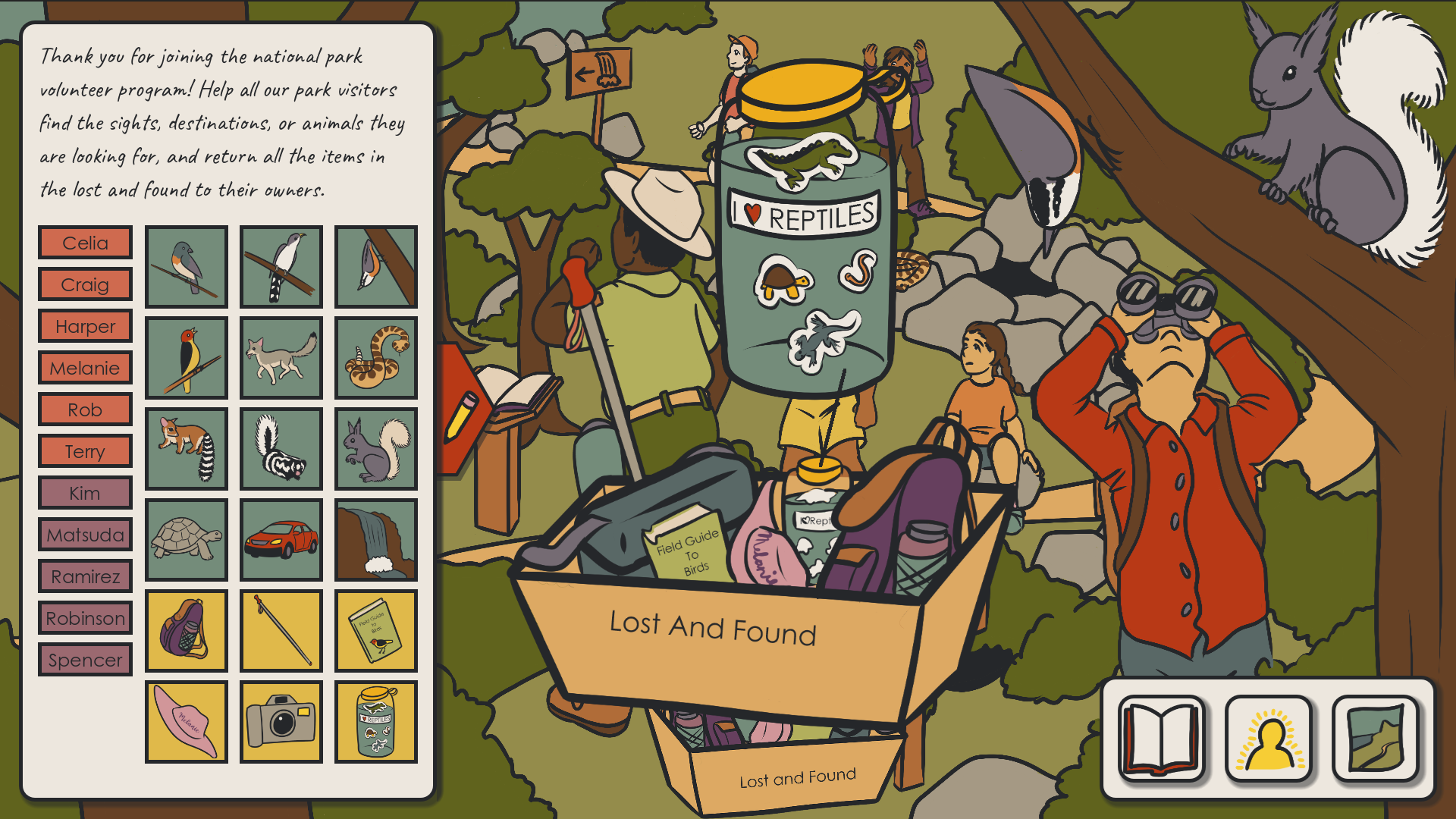
Image: Deductopia - Trek
With enough information, you can press on the book icon to open the answer fields, and drag what you believe to be the correct colour-coded answers into the right spaces.
But like most fill-in-the-blanks deduction games, Deductopia offers a selection of supportive tools to help reach a solution. These are especially useful for younger players, or anyone wanting a lower difficulty. As the difficulty can be tweaked from the menu. While the puzzles don't change, you can decide whether a person's information is validated on a successful entry, or whether you only get told if everything is correct once you've correctly entered every piece of information. This completely changes the dynamic, as if you get one thing out of place, you wouldn't know which one was wrong without carefully reassessing your answers. If you want a real challenge, it's a fun way to play.
However, Nightwell Games also includes a handy hotspot system to highlight selectable points in a scene. Then, once you've collated all the information, you can pull the pencil tab across the screen to type in important details on scratch paper. While it isn't a feature I used during my playthrough, it does work really well, and it would be helpful when playing the game alongside younger players.
For a game aimed at a wide age range, I was pleasantly surprised by the complexity of many puzzles. It respects the intelligence of a child with family friendly, logical designs all set in and around social events and activities. The colourful map does a great job of establishing the world of Deductopia, enticing players to choose from 13 levels set in various locations.
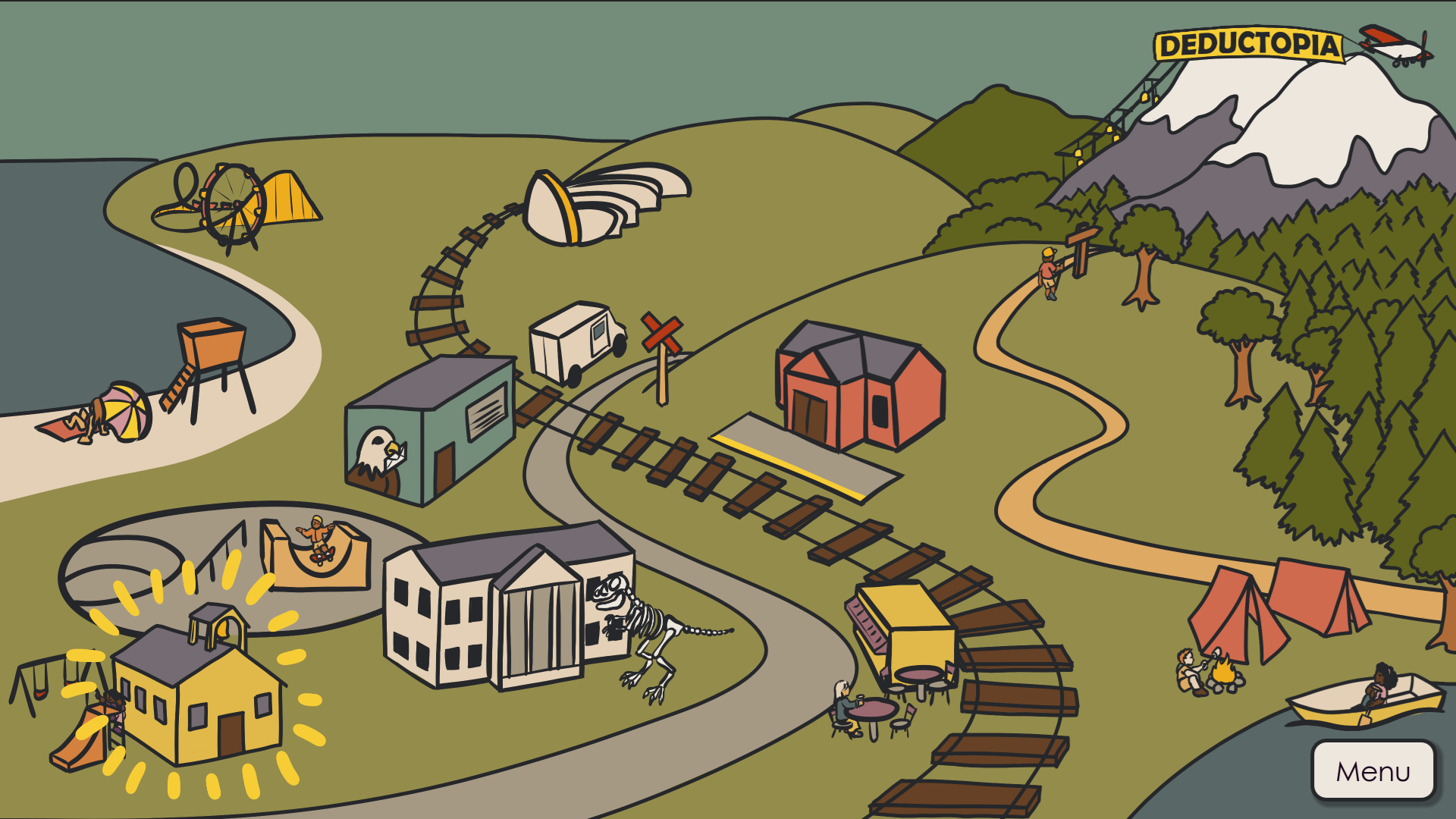
Image: Deductopia - Map
Areas offer a solid variance on the same puzzle type. After completing the initial tutorial that gets you used to the gameplay mechanics, you can choose to go to any room in any order. By selecting one at random, you soon realise some rooms are more complicated than others. Like the coffee shop that's mixed up every customers' order, a whole family tree to complete, or the school that wants you to assign students to the correct seats on bring your pet to school day.
After reading each levels breezy but expressive Introductory prose, rooms require you to pay close attention to the voiceless dialogue bubbles and the scene art itself to make sense of notes. Such as looking for a cat in a specific costume, the contents of a lunchbox, or the milk art on a coffee. All coalescing into a well-designed puzzle game that's a great way to spend a few hours.
Yet the puzzle difficulty of certain rooms might frustrate younger players without a hint system. But I believe the puzzles are all logical and a fair challenge for everyone.
However, the looping two frame animations did begin to aggravate my eyes in more overwhelming scenes. While it does give a sense of motion, it feels too rapid, and it could've benefitted from an additional few frames of animation. But as an indie title, it's completely understandable why there isn't more, and it can also be turned off in the settings.
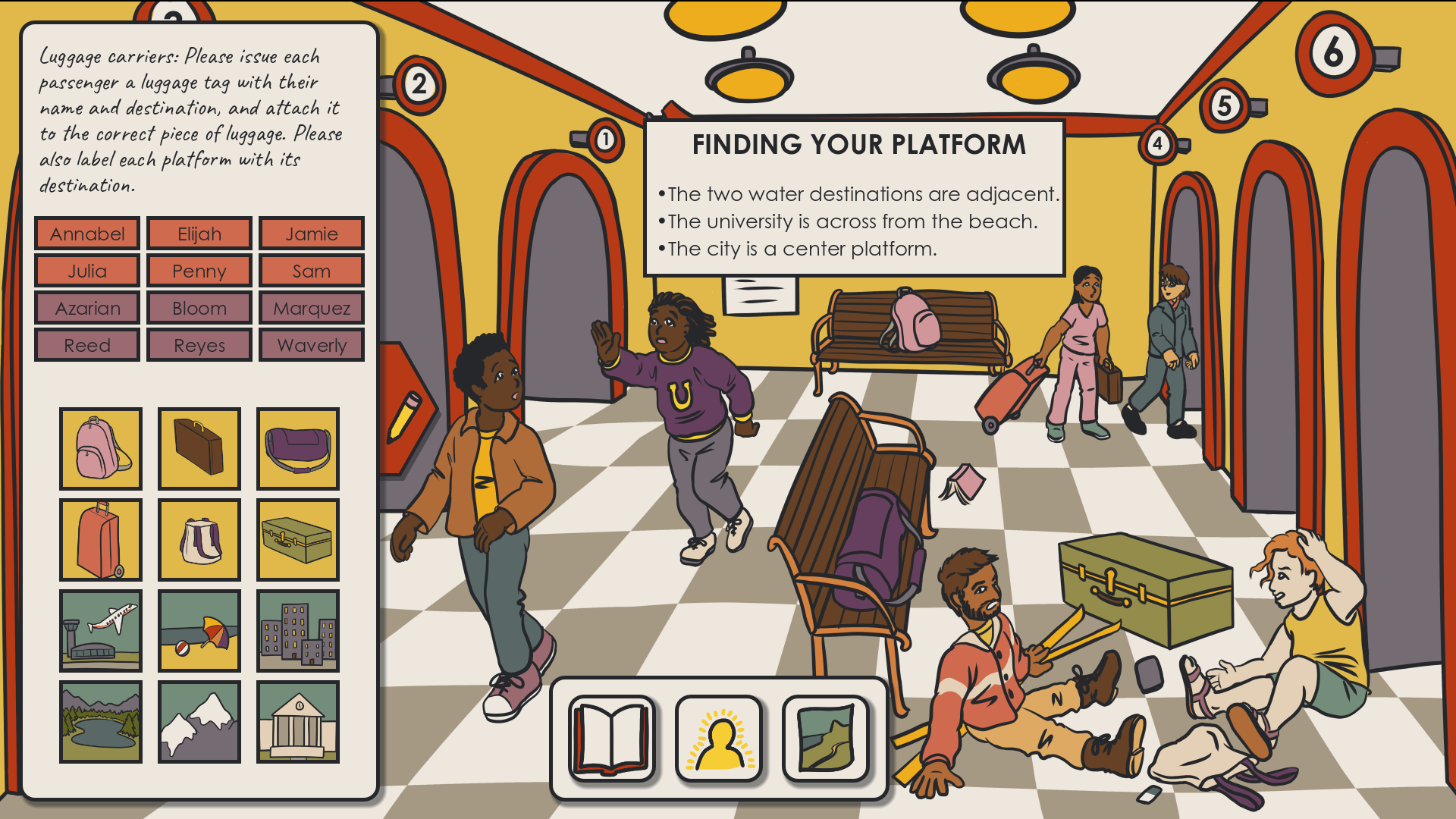
Image: Deductopia - Train Station
I had similar feelings about the score - a looping track that perfectly fits the cosy feeling of Deductopia. I'd only hoped for a few more tracks to give different rooms distinct atmospheres.
But I really liked the overall tone and narrative within the rooms; cosy snapshots that could be ripped from anyone's life. There's also a surprising amount of personality instilled in an inclusive group of characters with so little written dialogue. One of my favourites was a classroom spelling contest where you feel like you know the whole class of children from the way they're drawn and written. It made the world of Deductopia feel alive.
For fans of the more family friendly Duck Detective series, Deductopia is a great way to spend a few hours lost in a pleasant and cosy world of logical deduction puzzles. While it has charming art and good minimalist writing, like any good puzzle game, it's the strength of its puzzles where Deductopia thrives.
*Review Code Provided By Publisher