
Forever Ago Review
Sometimes in life there are moments that require us to take time to adjust to new realities. Much like the sweet melancholy in Pixar's UP, Forever Ago is a heartfelt story of romance, loss, unfulfilled dreams, and remembrance. A third-person narrative adventure game developed by Third Shift and published by Annapurna Interactive, that combines the quiet contemplative moments of something like Life Is Strange, with the ability to make and relive memories through photography similar to Season: A Letter to the Future.
You play as Alfred, an elderly man on a solo road-trip in his camper van. With his wife's journal and trusty camera in tow, he hopes to revisit the places he and his wife Audrey made countless memories since the day they started dating in 1974.
The story is told through a mixture of flashback vignettes that cover pivotal life milestones, dreamlike scenes that show Alfred's emotional inner turmoil, and present day environmental exploration.
We meet Alfred and Audrey on an early outing as young adults, as their bond slowly builds into a romance. It's a charming interactive scene that teaches you the main gameplay mechanics. You learn to walk and fast walk. Use the camera by pointing at your subject and setting the zoom, focus, and perspective by crouching or standing. Interact with various points of interest, and dialogue options that allow you to choose the colour of your future minivan or the shirt you want to wear.
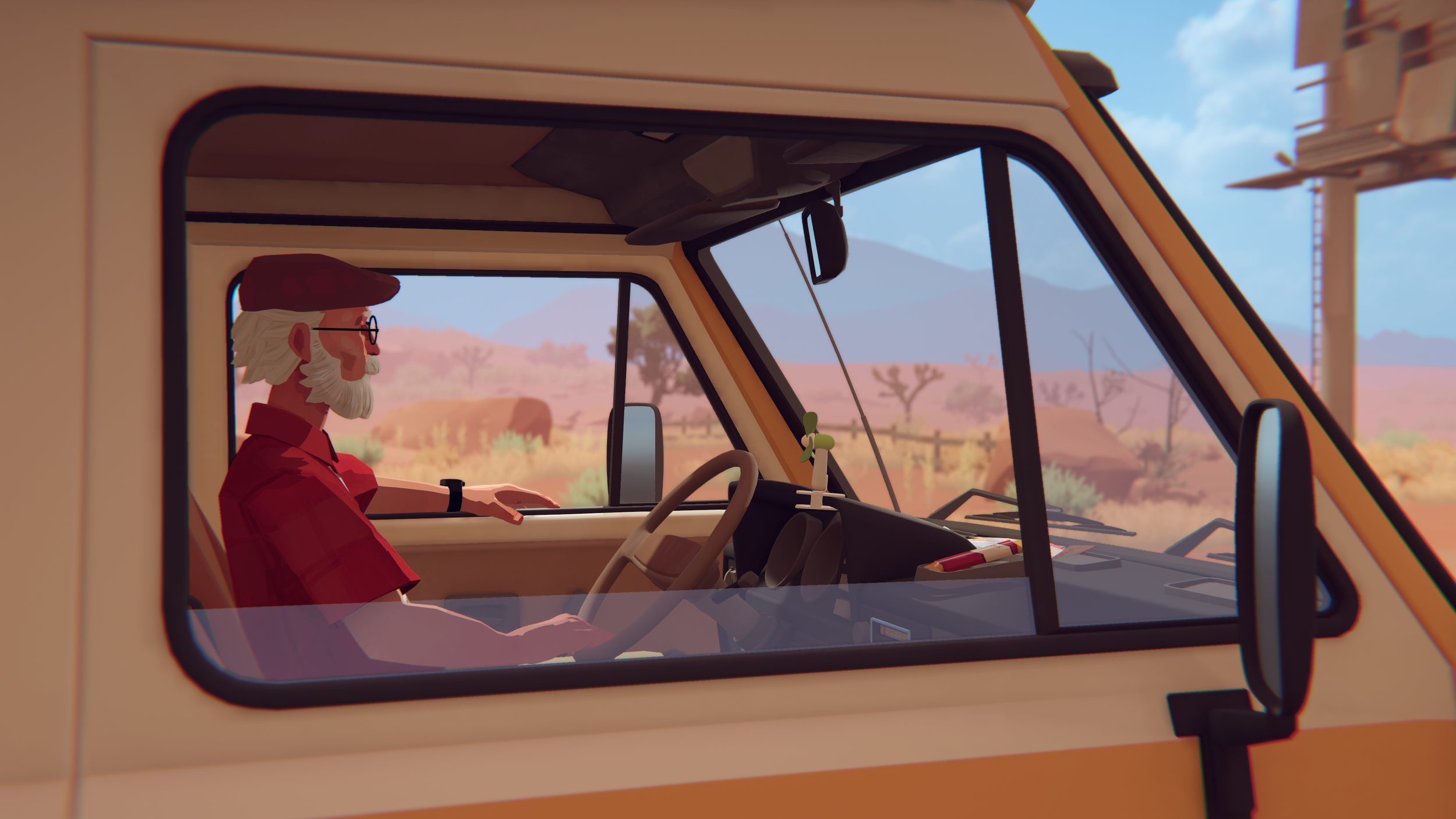
Image: Forever Ago - Minivan
After this, Alfred appears as an elderly man, alone on the road as he drives your chosen minivan. He arrives at a petrol station where Alfred and his wife used to frequent, and even knew the owner who's a local celebrity. But like everything in life, nothing stays the same forever, and Alfred is surprised by the changes.
Before going inside, Alfred can open Audrey's illustrated journal to see which memories she's told him to experience again. These are listed in the personalised journal, or on the top left of the screen with the click of a button. While exploring the environment, you can snap up to 12 photographs per level to later choose which 4 to place in the journal. It's a small, immersive action that gives consequences to your choices.
As you explore the beautifully rendered and highly detailed environments, you'll find trails of pink petals which after collecting them all, activates Alfred's memories. Then, the petals rise from the earth and wait for you to snap a photo, to summon the past in front of your eyes. Important story moments that vary from happy to confrontational. These complexities help humanise Alfred and Audrey's relationship.
But as much as Forever Ago is Alfred's story of grief and learning to accept change through his encounters with others, it also cleverly uses visual world-building through environmental art and well-written notes to embellish the stories of people and places. Such as the young mechanic, Sam, who has her own struggles, but demonstrates a drastically different mindset to Alfred - a story expanded on in family photographs, bills, and letters.

Image: Forever Ago - Sam
Or when Alfred slowly unravels the real reason behind why a theme park is in a state of disrepute. Even though a lot of this is optional, I'd encourage players to slow down and match Forever Ago's intentionally relaxed pace, to soak in the cinematic world and its characters.
It has a strong cohesion between dialogue options, narrative delivery through every day tasks like shopping or watering the garden, and the tranquility of photography and scrap-booking, that makes the narrative and interactions believable. Such as when Forever Ago gives players agency to choose dialogue options that treat characters poorly, or choose which shirt to put on to represent Alfred's mood and personality. A good example is when you talk to the overenthusiastic store clerk, Milton, who symbolises everything Alfred has come to hate. As everything is a reminder of how the world keeps changing whether you want it to or not.
Even Alfred's seemingly innocuous narration about shop items are incredibly poignant, like when Alfred comments on no longer drinking wine due to already using it as a vice for too long. These moments bring out his pessimism, depression, hopelessness, and anger. Even though he knows his behaviour is wrong, his patience is lacking, and he's not the jovial spirit he used to be. He's lost himself.
Forever Ago contrasts this by cutting to old memories that show how Alfred and Audrey's personalities have developed over time. How the things they yearned for changed as they lived their life. Showing how even the most exciting, memorable thing can become repetitive and empty if your heart isn't in it. The majority of these changes are shown from Alfred's observations, as he comments on the majority of what he sees.
However, there's also moments where the journey gets too overwhelming for Alfred, and his whole world collapses in on itself. This transports Alfred into a fugue state, where he's in his own mind, walking the corridors of his rawest memories. It's another way Third Shift slowly releases story details to let you piece things together.
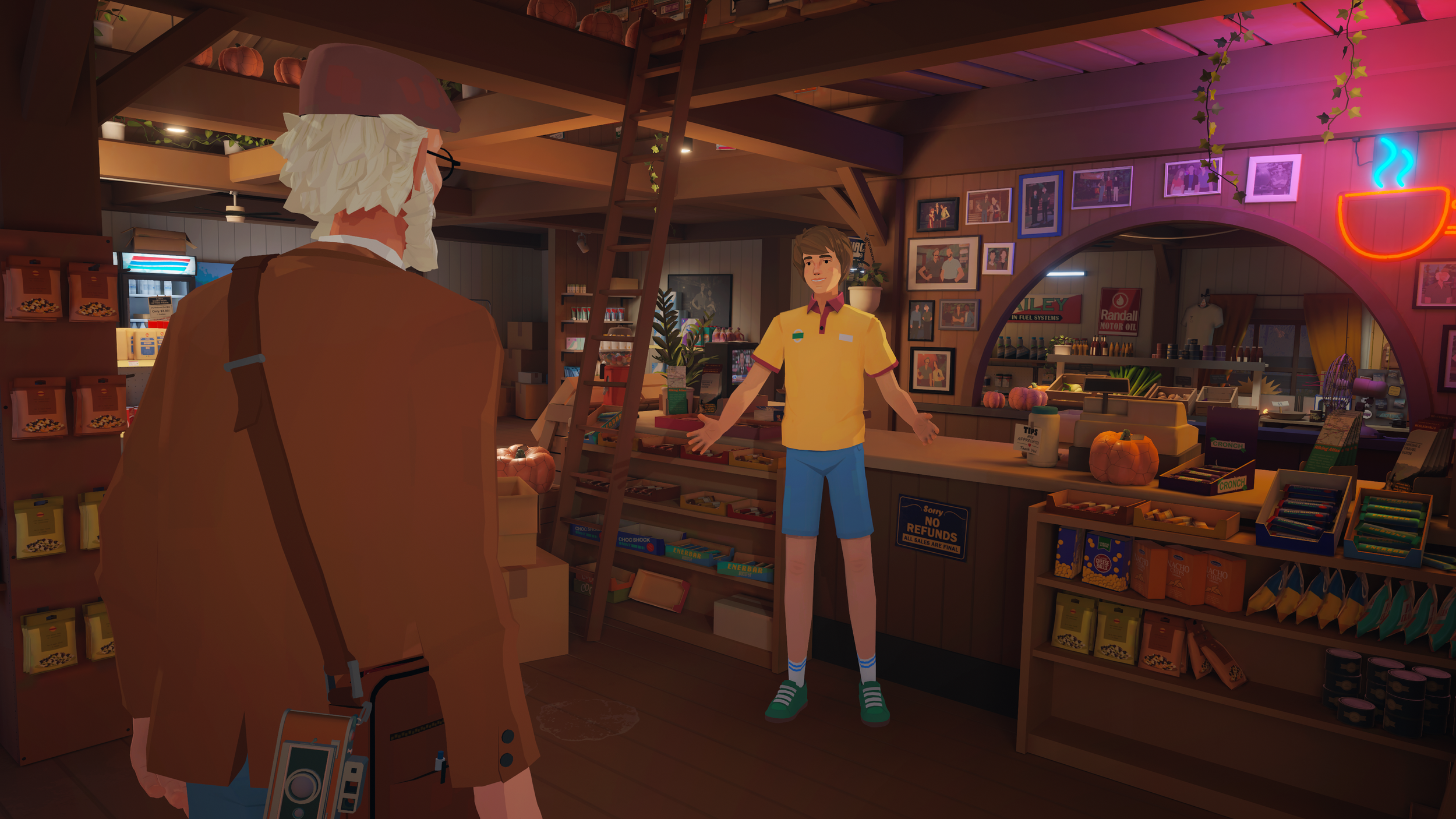
Image: Forever Ago - Milton
But what could easily veer into an overly sentimental narrative is perfectly delivered by a small cast of voice actors. Each one turns the nuanced script into a story that successfully balances the emotional drama. But it's the central bond between Alfred and Audrey that helps Forever Ago's narrative confidently land. Both Piotr Michael and one of my favourite voice actors Cissy Jones of Firewatch fame, give honest and vulnerable performances that showcase believable changes as their characters age.
It also helps that the character models and animations look the part amongst the stunning environments. While character faces have a simplistic style, it really works with the rest of the game's visual design. If anything it makes them stand out, especially during cutscenes. As the direction and camera work is brilliant at controlling the depth of field and focus to deliver on emotionally poignant moments.
There's also a wonderful score and atmospheric audio design. The soundtrack kicks in at appropriate moments to emphasis how Alfred is currently feeling on his journey: from chilled music as Alfred drives, or a classic track that summons a special memory. While sound effects highlight each locations different atmospheres, such as the quiet of an abandoned theme park, or a motel where you can sit on a bench to soak everything in.
However, that isn't to say Forever Ago is flawless. There were many times when the interact button was tricky to line up if I approached the object too quickly. But the most infuriating problem was losing my progress because of infrequent checkpoints, as I had assumed that the game would save upon completing main journal objectives, which wasn't always the case.
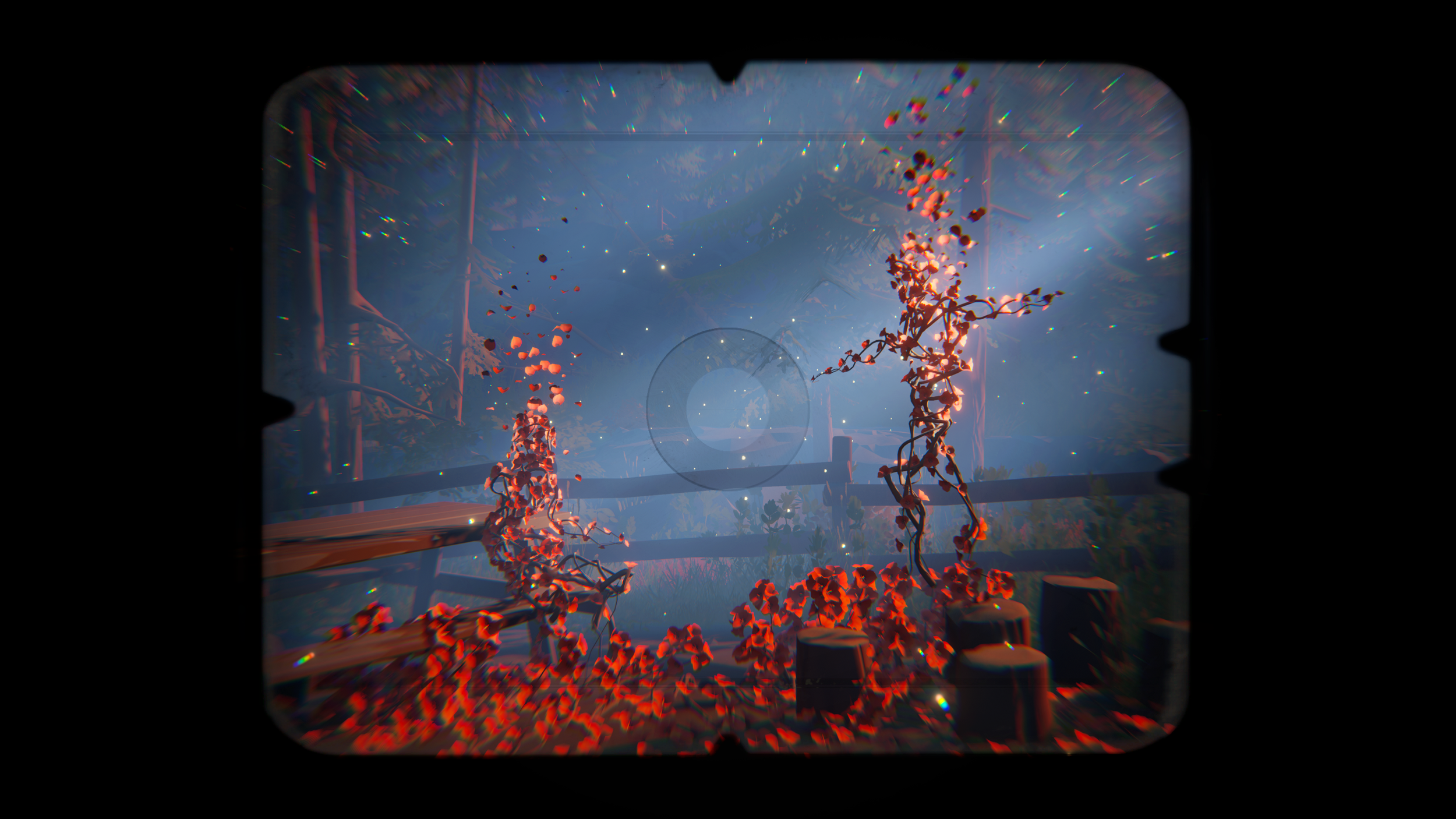
Image: Forever Ago - Petals
But in the end, I found much more to like than not. It's a video game that I'll be thinking about for a while as it said something. Yet, as someone who's had cancer twice in my life and seen how its impact stretches further afield than yourself, it's good to see another video game that delivers a realistic interpretation that might help someone.
Forever Ago is a confidently made, poignant narrative adventure that finds an important perspective on the impact someone's illness has on their loved ones. An empathetic tale and love story from the rare perspective of an older protagonist; a cinematic experience that most people will relate to in some way. But while the gameplay isn't perfect, such as in life, Forever Ago is a reminder to appreciate even the imperfections and so-called darker days, to keep moving on to experience new adventures.
*Review Code Provided By Publisher
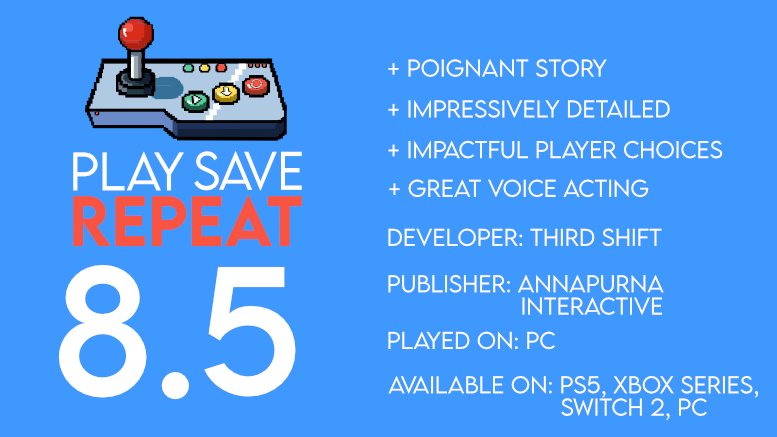
Image: Forever Ago - Score - 8.5