Review - Ghost of Yotei
American studio Sucker Punch Productions follows up the well-reviewed, Ghost of Tsushima - a tale of samurai Jin Sakai who is at odds with betraying his honourable ways to save his island from Mongolian invaders - with Ghost of Yotei, a more focused but equally engrossing tale of vengeance.
Ghosts of Yotei starts by showing the new protagonist Atsu as a young girl as she is pinned to a burning tree by a katana and left for dead by a murderous group called the Yotei Six. Starting a sixteen year journey towards revenge for those she has lost, vowing to kill them all whatever the cost.
A story of vengeance might seem overdone to some people, compared to the internal struggles faced by Jin as he questioned the morality of bending his samurai code in favour of shinobi style methods. But I always enjoy vengeance stories as they're an old and timeless cornerstone of storytelling that doesn't have to feel stale, and although Yotei plays into tropes and has predictable twists and reveals, the writing and performances make it thoroughly entertaining until the credits roll.
It's important to remember these story structures and tropes have existed in every form of storytelling for centuries. So here's a quick and very incomplete history of revenge, containing some of my favourite stories.
In the early 17th century, performers acted out William Shakespeare's revenge tragedy Hamlet about a prince seeking revenge on his uncle. Becoming direct influence for Disney's Lion King.
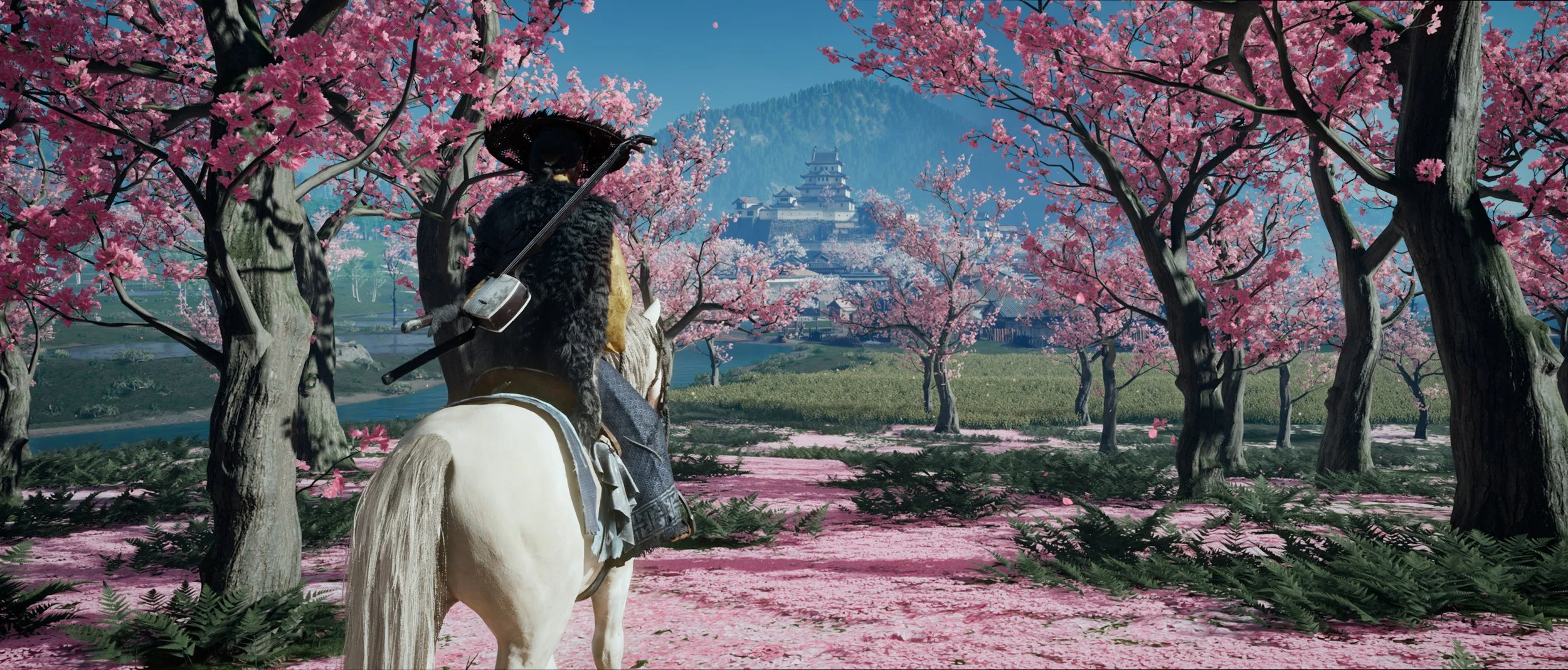
Image: Ghost of Yotei - Blossoms - Sucker Punch Productions
Skipping a few centuries, to the early 19th, Mary Wollstonecraft Shelley wrote and published the groundbreaking gothic horror, Frankenstein, or the Modern Prometheus - a timeless examination of the cycle of revenge and self-discovery. And more importantly, Shelley criticized the patriarchal systems and societal limitations and whilst proving a female author could thrive in a male dominated field. A story that has continued to be topical and resonate with each new generation. Bringing us this year's brilliant interpretation on film, by Guillermo Del Toro.
To other contemporary films like Emerald Fennel's A Promising Young Woman, Quentin Tarantino's Kill Bill Vol. 1 and 2. And Django Unchained.
Or Clint Eastwood's Unforgiven, that deconstructs the impact of seeking revenge.
But it's Korean cinema where I've enjoyed the most revenge stories. All vastly different. Like Bong Joon Ho's Parasite that contains a complex revenge against the unfair systemic injustices built into class and modern society; Park Chan Wook's Oldboy's twists and brilliant action; and Kim Jee-Woon's I Saw The Devil's portrayal of vengeful obsession and violence.
Then, there's video games. The obvious being Naughty Dogs The Last of Us Part 2, that shows how there's no winners on either side of vengeance.
Dishonored uses revenge as a backdrop to support the immersive sim elements.
And one of my personal favourites, Shenmue. A revenge tale we might sadly never get to conclude.
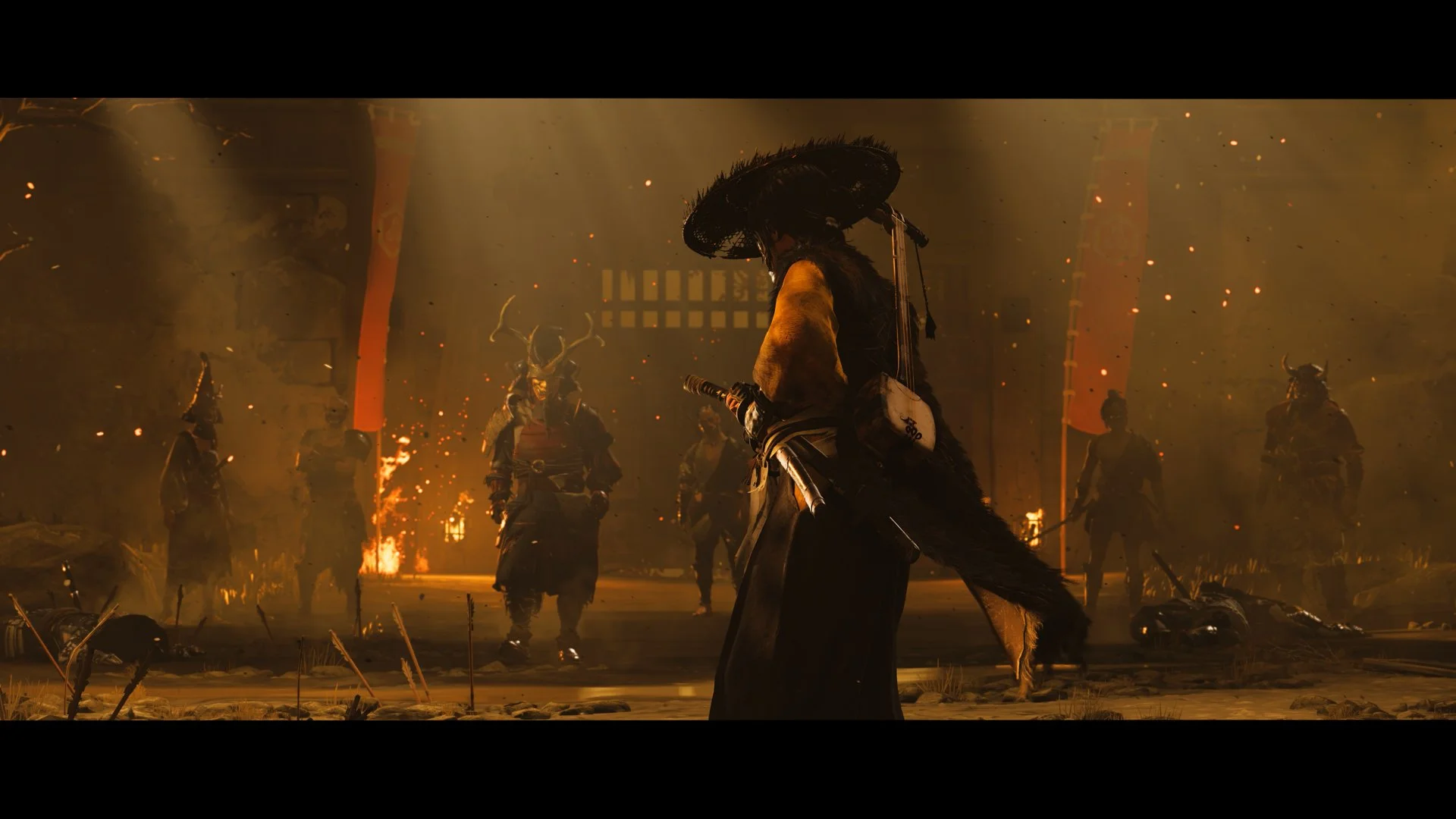
Image: Ghost of Yotei - Fight - Sucker Punch Productions
Almost all of these stories sees their protagonists go through traumatic incidents or worlds that shape their need for vengeance and answers, even if irrational thinking leads to terrible outcomes. The moral of these stories tread familiar ground about what revenge really does to someone and how that journey usually goes parallel with discovering ones identity that has been stolen by trauma. But each manage to find unique ways to paint their worlds and superb characters within a very malleable framework to deliver on their impactful conceits. And luckily, Ghost of Yotei succeeds most of the time.
Being the sequel to a successful Playstation IP brings a pressure to succeed and more often than not, evolve. I could spend this review focusing on how Ghosts of Yotei is more interiative Tsushima’s gameplay mechanics than revolutionary, which I will touch upon, but first, I would like to focus on how it changes the gameplay experience for the better.
From simply looking, it's clear that Sucker Punch Productions has welcomed the move from a small island off Japan, to Ezo on the northern mainland island of Honshu, now a part of Hokkaido. The same painterly presentation from Tsushima is dialled up with precision, as beautiful snow-capped mountain vistas silhouette fields of white and yellow flowers that are alive with roaming wild horses and ronin on the hunt for their next bounty. I played on PS5 Pro, which comes with multiple graphical options from 60 frames per second performance mode, to 30 frames per second high resolution quality mode. But the mode I found to be the most impressive was the ray traced performance mode which allows a solid 60 frames per second at a lower internal resolution with amazingly detailed ray traced lighting that shines when light passes through objects and touches skin. But the most amazing part is how close to the higher resolution mode this version looks, thanks to the upscaling used. Rarely did I see the flickering artifacting it is known for, as such, this was easily the best implementation so far and a good sign that PlayStation's partnership with AMD will lead to upscaling enhancements in the future. But enough about the graphics.
It's the exploration of the wider vistas of the open world that I found impressive. As soon as you enter the first open world zone, Atsu is tasked with equipping her telescope to zoom in on visual points of interest that turn the reticle yellow when hovered over until theyre added to the map. This felt reminiscent to exploration in the last two mainline Zelda games, Breath of the Wild and Tears of the Kingdom. Giving players that little bit more freedom to take on optional content in the manner that you discover it. Simply standing on a hilltop, looking out at smoke rising over the horizon and choosing whether or not to go makes exploration feel less structured and tailored to your own playstyle. Then, when you call your horse with a tap of the D-pad and gallop over to your destination, swiping the touchpad to follow the wind that acts as a non-intrusive guide - one of the best mechanics carried over from the original - Atsu finds an optional task. But the world is so well designed to keep a player entertained that this exploration more often than not naturally leads to another point of interest to keep the game flowing forward. It is smart game design.
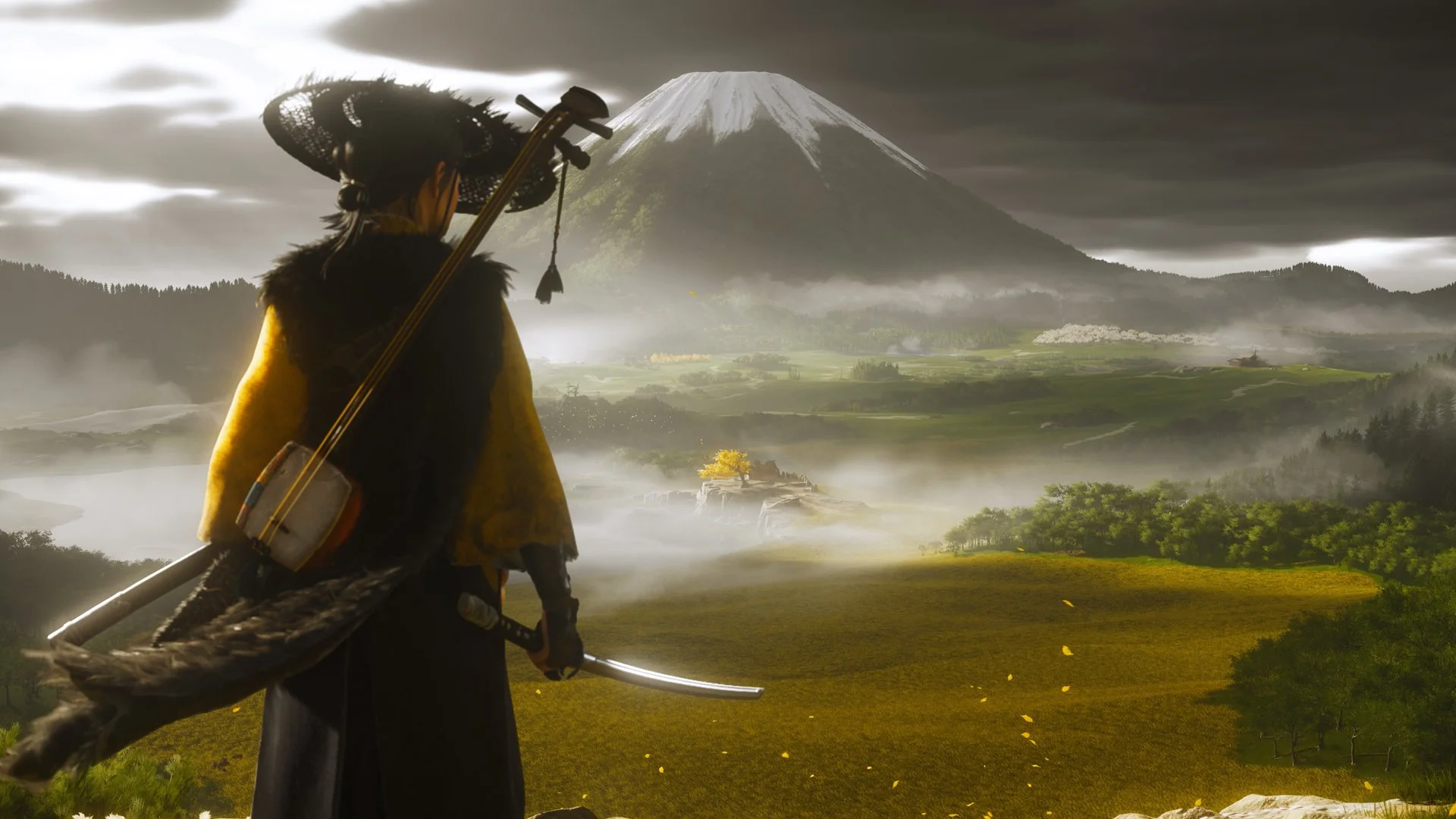
Image: Ghost of Yotei - Mountain - Sucker Punch Productions
Alternatively, if free roaming exploration isn't something someone enjoys, Atsu can purchase maps from a cartographer which adds key locations of interest to your map without the leg work. But I generally found myself naturally going from a point of interest to another one. Back are noisy foxes to follow to unlock charms, bamboo strikes, hot springs to explore introspective thoughts and level up health, and haikus are replaced by paintings that are drawn on the dualsense touchpad. However, there are plenty more returning and new activities: from beautiful platforming challenges to shrines, encampments to clear, attaining skill points at altars, puzzle boxes to solve, shamisen songs to learn, bounties to get from boards around the world and more. All natural discoveries or from conversations with NPCs. Not everything is a huge leap forward from the first game, but it's iterative and everything improves the experience.
Some might be disappointed that the sequel isn't completely reinventing the wheel, but a good sequel in gaming often sands off the previous rough edges. But everything here like the freedom of approach improves the game, and more player choice is never a bad thing. For a lengthy game at over 25 hours, respecting a player's time is a positive. It also helps that like Insomniacs Spider-Man games, Yotei has some truly remarkable load times. It makes completing a side quest across the map no longer a daunting feat when you can select an already discovered landmark near the objective and be there in a few seconds at worst.
This freedom of choice is present in the main story too, but only to a minimal extent. The game allows you to journey at your own pace, encountering information about the first two targets of the Yotei Six before choosing whether to face the Oni or the Kitsune first. Either way doesn't seem to have an impact on the story, but it just allows you feel like you're in control of Atsu's journey. It might not be the most impactful feature, but it gives people some variation which is a nice extra. Although, I personally found the story reveals in the Oni storyline added emotional depth to Atsu and made me feel closer to her character which improved the impact of the story moving forward.
But speaking of extras, it's this area where Sucker Punch goes above and beyond. Tsushima included the beautiful black and white, Akira Kurosawa mode which makes a welcome return here. As a fan of Kurosawa's movies, it's always nice to switch to that mode now and again. But this time they up the ante by including a Shinichiro Watanabe mode during exploration that features the lo-fi hip-hop beats reminiscent of his anime Samurai Champloo, and a gorier visuals mode named after famed director Takeshi Miike. And these modes all encourage the use of the photo mode, to transform the visual flair of your in game photography.
But the most important part of Ghost of Yotei is the gameplay; the fantasy fulfillment of becoming a samurai. Or the feared Onryo - the demon all of Ezo begins to know. Still, just as in Tsushima, Yotei's combat is outstanding and more importantly, fun throughout the whole journey. And as you progress through the story, Atsu has the opportunity to learn how to use new weapon types aside from her trusty katana. Each new weapon grants her a new form of offense that is suited to battling a particular type of enemy more easily. So with each new weapon, a new tactic reveals itself. The same dodge, block, parry and counter gameplay in the same vein as the Batman Arkham games, combined with the added complexity of multiple weapons that each serve a purpose and then throw in secondary tools like kunai, combat encounters on normal or higher difficulties provide a real challenge. Even on normal, precision and attention to detail is needed when enemies combine abilities to be able to use unblockable attacks, parry only attacks, and unblockable disarming strikes. This kept me on my toes during some of the tougher late game and side bosses.
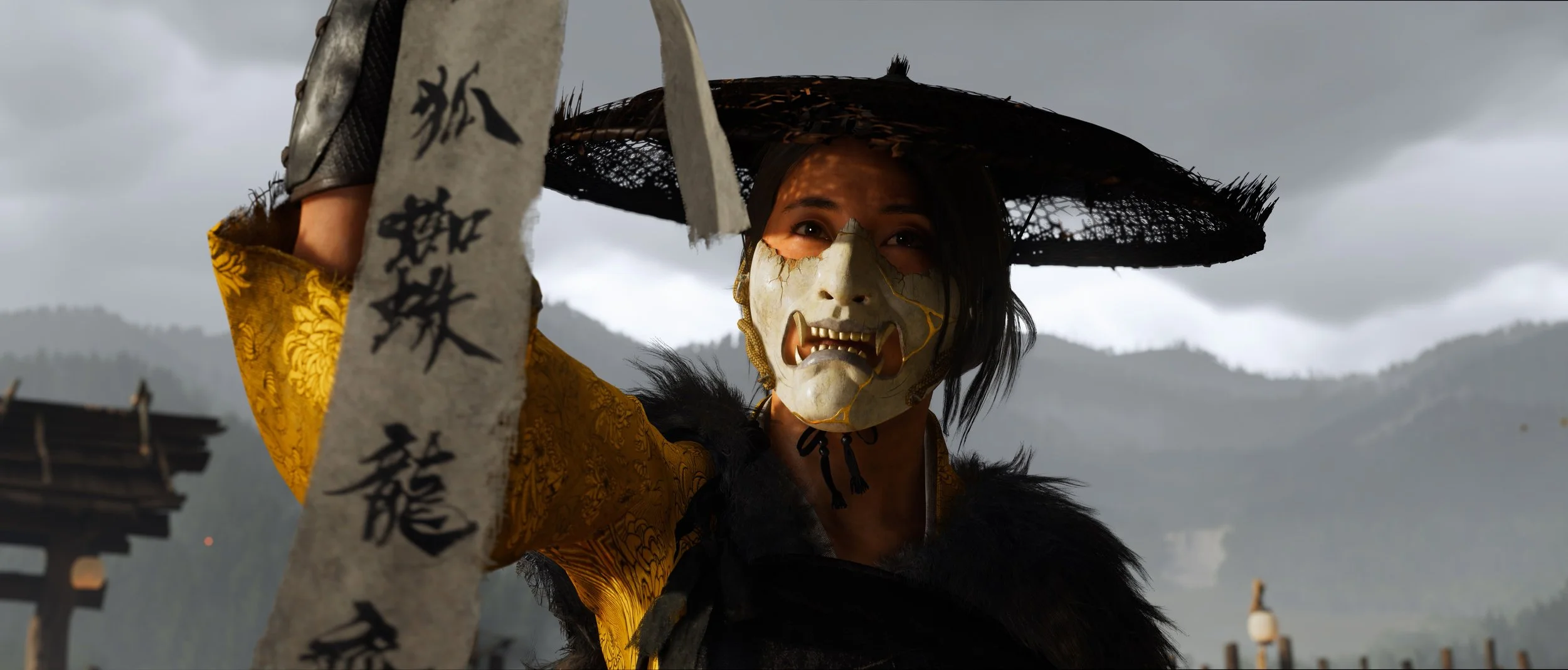
Image: Ghost of Yotei - Banner - Sucker Punch Productions
This is where gear comes in. As Atsu, you collect armour pieces and talismans that add perks to assist your own personal play styles. Whether you need a health assist or extra parry windows or stealth help, there's plenty of options to craft an Atsu that suits your own style. Which brings me to the other form of combat - stealth.
Stealth gameplay is simple but impactful. You can creep around and hide in tall grass or on rooftops or grapple onto high chains or wires and climb onto buildings. I particularly enjoyed upgrading Atsu to be able to chain assassinations together to take out three enemies in one go, then pick up an enemies sword or knife and throw it at another enemy, and if I was seen by another, equip my bow and use my skill to slow down time to aim an arrow at their head. Combat always succeeds in giving you that satisfaction of feeling like a samurai and a shinobi in one. Having played and enjoyed the original Ghost of Tsushima, I came away enjoying Yotei’s combat that little bit more.
However, Yotei wouldn't reach such heights without the superb performances and perfectly composed music. First, I want to praise Feodor Chin's nuanced performance of the antagonist and leader of the Yotei Six, Lord Saito. He is the perfect counter balance to Atsu. And I feel obligated to highlight Erika Iishii as Atsu, they perfectly deliver a layered character who in one moment can feel like she's on the edge of an explosive rage, and in another, express a delicate vulnerability as the crack in her voice betrays her sadness - a woman who doesn't know if she can be more than her pain. Sucker Punch's writing team layer enough gradual backstory that by the end ATSU is fully formed and you need to see her story through to the end.
That brings me to the music. Every composition has intent - a purpose to enhance the effective camera work and theme of any particular battle or story beat. Music has as much importance as in the first game. This time trading in Jin's flute for Atsu's shamisen - another familial link that she keeps close at all times. It's more than just an instrument, it's a connection to a stolen past. But with the focus on vengeance, our wandering ronin is accompanied by the guitars strums frequent in famous westerns and that genre influence carries throughout and is shown right from the intro where Atsu is a stranger in a new village and everyone rushes inside fearing the upcoming battle just like the townsfolk fleeing the saloon and shutting up shop in many cowboy films.
This attention to detail in emboldening story themes through music is at its strongest during the mainline story’s short singing interstitials. Each in Japanese as big flowing subtitles often accompany Atsu on a isolating horse ride as she is alone with her thoughts as the song highlights her story and how she feels at that moment. It's an effective storytelling device as each impactful lyric disappears in a cloud of dispersing white blossoms.
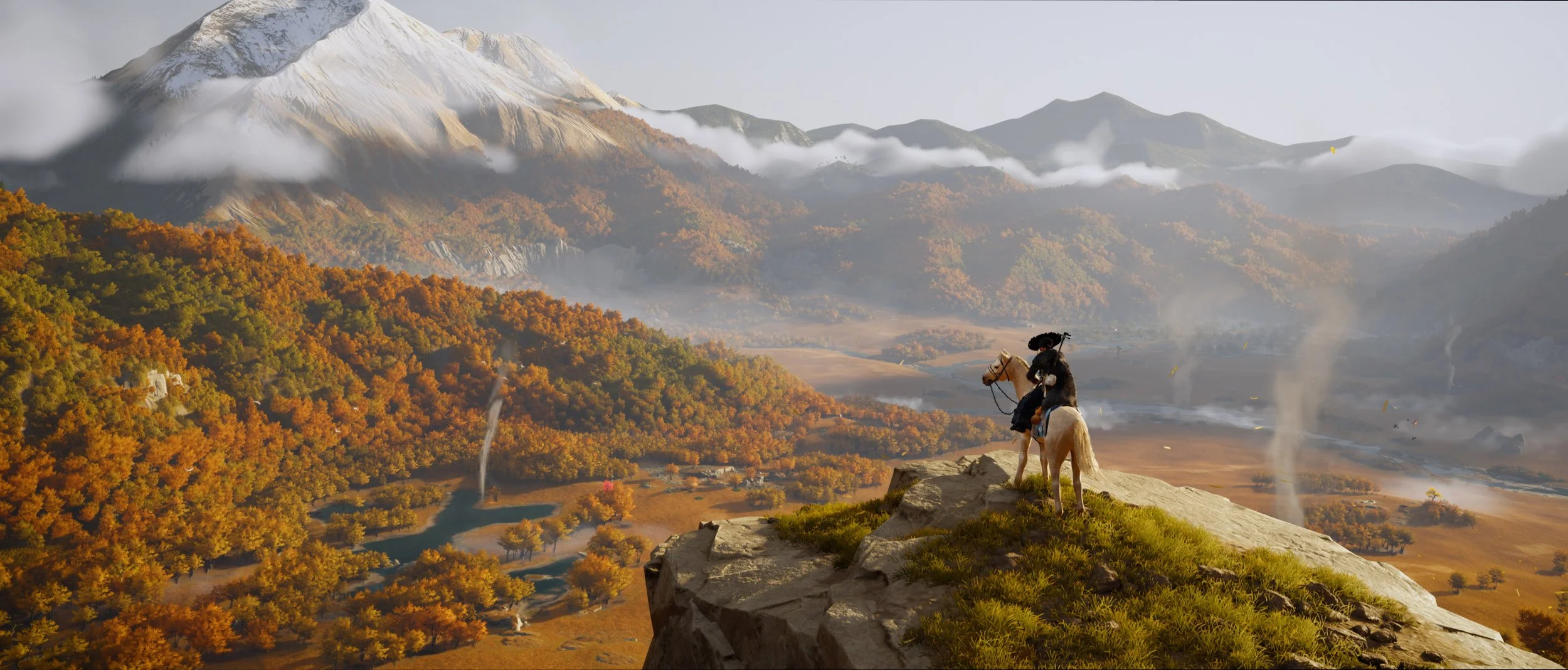
Image: Ghost of Yotei - Smoke - Sucker Punch Productions
Sound is also drilled into the games mechanics. The shamisen giving Atsu the power to locate specific side quests and collectibles amongst other things when she plays a specific song after learning it in the story or on one of many side missions or secret spots. More than one side quest even used music as a solution to progress.
Ghost of Yotei also has a suite of accessibility options to help those with varying needs. From subtitle options, visual changes, to changing how optional mini games function, like the fun Zeni Hajiki coin game, where instead of using the dual senses tension triggers find real name, a bar shows the power being applied, and disabling the timer on the bamboo challenges button presses. Although there's always more that can be done to make video games more accessible for more people, I have noticed that both PlayStation and Xbox first party titles have been making more effort on that front, and that's always a good thing.
While not a major departure from Ghosts of Tsushima, Ghosts of Yotei iterates on the key pillars of combat, graphics and world design, whilst continuing its best in class music, performance and direction. Some might prefer Jin's battle against his samurai honour to Atsu's need for revenge. But I believe the story here is strong and well acted and if you're a fan of revenge stories like I am, you'll have a very good time. But if you come to an open world for the gameplay and exploration, Yotei might not entirely leave you to your devices like this years Hell Is Us, but it does give the option to discover at your own pace in a well designed open world that has something interesting at almost every sight line.
For me, Sucker Punch have made another captivating portal into historical Japan and delivered a fine sequel that added to what came before. Ghost of Yotei is an easy recommend. And whether they make a third Ghost of game, or revisiting a robbing raccoon, or something entirely new, I'll be there, excited to see what the studio do next.
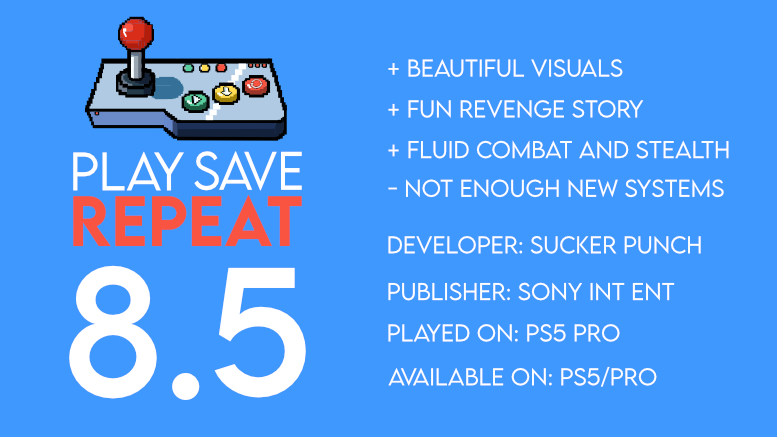
Image: Ghost of Yotei Review Score - 8.5/10